

Addison’s Disease: When the Adrenal Glands Fail to Produce Enough Hormones

Verified By
KIMS-SUNSHINE
Specialist,
15 December, 2025
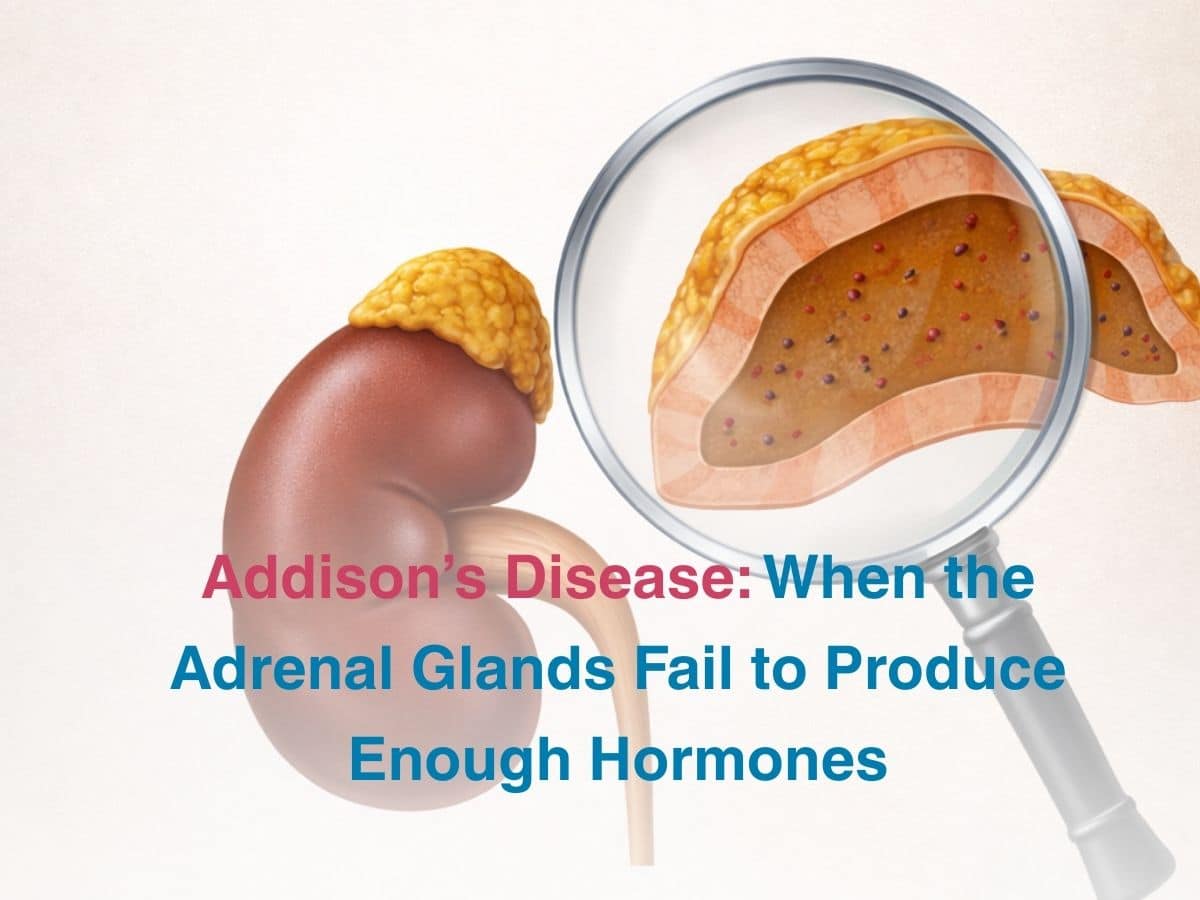
Addison’s disease is a rare medical condition where your adrenal glands don’t produce enough cortisol. Cortisol is an essential hormone that is necessary when you wake up and it is needed to ensure that your body responds in the right way to different stimuli. This is also why it is called the ‘stress’ hormone.The adrenal glands also produce aldosterone- which is responsible for maintaining electrolyte balance in the body. Cortisol on the other hand is more of an all-rounder as it helps in ensuring that your blood sugar levels are good, your blood pressure is fine and your immune system is working perfectly. It does this even under different conditions- like when you have a severe infection, or if you have had a major surgery or if you are ill in any other manner. Addison’s disease is rare in India, but more cases have been reported in the northern parts of the country than the south. This may be due to poor detection, awareness or under-diagnosis, or may be due to other factors too.
Causes Of Addison’s Disease
In the West, Addison’s Disease is seen to occur when someone has an underlying autoimmune disorder. But, in India, the possibility of individuals developing Addison’s Disease is higher due to an untreated infection like tuberculosis and is not autoimmune alone in nature. There are 2 types of adrenal insufficiency- primary is when you have Addison’s disease and your adrenal glands are not making the necessary amounts of these 2 hormones.
There is a secondary type where a poorly working pituitary gland can influence the adrenal glands to make very low amounts of cortisol and aldosterone respectively. Hence, some of the main causes for Addison’s disease include
- Repetitive bouts of infections
- When you have some kind of metastatic cancer
- If your adrenal glands are haemorrhaging
- If the adrenal glands have been surgically removed.
- If you have an autoimmune disorder like amyloidosis.
Symptoms Of Adrenal Insufficiency
Some common symptoms that show up due to cortisol insufficiency include
- Hyperpigmentation or darker looking patches of skin and gums.
- Severe abdominal pain with nausea and vomiting.
- Not having an appetite
- Severe muscle spasms and joint pain.
- Low blood pressure
- Mood changes
- Craving salty snacks or foods
- Hypoglycaemia
- Women have to deal with irregular periods and body hair loss.
An Addisonian crisis occurs when there is almost no cortisol being made in the body and at such times, symptoms like dehydration, nausea, diarrhoea, loss of consciousness, sudden and sharp pain in the belly, lower back or legs or extreme weakness are common. This is a medical emergency and needs to be treated right away or it can be fatal for the affected individual.
Diagnosis Of Adrenal Insufficiency
Diagnosis is often hard as symptoms are vague and may come and go.
- Hyperpigmentation if present may hasten diagnosis but this is not always true. Specific blood tests that measure electrolyte levels cortisol and ACTH (from the pituitary gland) are done.
- An ACTH stimulation test may be done- where an external injection of ACTH is given and even with high levels of the hormone, if low amounts of cortisol are being made, then you may have Addison’s disease.
- An insulin induced hypoglycaemia test is done to check if your pituitary glands are working well or not. If there is less ACTH produced by the pituitary gland, then the adrenal glands don’t function normally. This test is done if secondary adrenal insufficiency is suspected. Blood glucose levels are checked after insulin is given -low blood sugar and high cortisol means it is normal. If there is hypoglycaemia and low cortisol, then you have adrenal insufficiency.
- A CT scan can help your doctor understand if there is some infection or autoimmune related destruction of the adrenal glands.
Treatment For Addison’s Disease
This involves hormone replacement therapy- hydrocortisone and fludrocortisone (synthetic versions of cortisol and aldosterone) are given and you will need to take it for life.
Conclusion
Addison’s disease is a chronic condition that can affect how your body functions normally. Hormone replacement therapy is an effective approach to treat this condition and you cannot stop taking medications at any time. An Addisonian crisis is dangerous and should be treated immediately, so if you know you have Addison’s disease and feel other symptoms coming on due to illness or surgery or other stress, get it checked without any delay whatsoever.
Frequently Asked Questions
What is Addison’s disease?
What are the early symptoms of Addison’s disease?
What is an Addisonian crisis?
Is Addison’s disease a lifelong condition?
How can people with Addison’s disease stay safe?