
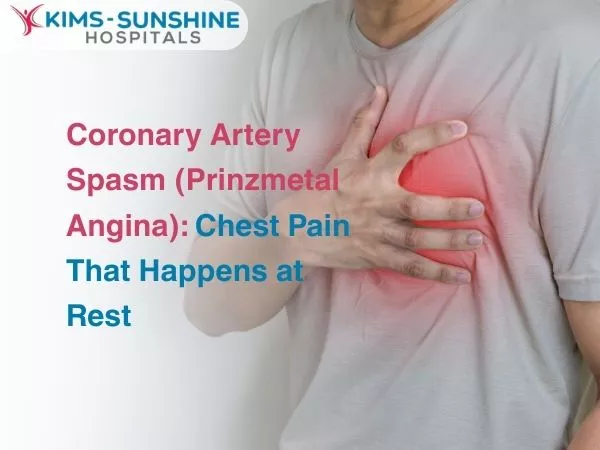
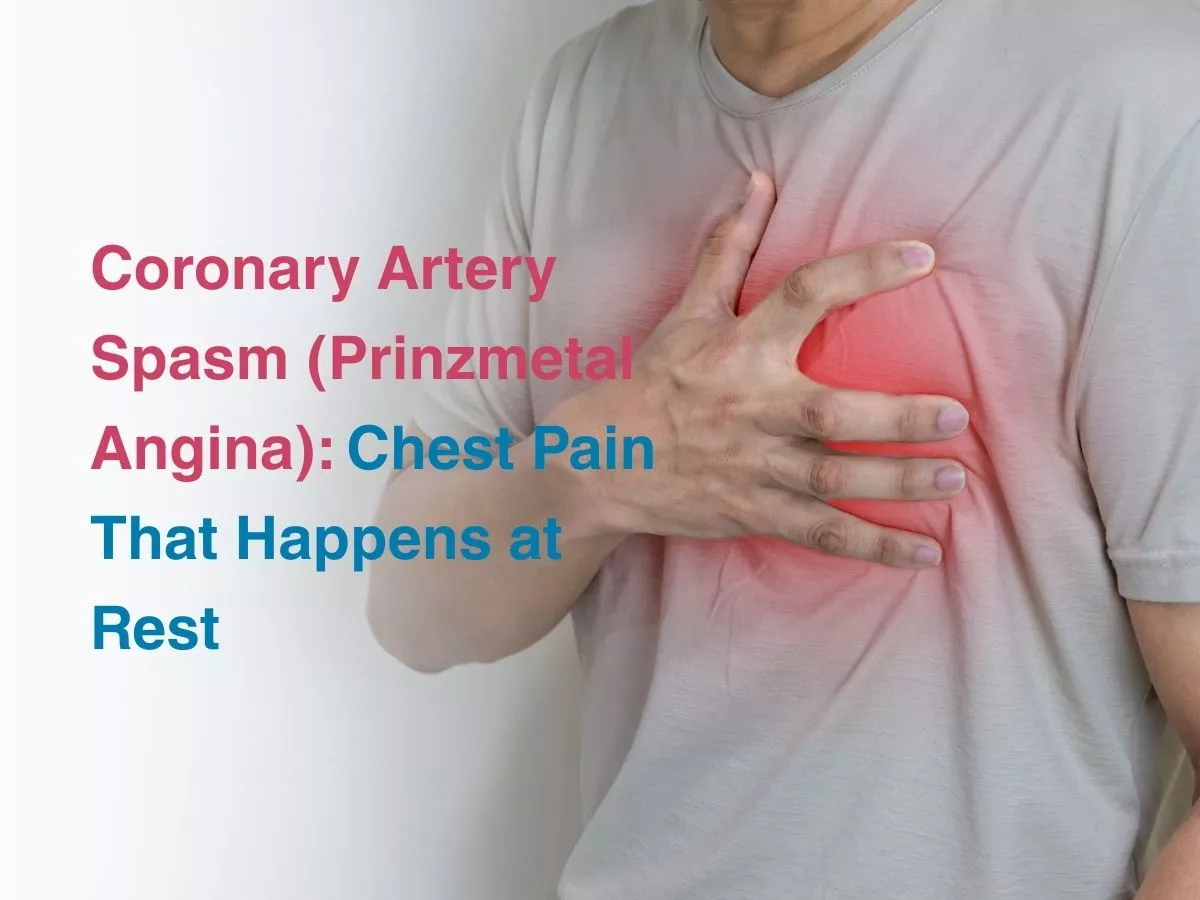
Coronary Artery Spasm (Prinzmetal Angina): Chest Pain That Happens at Rest

Verified By
KIMS-SUNSHINE
Specialist,
08 February, 2026
The coronary artery is the main blood vessel which feeds the heart with oxygen rich blood, thus helping the heart pump continuously. When there is a temporary spasm or tightening of the smooth muscles in the blood vessel walls, it can delay blood flow and cause symptoms when you are resting. Coronary heart spasms are one of the major causes for ischaemic heart disease in India as it affects about 30 million people- most of whom are young and female. If you have chest pain when you are at rest, consider talking to a cardiologist at the best Hospital in Hyderabad today!
Chest Pain At Rest Causes
If you have high blood pressure or hyperlipidemia due to high amounts of cholesterol, you are at risk of developing this condition. Smoking often can also cause blood vessels to spasm. Other reasons include extreme stress, sudden exposure to very low temperatures and the use of certain drugs like amphetamines.
Coronary Artery Spasm Symptoms
Even when you have spasms in blood vessels, symptoms don’t often show up. Even when they do, you may shrug them off as they feel minor. You may notice very light chest pain – like a slight twinge either while sleeping or when sitting still. Each spasm may last for about 5 minutes or may be even longer. You may also notice tightness in the chest, and mild pain that stretches up to your neck or jaws.
Variant Angina Diagnosis
Many tests are used to diagnose this condition, among which an ECG is most commonly recommended.
- Coronary spasm ECG changes show that the heart is not beating normally.
- An EKG can tell your doctor how cardiac electrical activity is.
- A coronary angiography lets doctors check how blood flows in vessels, by injecting specific dyes to make visualisation easier.
- An ambulatory monitor may be given to you, which will record any changes in heart rate or spasms through the day and at night- which makes it easier to identify spasms.
Treatment For Coronary Artery Spasm
Treatment approaches include use of drugs or surgery for severe cases.
- Treatment normally includes the use of calcium channel blocker drugs like amlodipine, diltiazem or nifedipine, as they help your arteries relax.
- Statins are prescribed if you have high cholesterol – as a preventive measure to reduce spasms.
- If you have ventricular arrhythmia due to a coronary spasm, then you may be asked to get an ICD inserted- so that the heart is monitored throughout and it can be shocked back to rhythm, before any major changes occur. An ICD is normally implanted near the collarbone, just under the skin and it is battery powered.
Conclusion
A coronary heart spasm, also called Prinzmetal angina is an irregular type of angina or chest pain which places you at high risk of suffering from a heart attack or related conditions, as blood flow to the heart gets compromised. If the spasm lasts for a long time, it can be bad for your overall prognosis, even with treatment. If you notice shortness of breath, feel faint or have chest pain, along with a cold sweat and nausea, go to a hospital right away and don’t wait. If you notice chest pain at night or early in the morning, when you are at rest, call our cardiologists for a consultation, as we have some of the best heart specialists at KIMS Sunshine Hospital in Hyderabad.
Frequently Asked Questions
What is Prinzmetal or variant angina?
What triggers coronary artery spasms?
Is coronary artery spasm different from a heart attack?
Can smoking increase the risk of this condition?
When should chest pain at rest be evaluated urgently?