


Memory Problems or Confusion? Early Signs That Need Neurological Evaluation

Verified By
KIMS-SUNSHINE
Specialist,
19 May, 2026
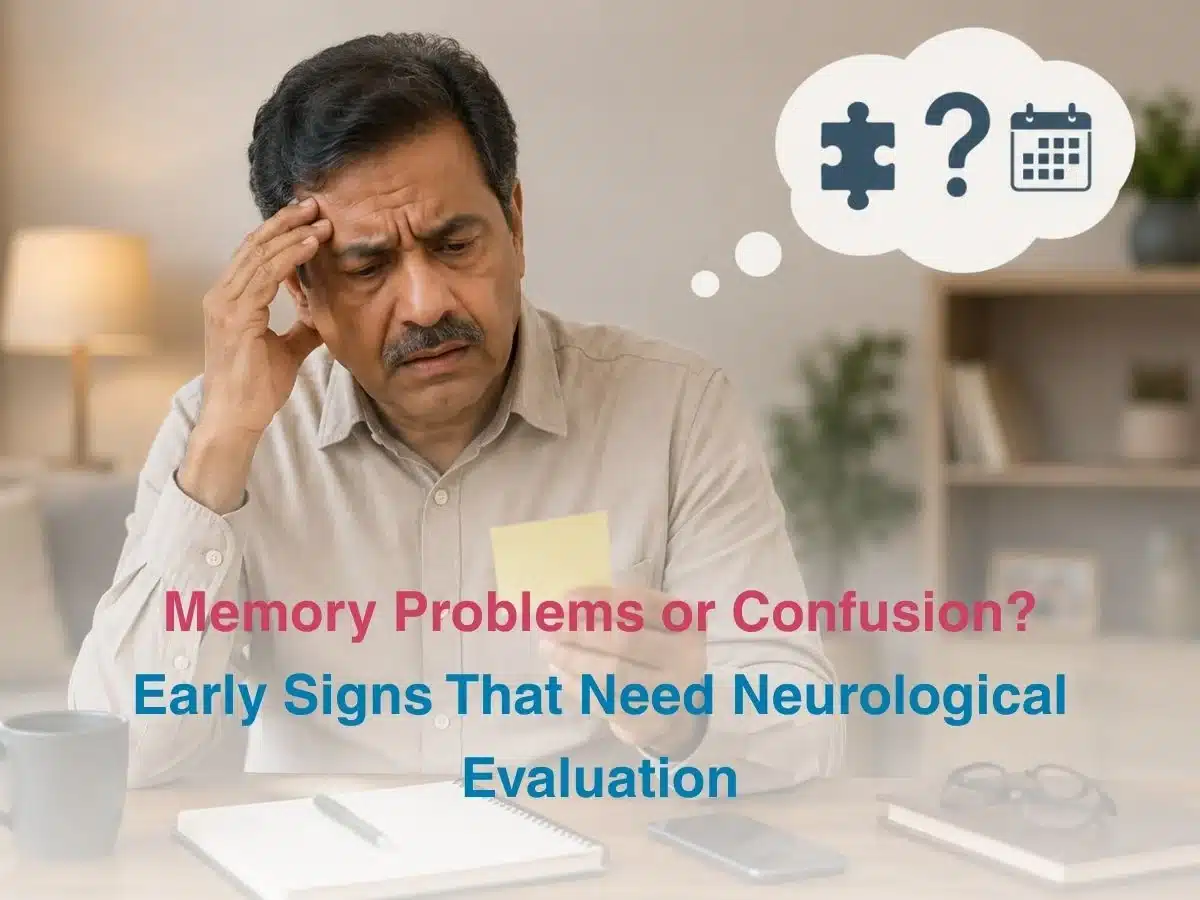
The brain, spinal cord and nerves are all part of the far ranging nervous system which help control everything- from moving, feeling a particular emotion, making memories, retaining necessary information and then retrieving them as needed, among other more basic functions like breathing, sleeping, eating, etc. Forgetfulness is a very normal phenomenon that affects everyone but it is important to understand when to get a memory loss neurologist consultation, when you know something is amiss.
Let us hence look at when forgetting stuff is no longer random and when it is instead an issue in the form of dementia or memory problems, so you can talk to a specialist at the best neurology hospital for memory disorders in Hyderabad sooner rather than later.
Causes For Memory Problems Or Dementia-
Memory is a large part of what your brain works for- to learn something new, make memories of that information and retrieve it at a later date, knowing when that information is not useful and using it to solve everyday problems, among others. All of these are highly interconnected processes that occur in different parts of the brain.
When information does not pass properly between these parts, memory loss is observed as a symptom of some underlying condition that needs to be diagnosed. So, let us look at some confusion and forgetfulness causes in greater detail below-
- Blacking out because of too much alcohol in your system.
- If there is a brain bleed.
- If you have had brain surgery and some part was removed.
- Cancer therapy is like getting radiation therapy, chemotherapy.
- When you have had a traumatic brain injury.
- If you have had an ischemic stroke.
- If you have conditions like Alzheimer’s Disease, dementia, brain tumours, MS, Lewy body dementia etc.
- If you suffer from mood disorders.
- If you have severe infections.
- If you have seizures or severe migraines.
- You may forget large parts of your life if you have had to witness a majorly traumatic incident.
Symptoms Of Memory Disorders-
Let us look at how memory problems can affect your daily life-
- You may not be able to remember important conversations.
- You may ask the same question again and again.
- You may misplace everyday items and spend a considerable amount of time looking for them.
- You miss appointments more than usual.
- You forget to pay bills, or handle important responsibilities like usual.
You should definitely get a neurological evaluation for memory problems if you have any of these symptoms along with issues like forgetting words, muscle weakness, changes in vision, incontinence, have problems remembering faces or people and have issues with planning or executing tasks- which is called executive dysfunction – and this needs to be done IMMEDIATELY!
Diagnosis and Treatment Of Memory Disorders-
Diagnosis begins with taking a detailed medical and family history, followed by getting a cognitive function testing- as part of a neurological work up. Blood tests are done to check for infections and metabolic causes which may be leading to forgetfulness. Imaging in the form of MRI brain scan memory loss or a CT scan are also recommended.
Treatment involves the use of specific cholinesterase inhibitors, NMDA receptor antagonists, supplements, along with cognitive therapy and making lifestyle changes that can help you manage symptoms better. You can also start using tools to help you plan your day better- and install applications like planners on your phone. You will also be asked to work on puzzles that will engage the brain.
Conclusion
Memory loss can be slow, but devastating- seeing a person slowly disappear over time or lose parts of themselves can be hard on everyone around them and the affected person themselves. Memory loss and dementia related disorders can be managed with specialised help, so get in touch with us at KIMS Sunshine Hospital right away!
Frequently Asked Questions
When should memory problems be evaluated by a neurologist?
Which tests are done for memory loss diagnosis?
What are the early signs of Alzheimer’s disease?
What is the cost of neurological evaluation for memory issues?
Where can I get expert care for memory and cognitive disorders?