
Heart Failure with Preserved Ejection Fraction (HFpEF): The Overlooked Form of Heart Failure

Verified By
KIMS-SUNSHINE
Specialist,
30 December, 2025
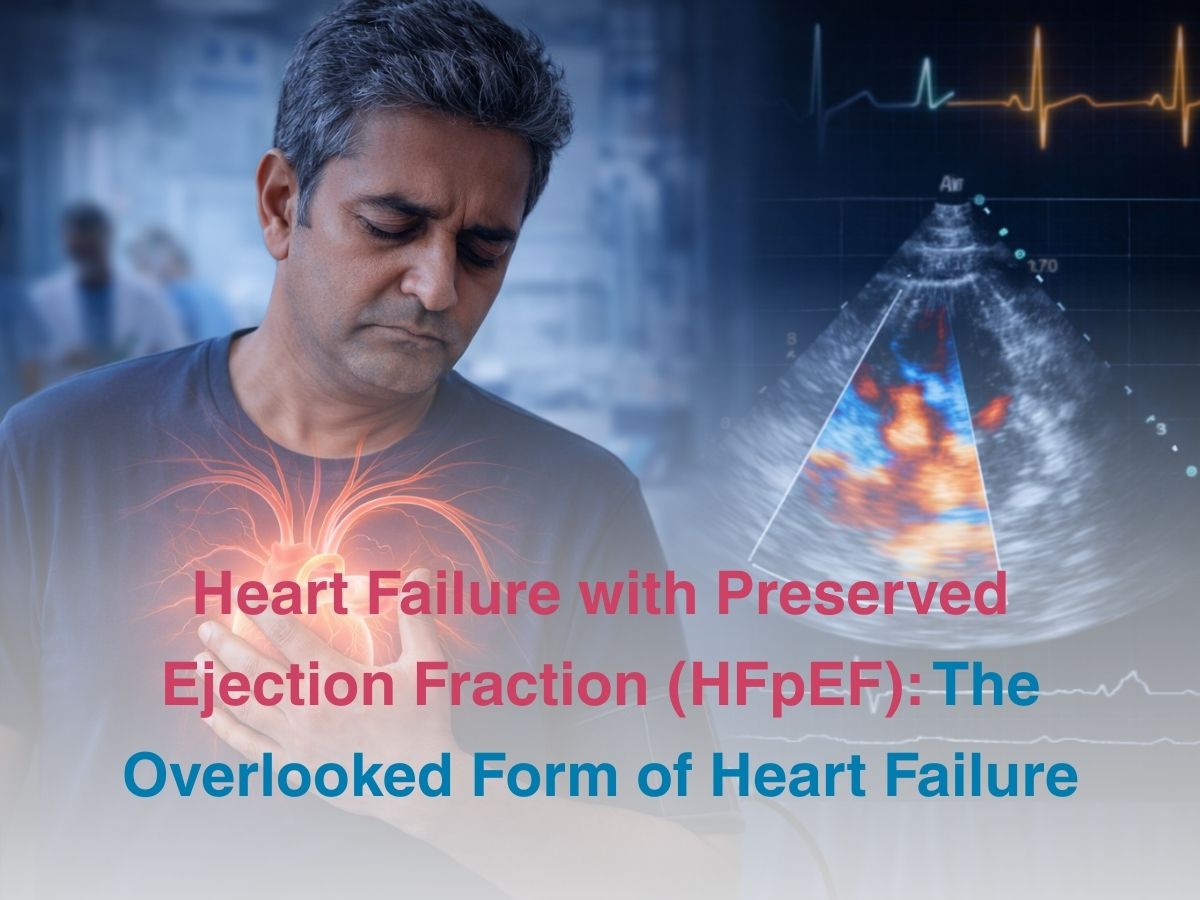
Heart failure is a chronic condition where an individual’s heart continues to work but it is not at the same rate as before. This means blood will be pumped, but it will be a lot slower- fluids will accumulate in higher amounts in the extremities and in the lungs. In the long term, this places too much stress on the heart and the other organs in the body like the kidneys. There are 2 types of heart failure- based on the ejection fraction or amount of blood that fills up in the heart and is pumped to different parts of the body and how well the heart muscles themselves contract. If the volume of blood pumped out of the contracting heart is on the lower end, then it is called heart failure with reduced ejection fraction. For some individuals however, the heart chambers are stiff and don’t work normally, but the amount of blood pumped out remains in the normal range. This is when it is called heart failure with preserved ejection fraction.
HFpEF Symptoms
In medical terms, when the amount of blood pumped out from the left ventricle is lower than average, it is termed low ejection fraction. The symptoms of HFpEF include-
- Chest pain and shortness of breath
- Not being able to exercise as intensely as before
- Fatigue is common
- Swelling due to fluid accumulation in the extremities
- Not being able to breathe normally if you are lying flat on a surface
HFpEF can be caused due to pre-existing heart disease, if a person is obese, hypertensive or diabetic. Individuals with chronic kidney disease are also at high risk of developing HFpEF. While the exact cause for why heart muscles and chambers begin to stiffen is not known, it is understood that this is a gradual process that occurs over many years. But, breathing related problems are often observed and can even cause obstructive sleep apnoea in affected individuals.
HFpEF Diagnosis Criteria
The diagnostic criteria aim to measure how well the heart is functioning by taking a close look at its pumping mechanism. An ECG or echocardiogram is very helpful in visualising ejection fraction and diastolic dysfunction. Stress tests are done for better understanding of how the heart pumps under duress. Heart catheterisation and cardiac MRI may be recommended in certain cases too.
Treatment For Diastolic Dysfunction
Treatment for this condition involves the usage of diuretics to reduce fluid accumulation. Blood pressure needs to be controlled, so medications for that are given if an individual has high blood pressure. Beta blockers and some inhibitory drugs which have been recently approved by the FDA help in managing symptoms long term. Taking good care of yourself by focusing on a heart friendly diet, regular moderate bouts of exercise and reducing sodium intake can help both the heart and kidney function better and reduce strain on both these crucial organs.
Conclusion
Heart failure is normally classified into different stages, depending on the severity of symptoms observed and felt. Stage A involves making changes in lifestyle and some drugs. Stage B uses antagonists and inhibitors for drugs. Surgery is required in some cases with advanced stages. Talk to a cardiac specialist about your symptoms and try to understand how your condition can be managed effectively. Call us for a consultation today!
Frequently Asked Questions
What is HFpEF?
What symptoms suggest HFpEF?
How is HFpEF diagnosed?
Is HFpEF reversible?
Can HFpEF lead to hospitalisation or complications?