


Mitral Valve Regurgitation: When the Heart Valve Leaks and How It’s Managed

Verified By
KIMS-SUNSHINE
Specialist,
04 March, 2026
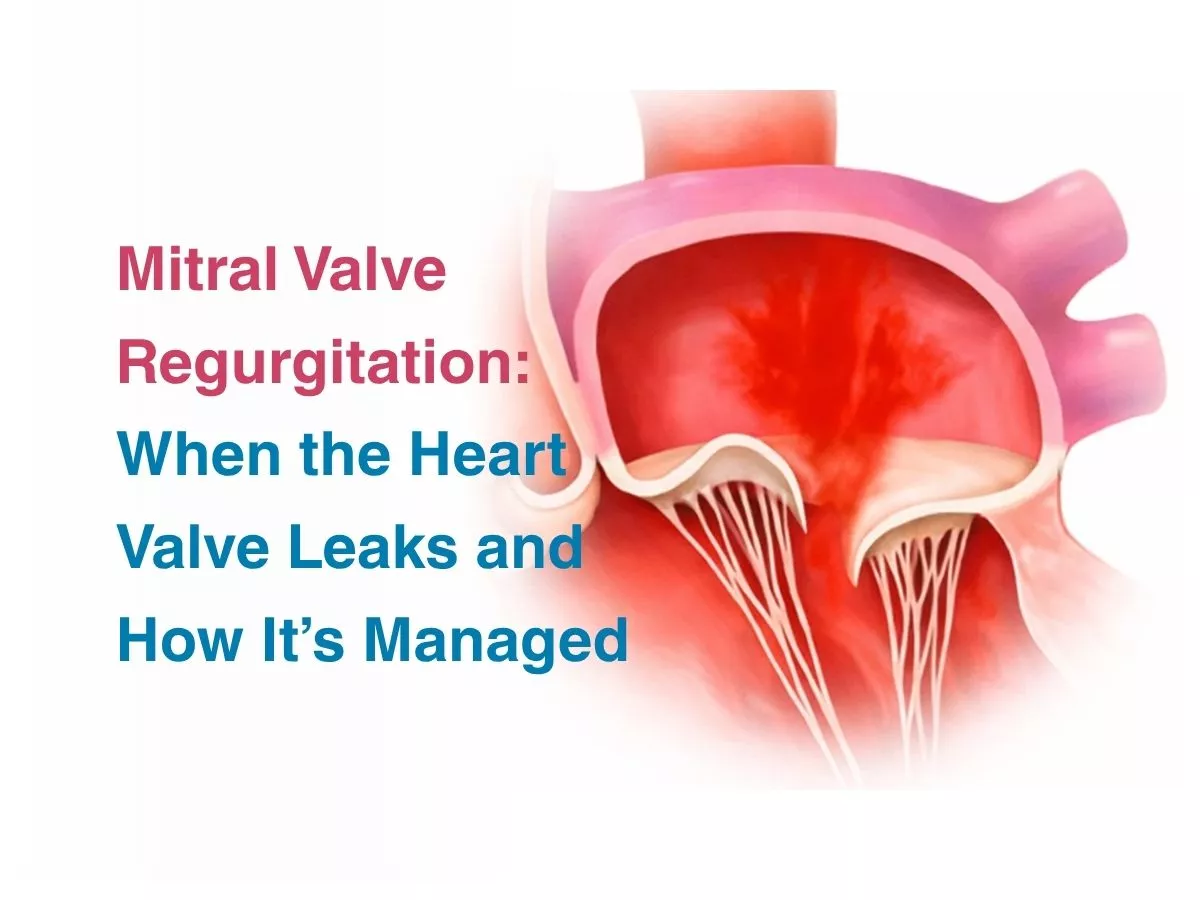
The heart has four chambers through which blood flows sequentially, before exiting and entering systemic circulation. For this process to continue without any problem, blood needs to flow in one particular direction. Valves are present for this express purpose- to prevent backflow or regurgitation of blood. When the mitral valve on the left side of the heart gets affected, it can cause blood to flow backwards and force the heart to work way harder than usual. Opting for treatment from the best cardiology hospital in Hyderabad is hence necessary, to ensure there are no further complications.
Mitral Valve Regurgitation Symptoms
A leaky heart valve can be problematic- the valve itself may have not formed properly, or it may have gotten infected. At times, the valve is fine, but the surrounding tissue is not structurally sound, which means the valve also cannot work normally.
Initially, the affected valve itself won’t cause issues, but as the regurgitation or backflow gets worse, heart function can get affected. It can cause a bunch of symptoms, some of which have been listed below-
- Shortness of breath is very common.
- You may have chest pain and cough too.
- You may notice swelling or edema in the extremities due to fluid retention.
- You may feel overly tired.
- You may deal with heart palpitations too.
Causes of Mitral Valve Regurgitation
Mitral valve regurgitation can be primary- where the valve itself is not working properly due to some structural issue, or secondary- where another underlying cause is the reason for the valve to malfunction, like cardiomyopathy for example.
Some of the most well known causes for primary mitral valve regurgitation include mitral valve prolapse, infections, traumatic injury to the heart, rheumatic heart disease etc.
Causes for secondary mitral valve regurgitation include different types of cardiomyopathy- ischemic, dilated or hypertrophic obstructive, respectively.
Diagnosis of Mitral Valve Regurgitation
A physical exam is first performed- where the doctor will check your vital signs, listen to your heart and check for a heart murmur with a stethoscope and also check for edema in your extremities.
The specialised tests recommended to diagnose this condition include-
- A transthoracic echocardiogram (TTE) can be used to check for structural abnormalities and diagnose this condition.
- A transesophageal echocardiogram (TEE) is when a scope is inserted via the food pipe and into your chest cavity- to get a closer look at the valves of the heart.
- A cardiac CT scan
- An exercise stress test- where they ask you to run or jog on a treadmill or use a stationary cycle to check for changes in heart rate and any other symptoms.
- A cardiac MRI in some cases.
- A coronary angiogram- where a catheter is threaded through to the heart to check blood flow.
Treatment of Mitral Valve Regurgitation
Treatment for valve leakage depends on the type of mitral valve regurgitation you have- primary or secondary and approaches will also vary if you have acute vs. chronic mitral regurgitation. Surgery is normally recommended and the two options are mitral valve repair and mitral valve replacement respectively.
Medications are also given to prevent heart failure or manage atrial fibrillation, along with the use of LVAD insertion or palliative care too.
A mitral valve repair is when the leaflets are surgically repaired. It can be done with open heart surgery, minimally invasive heart surgery or mitral transcatheter edge-to-edge repair (TEER) where a clip inserted helps the valve leaflets close better.
Mitral valve replacement is done if the valve is severely infected or when repair is not possible. A bioprosthetic or mechanical valve is surgically inserted, after removal of the older valve tissue. This approach uses open heart surgery. The minimally invasive option is transcatheter mitral valve replacement (TMVR).
Conclusion
Mitral valve regurgitation is a common heart condition that affects millions of individuals in the country. When not diagnosed and treated in a timely fashion, it can lead to complications like stroke, pulmonary hypertension or a heart attack in severe cases. If you suffer from mitral valve regurgitation or have symptoms like severe breathlessness and chest pain, contact us at KIMS Sunshine today- as we are the best cardiology hospital in Hyderabad.
Frequently Asked Questions
What is mitral valve regurgitation?
What causes a leaky mitral valve?
Can mild mitral regurgitation be monitored?
What is the difference between valve repair and replacement?
Can mitral regurgitation cause heart failure?