
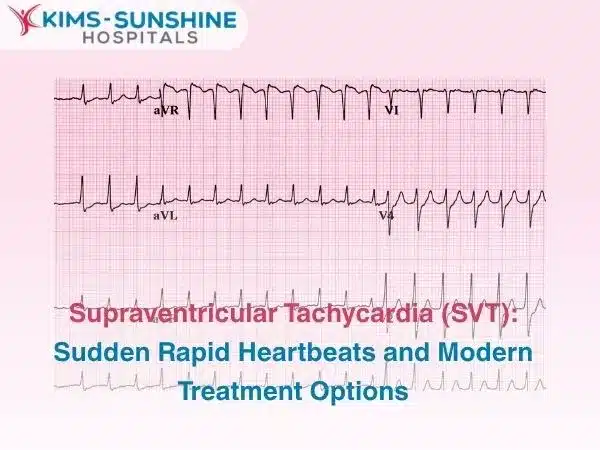
Supraventricular Tachycardia (SVT): Sudden Rapid Heartbeats and Modern Treatment Options

Verified By
KIMS-SUNSHINE
Specialist,
03 March, 2026
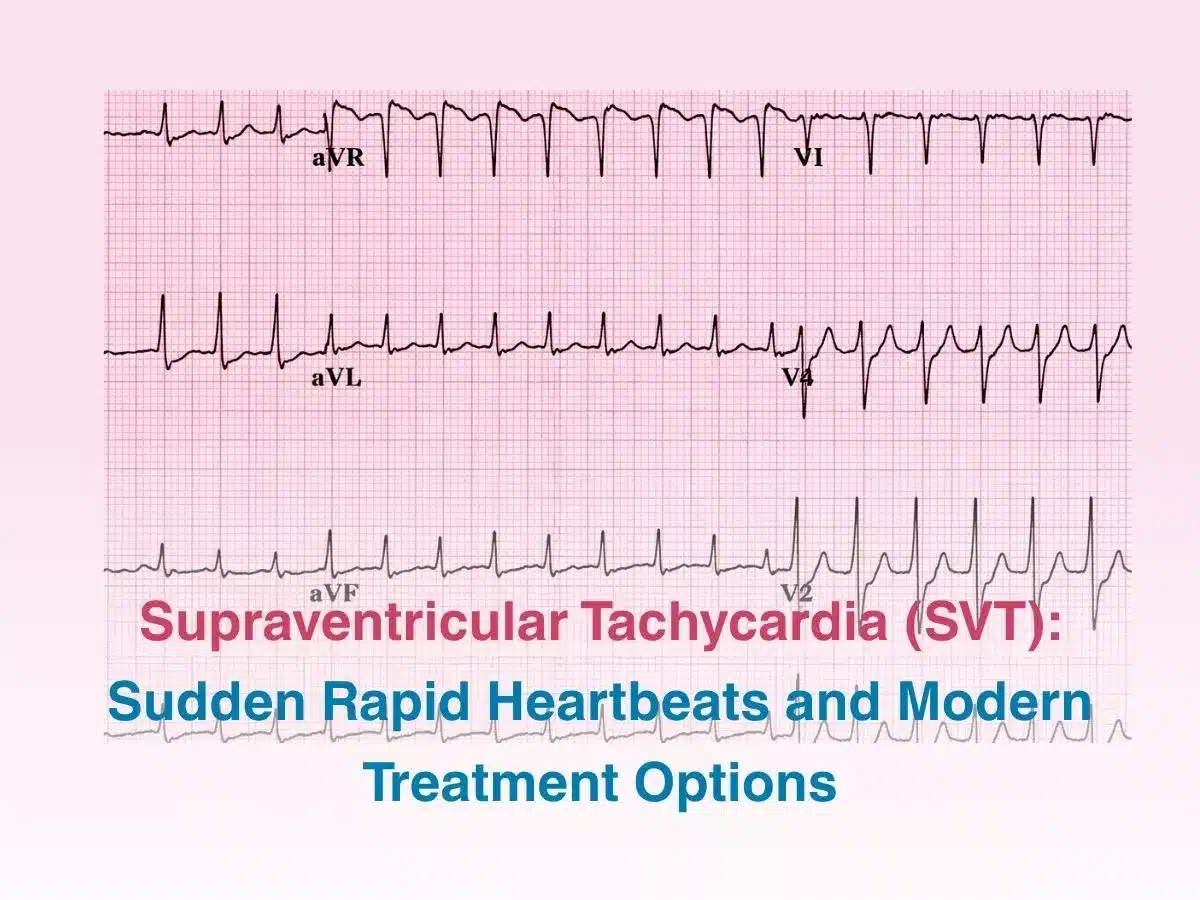
Supraventricular tachycardia, also called SVT is a heart condition that is characterised by rapid changes in heart rate. The change in rhythm begins from the upper chambers of the heart. When this condition continues for a long time and remains undiagnosed, it may lead to complications – as the heart beats too fast, but its chambers don’t fill up with blood that fast. This can reduce the amount of blood being pumped, though more effort is put in by the heart. There are different types of SVTs and they require specialised care by specialists at the best cardiology hospital in Hyderabad.
SVT Causes and Symptoms
SVT is normally caused by stress, the use of caffeine, alcohol, tobacco, physical activity, not sleeping well or dehydration respectively.
Some of the symptoms of this condition include
- You may have chest pain.
- Palpitations at rest are a common feature of this condition.
- You may feel tired and light-headed.
- You may feel breathless
- Dizziness due to fast heart rate is also observed.
Untreated SVT can lead to complications like cardiac arrest, heart failure or cause you to faint often. This can be problematic in the long term.
Diagnosis of SVT
The diagnosis of this condition is mainly done using an ECG or electrocardiogram. If your heart rate needs to be monitored constantly, then a heart monitor which records it- like a Holter monitor for example is used for a few days or so. If heart rate needs to be checked for longer, other non-implantable or implantable battery powered devices are available.
Treatment for SVT
Home based treatments include lying down flat on a surface, coughing or putting an ice cold towel on the face. Vagal maneuvers can be performed- where you apply pressure on the neck- also called carotid sinus massage.
Medications are pretty effective in this condition- so you may prescribed adenosine, beta-blockers for SVT, calcium channel blockers, digitalis, atropine or potassium channel blockers respectively.
If medications don’t seem to help, then surgery may be recommended-
- Catheter ablation– The part of the heart sending out abnormal electrical pulses is accurately identified and then ablated – using a minimally invasive catheter that either freezes or heats the cells in the region. Both techniques result in the formation of a scar in the area, and in over 95% of cases, people become normal after getting this done.
- An implantable cardioverter defibrillator or ICD can be implanted – this device will shock the heart into rhythm when you have an arrhythmic episode.
Conclusion
The good news is the prognosis for SVT is mostly good after treatment. Many individuals can manage their symptoms with medications alone. But, when they don’t work or you have too many side effects to deal with, you may opt for surgery. At home treatments and vagal maneuvers can help for the most part. If you notice breathlessness, chest pain and associated symptoms, please don’t hesitate to get in touch with specialists at KIMS Sunshine Hospital- especially if you have already been searching for the ‘best cardiac hospital near me’ online. Call us today!
Frequently Asked Questions
What is supraventricular tachycardia?
What are the symptoms of SVT?
How is SVT diagnosed?
What are vagal maneuvers?
Can stress trigger SVT episodes?