
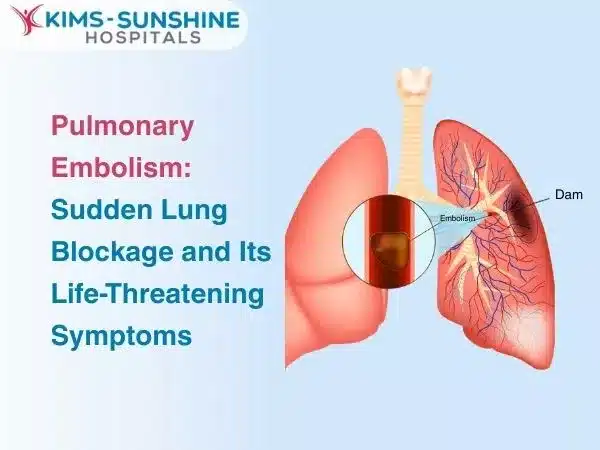
Pulmonary Embolism: Sudden Lung Blockage and Its Life-Threatening Symptoms

Verified By
KIMS-SUNSHINE
Specialist,
18 February, 2026
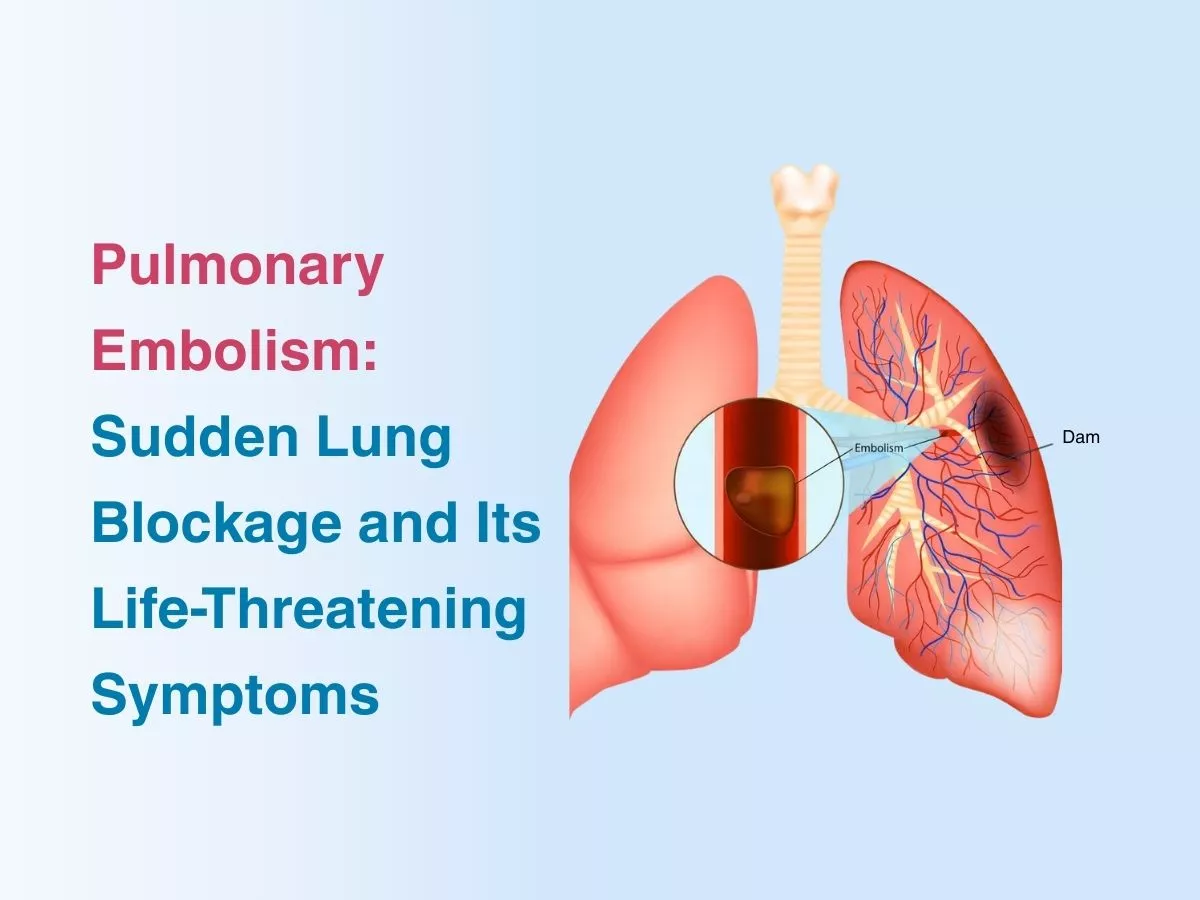
An embolism is caused by a blood clot called an embolus or emboli (plural). The clot can block any blood vessel in the body and when it happens in the lungs, it can lead to a pulmonary embolism, which is a medical emergency that requires medical help immediately. A pulmonary embolism can strain heart function and damage the lungs. So, if you suffer from deep vein thrombosis (DVT) or related conditions, you should be careful about lung health too. Call our specialists at KIMS Sunshine hospital, if you have been searching for the best ‘Pulmonology Hospital Near Me’ online.
PE Risk Factors And Causes
Some of the most well known causes include-
Pooling of blood in the extremities due to inactivity, extended periods of bed rest, long flights or other similar instances where you are stationary for a long time.
If you suffer from heart disease.
If there are changes in how your body tries to clot blood- low or high amounts of clotting factors can be problematic.
You are at high risk of developing a pulmonary embolism if you have deep vein thrombosis, lead a sedentary life, use birth control, have clotting disorders or have chronic conditions like hypertension or diabetes, or are pregnant, among others.
Pulmonary Embolism Symptoms
A blood clot in lung can cause the following symptoms-
- Chest pain on breathing
- Shortness of breath even when you are at rest
- Wheezing
- Sharp chest pain that has a radiating quality, similar to a heart attack.
- Persistent cough
- Fast heart rate
- You may sweat too much
- You may feel anxious or faint.
Diagnosis of Pulmonary Embolism
These are the tests that are normally done-
- A CT pulmonary angiography scan to check how blood flows in the lungs and if there are clots present.
- Ultrasound of the legs if you have DVT – to check for clots in distant blood vessels.
- A pulse oximeter to check oxygen saturation levels in blood.
- Blood tests to check for D-Dimers- and diagnose clotting disorders, which may be causing the PE.
Treatment for Pulmonary Embolism
Treatment approaches depend on why you have the pulmonary embolism in the first place.
- Anticoagulant treatment can break down the clot and help blood flow better. It can also reduce the clotting ability of blood, to prevent clots from forming in the future. It can be for 3 months or longer.
- Compression stockings can be used to help improve blood flow to the legs.
- Removal of the clot from the pulmonary artery can be surgically done if necessary.
- Clot busters or thrombolytic drugs are given when you have low blood pressure or are unstable because of the PE itself.
Conclusion
If you don’t diagnose and treat a PE in time, it can affect your heart’s ability to pump blood to all parts of the body, as it has to strain more with a clot blocking blood flow from the lungs. You will need treatment for sure if you already suffer from a chronic lung or heart condition. If you get treated on time, your symptoms will go away and your heart will begin to work well like before. If you have any concerns about lung function, show symptoms or have DVT, then you should get in touch with pulmonologists at KIMS Sunshine hospital, as we are the best multispeciality hospital in Hyderabad. So, call us today!
Frequently Asked Questions
What is a pulmonary embolism?
How is DVT related to pulmonary embolism?
How is PE diagnosed?
What treatment is given for pulmonary embolism?
How long is anticoagulant therapy needed?