


Pituitary Tumors: Symptoms, Hormonal Effects, and Neurosurgical Treatment Options

Verified By
KIMS-SUNSHINE
Specialist,
20 February, 2026
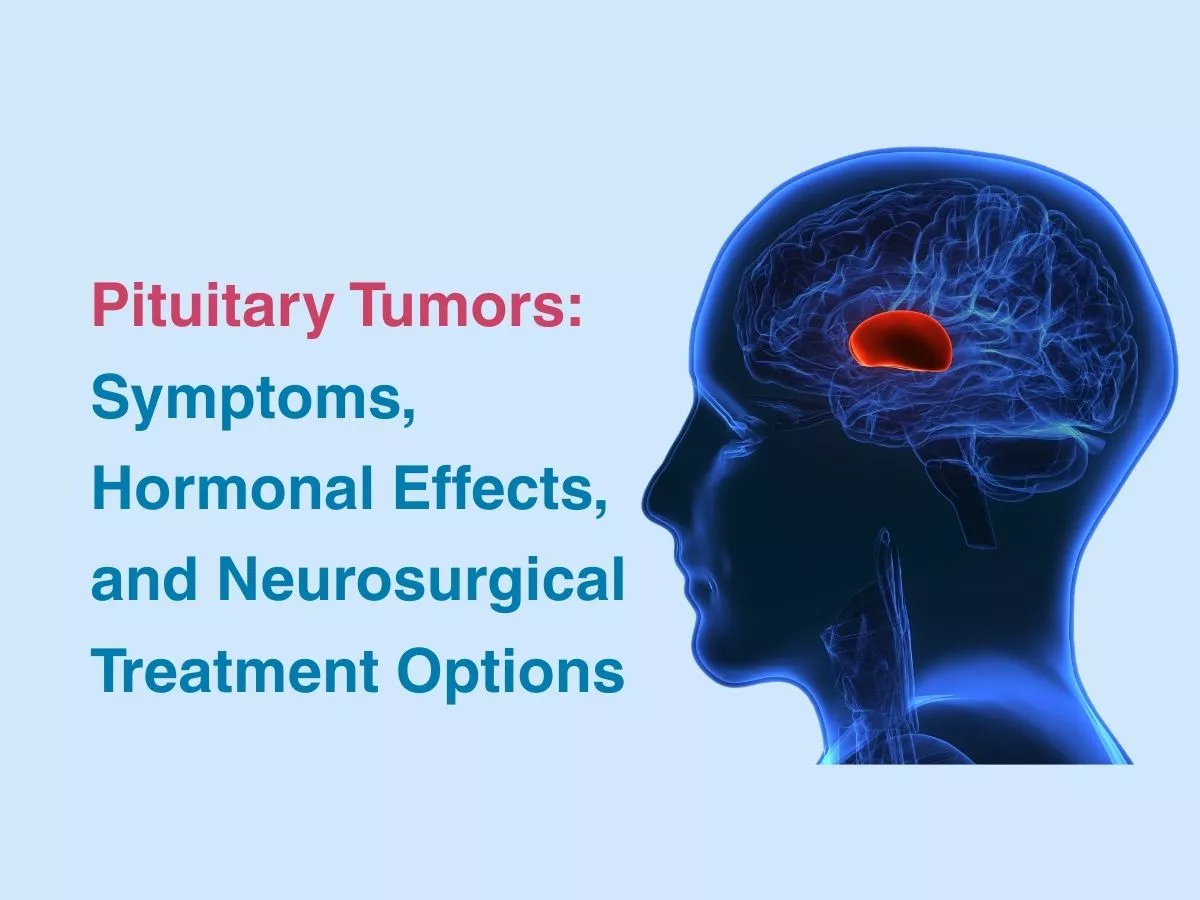
Pituitary tumors, also called adenomas are benign and grow on the pituitary gland. The pituitary gland is about the size of a pea and is divided into 2 lobes- front and back, which release different hormones. If there is a tumor, it can cause more of one or few hormones to be produced in larger amounts. Symptoms are based on the extra hormones secreted. Pituitary adenomas need to be diagnosed and treated by specialists like endocrinologists, neurosurgeons or neurologists- all of whom can be found at KIMS Sunshine under one roof- as we are the best multispecialty hospital in Hyderabad.
Pituitary Adenoma Symptoms
The pituitary gland secretes several hormones like FSH, vasopressin, GH, LH, oxytocin, prolactin, TSH, ACTH etc. among others. When there is a functional pituitary adenoma, the amount of the hormones being made can be different. But, in non-functional adenomas, even if no hormones are being made, the larger than usual gland can still press on neighbouring structures and cause symptoms. Let us look at some symptoms of functional pituitary adenomas
- When low LH and FSH mean there is less testosterone or oestrogen being made. This can hence affect both men and women in different ways.
- Low TSH can cause hypothyroidism with fatigue, constipation, dryness of skin and brittle hair, mood changes and a sensitivity to cold or even fluid retention. If you have a thyrotroph adenoma, then too much TSH can cause hyperthyroidism and associated affects.
- Acromegaly and growth hormone excess can cause you to have large hands, feet, issues with the heart and metabolism, joint pain, too much sweating, etc. among other symptoms associated with ‘gigantism’.
- If too much prolactin is being secreted, then some prolactinoma signs include infertility in men and women and milk like discharge from the nipples, even when you are not pregnant.
- A deficiency of ACTH can cause less cortisol to be made- so then you have low blood pressure, abdominal pain, poor appetite or severe nausea and vomiting. The opposite happens when you have too much ACTH being made due to a corticotroph adenoma- and excess cortisol can cause Cushing’s syndrome.
Other general symptoms include vision loss and headaches.
Diagnosis And Treatment Of Pituitary Tumors
Blood tests are normally done to check for changes in hormone levels. MRI or CT scans are done to confirm the presence of an adenoma. If vision problems are present, a detailed eye and vision exam will be carried out.
Treatment approaches include the use of medications, radiation therapy to reduce the size of the tumour or surgery. A combination may also be more feasible in some cases.
- Transsphenoidal surgery is the most common surgical approach where they insert instruments through the nose and the sphenoid sinus. This allows them to access the pituitary easily, as the gland is right behind the nasal passages. This method is minimally invasive and is done if the adenoma is small in size.
- If the adenoma is too large to be removed this way, a transcranial surgery is done where your skull is opened, but this is very rarely done.
- Medications include bromocriptine or cabergoline, which can shrink the tumor. This is normally done for prolactinoma cases, but if drugs don’t work, then surgery is necessary.
- Radiation therapy is the use of X-rays to prevent the adenoma from growing, using a stereotactic approach, for more accuracy.
Conclusion
There are some side effects of going in for surgery or radiation therapy, but these outweigh the issues caused by the adenoma itself. In a few people, when the adenoma is removed, hormone deficiency becomes a permanent fixture, so hormone replacement therapy is essential for life. Adenomas also may come back, so you will need more treatment. Complications can develop when this condition is not treated. So, when you have the abovementioned symptoms or imaging before has shown the presence of an adenoma in the pituitary gland, do not ignore symptoms and instead opt for timely treatment- with medication, radiation or neurosurgical pituitary management respectively. These facilities and more are available at KIMS Sunshine Hospital, so call us today!
Frequently Asked Questions
What are pituitary tumors?
How do pituitary tumors affect hormones?
Can pituitary tumors affect vision?
What is transsphenoidal surgery?
Can pituitary tumors recur after treatment?