
Esophageal Stricture: When the Food Pipe Narrows and Swallowing Becomes Difficult

Verified By
KIMS-SUNSHINE
Specialist,
09 February, 2026
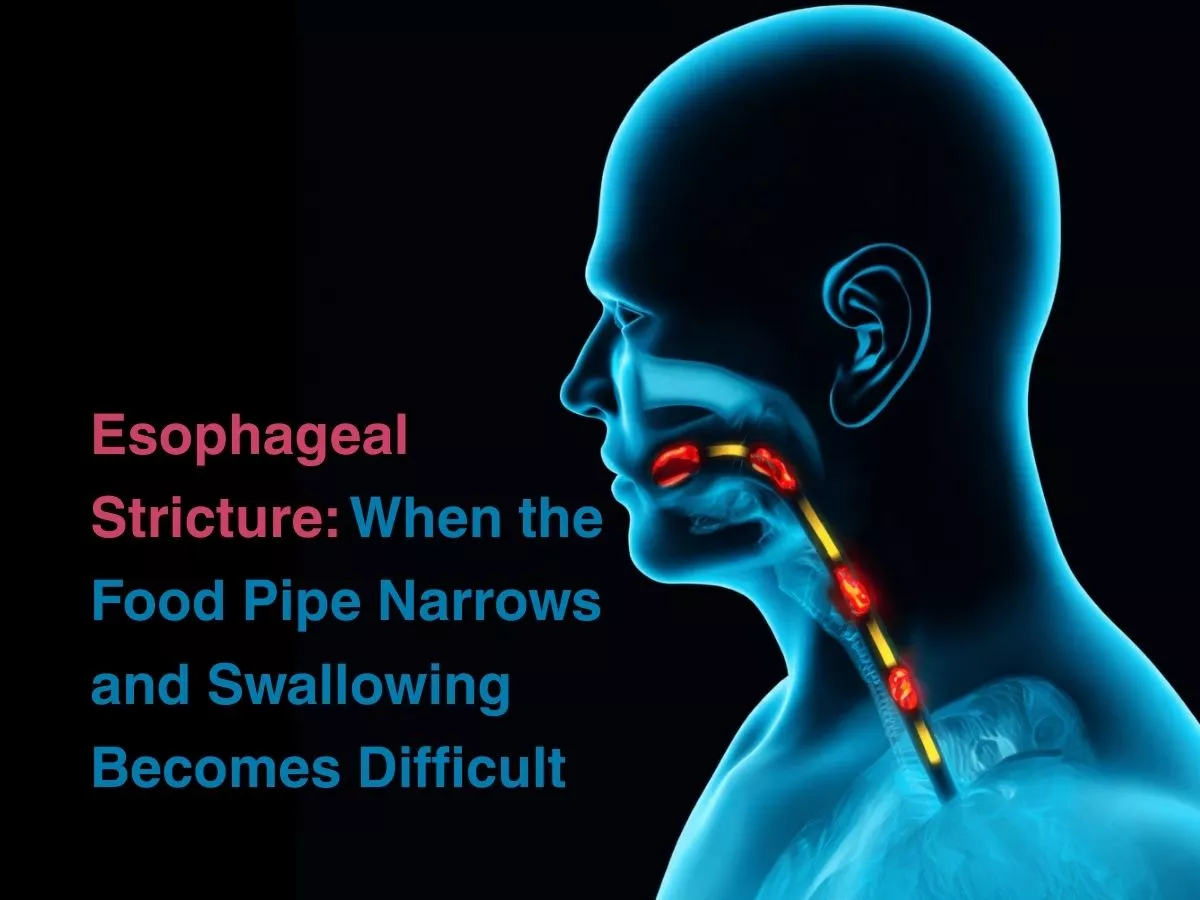
The esophagus, also called the food pipe, serves as a passage into the stomach for all solid and liquid foods and beverages that we consume on a daily basis. When this pipe becomes narrow due to some reason, swallowing becomes hard and difficult. Such strictures have recently been found to affect many individuals in the Indian subcontinent- and this normally occurs due to some other underlying condition which has not been addressed in a timely fashion. When swallowing becomes difficult and affects your daily life, you should consult a gastroenterologist at KIMS Sunshine- the best multispecialty hospital in Hyderabad.
Esophageal Stricture Causes
The stricture can start from the inside- where the esophageal mucosal cells get inflamed and develop scar tissue over a long time, causing the passage to narrow further. Neighbouring organs or growths can press on the tube from outside and also cause it to become narrow. In general though, the stricture takes time to develop and does not happen instantly. Some well known causes include-
- Chronic inflammation or esophagitis due to exposure to corrosive drugs, medications or suffering from frequent viral or fungal infections.
- If you have autoimmune disease, then there is a risk of chronic inflammation triggering stricture formation.
- If you have any injury- like from acid, exposure to heat, cancer treatments that have radiation as a part of the regimen.
- Chronic inflammation can also cause abnormal changes to the cells in the pipe lining and predispose them to become cancerous later on, though this is extremely rare.
- If you suffer from GERD.
Narrow Food Pipe Symptoms
Now that you know some of the causes, let us look at the signs or symptoms you may notice-
- You have issues with swallowing – you may compensate with smaller mouthfuls or by chewing food better but it can get worse if not treated.
- The feeling of food getting stuck in throat intensifies over time.
- You may have chest pain which is not related to cardiac function at all.
- You may cough or choke when you try to swallow something.
- Regurgitation is a common issue.
- Since you eat less, you begin to lose weight too.
Diagnosis for Esophageal Strictures
Detailed imaging can help a gastroenterologist identify strictures- if any are present. Some tests include-
- A barium swallow assay- where you take a solution which contains barium, after which X-rays are taken periodically- to check how it is moving along the gut.
- An upper endoscopy for esophageal stricture – when you are sedated and then a scope is sent down the throat and into the food pipe- this allows clear imaging of the esophagus. A biopsy can also be done if necessary.
Treatment For Esophageal Narrowing
The main goal of treating this condition is to ensure you won’t have any issues with swallowing. This means the esophageal dilation procedure is recommended- if the stricture you have is caused by esophagitis, then it is simple and easy to deal with. But, complex strictures due to repeated scar tissue formation or other underlying causes will require other treatments.
- Dilation is a well known outpatient procedure where a dilator is used every few weeks or so- and its diameter is increased slowly, until your esophagus reaches normal dilation levels.
- For complex strictures caused by cancer for example, dealing with the cancer is more important.
- Steroid injections can be given – to modulate inflammation and reduce scar tissue formation and to prevent stricture formation after dilation has been completed.
- Cuts can be made on the stricture to loosen scar tissue- and this is done by endoscopic stricturoplasty.
- A stent can be placed to widen the esophagus and help improve passage of food and liquids, even after dilation therapy.
- In very severe cases, parts of the esophagus may be surgically removed – if you have malignant strictures or they don’t get better with treatment.
Conclusion
Having strictures can affect your quality of life- as you will need to rethink how you eat and redesign your diet. If swallowing is becoming too problematic and you suffer from chronic GERD or related conditions, you should not delay treatment. Walk into our multispeciality hospital as we have the best surgical gastroenterologist in Hyderabad. Call us today for a consultation!
Frequently Asked Questions
What is an esophageal stricture?
Can acid reflux lead to this condition?
What is esophageal dilation treatment?
Can this condition recur after treatment?
When should difficulty swallowing be evaluated by a doctor?