
Small Bowel Obstruction: Early Warning Signs and When It Becomes an Emergency

Verified By
KIMS-SUNSHINE
Specialist,
12 February, 2026
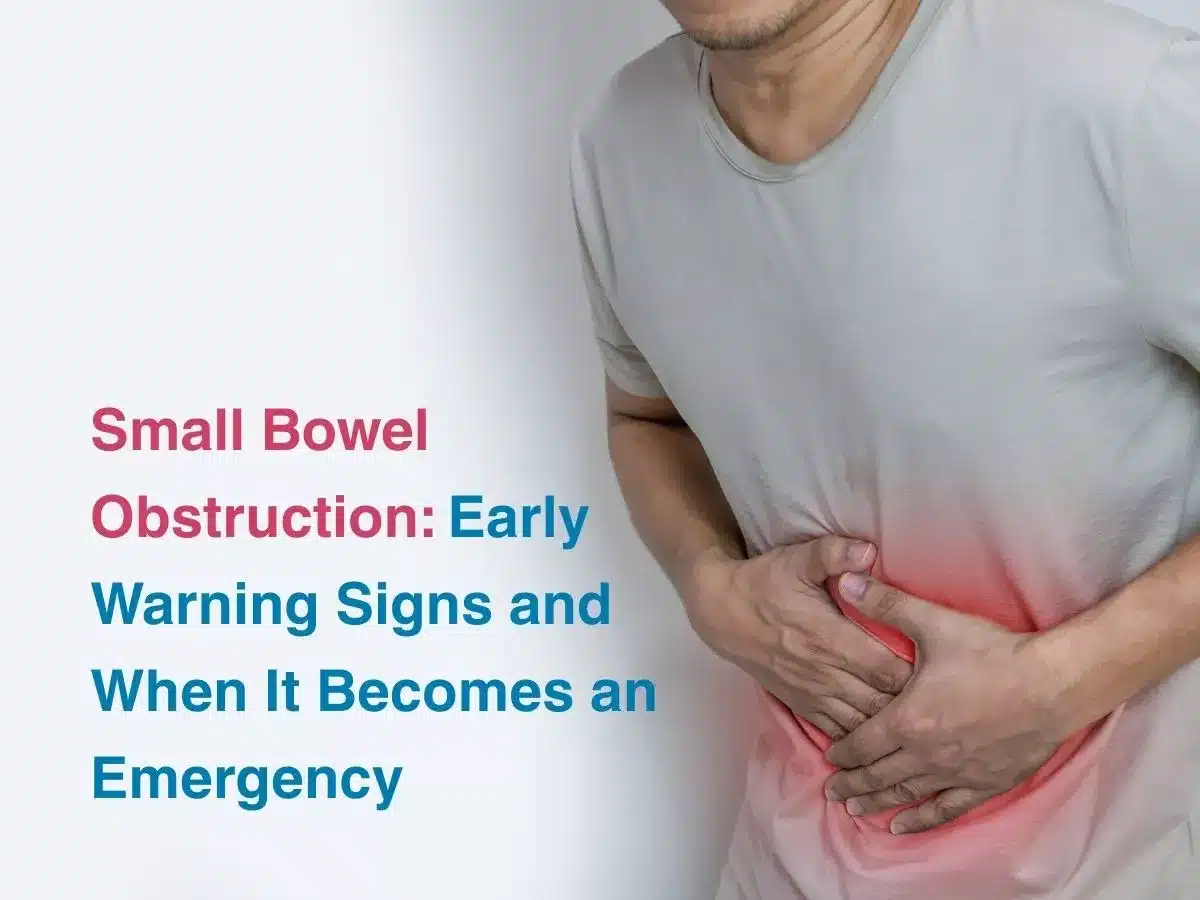
The small intestine and large intestine are collectively termed the bowels in general and when there is a blockage or obstruction in the small intestine, it is called a small bowel obstruction, which is a medical emergency. The intestine can be completely or partially blocked and at times, an individual can have the same symptoms as having an obstruction, even when there are no structural anomalies that have been found during imaging. If you notice severe abdominal pain with distension or other symptoms, you should contact a specialist at the best hospital in Hyderabad right away, without any delay!
Causes of Small Bowel Obstruction
These are some of the most common reasons for bowel obstructions to occur
- If you have had abdominal surgery, then extensive scar tissue can form (called post-operative adhesions).
- A hernia causing bowel obstruction is a common cause.
- If you have a large sized tumour which is benign or metastatic, it can obstruct the intestine and stop the free movement of food and wastes through the intestines.
- Inflammatory conditions like diverticulitis or IBD can cause chronic inflammation and subsequent scar tissue formation.
- When there is a congenital defect and the intestines get twisted or one part collapses into another, it can lead to an obstruction.
- Radiation therapy can cause inflammation and scarring even in healthy tissues.
Small Bowel Obstruction Symptoms
Some intestinal blockage signs include
- Severe abdominal pain and cramping.
- Vomiting – green or yellow coloured vomit.
- Inability to pass stool or gas.
- Feeling really ill and tired.
- High heart rate and dehydration.
- Severe (or not) constipation depending on extent of obstruction.
Children show the same symptoms, but at times may have a distended abdomen or swollen belly that is firm to the touch. There may also be blood in the stool.
If you don’t seek help immediately, you are at risk of developing a perforation or hole in your intestine or even tissue death in parts of the intestine.
Diagnosing a Small Bowel Obstruction
A detailed physical examination, imaging and blood tests can help diagnose this condition. Imaging like CT scan, abdominal X-rays and a barium enema X-ray can help image the intestine more clearly.
Treatment for Small Bowel Obstruction
Treatment approaches depend on the severity of symptoms you have.
- If you have dehydration, you will be given IV fluids.
- Medications can be given to help you stop vomiting or painkillers for pain.
- Rest for the bowels by not eating or drinking anything for a few hours.
- Complete obstruction can require emergency surgery. A stent may be placed inside the intestine to keep it open and allow passage of food or wastes. Other possibilities include surgical removal of scar tissue or adhesions, removing dead bowel tissue and reconnecting healthy parts to each other (anastomosis) respectively.
Conclusion
A bowel obstruction, if partial, can be managed without surgery. Complete blockage will need more pronounced surgical measures. You will notice better movement of gas and stool after treatment and this serves as a sign that your blockage is resolving. Complications like perforations need immediate surgery as sepsis can occur. Call a doctor when you notice severe cramping or abdominal pain with vomiting and other symptoms. Don’t ignore these symptoms and instead call the best multispeciality hospital in Hyderabad for help immediately.
Frequently Asked Questions
What is a small bowel obstruction?
What causes small bowel obstruction?
When does bowel obstruction become an emergency?
Can hernias lead to intestinal blockage?
When should you go to the ER for severe abdominal pain?