


Brain Aneurysm: When a Blood Vessel Weakens and Why Early Surgery Saves Lives

Verified By
KIMS-SUNSHINE
Specialist,
14 February, 2026
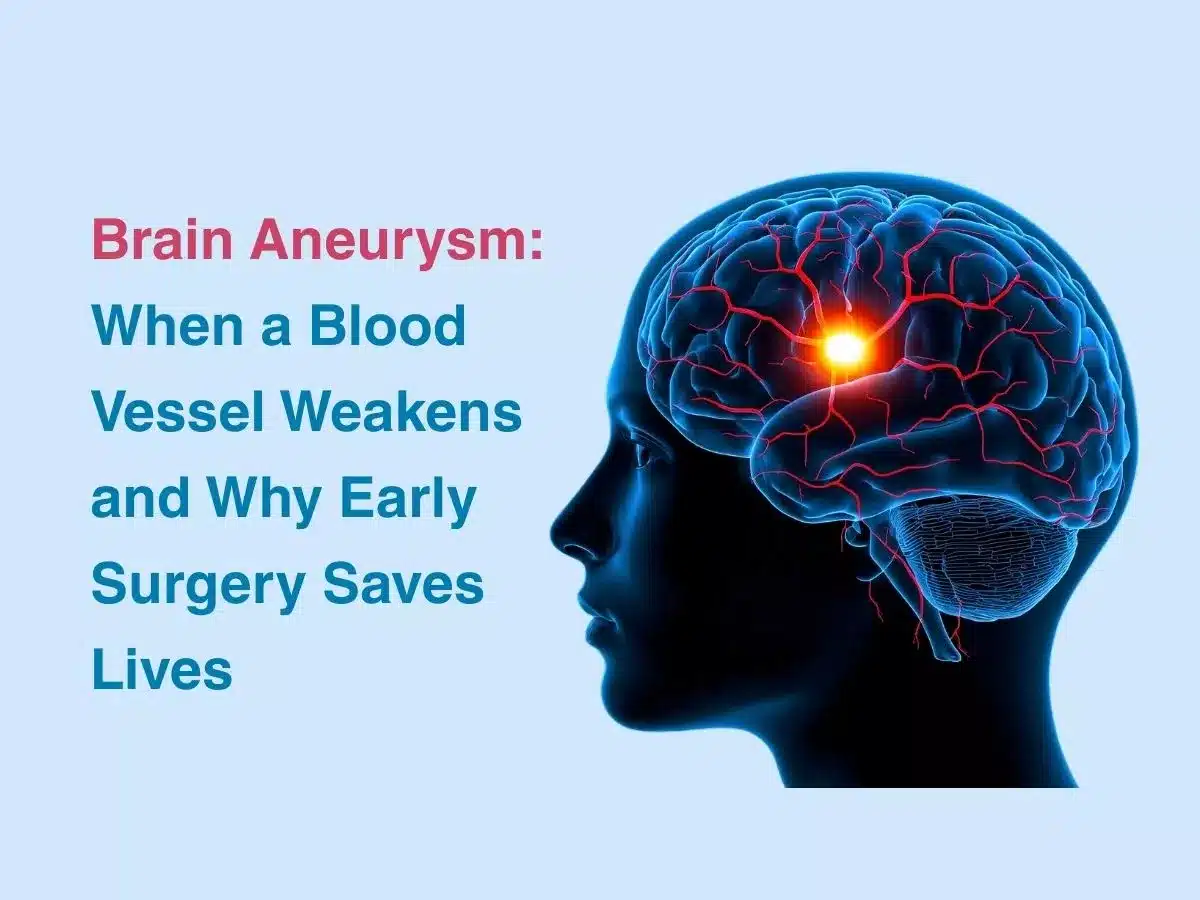
A brain aneurysm is a condition where the walls of blood vessels in the brain are weak and begin to bulge out, as an air bubble has formed. It can pop at any time, causing a massive haemorrhage, which is why aneurysms are also called ticking time bombs in the head. If you have a thunderclap or the worst headache of your life suddenly, it is probably because the aneurysm on the blood vessel has ruptured and you are now bleeding into your brain. Don’t wait long, instead get help from a specialist, as we are the best neurology hospital in Hyderabad.
Brain Aneurysm Symptoms
An aneurysm is one of the most well known sudden severe headache cause which requires immediate help. Other complications can follow if aneurysm rupture emergency care is not given. Symptoms of a ruptured brain aneurysm include-
- A thunderclap or very severe headache moments after the rupture has occurred, followed by a subarachnoid haemorrhage.
- The other possibility is a stroke, which can cause permanent brain damage, if help is not given within the first hour of symptom onset.
- Seizures are common and can worsen the degree of brain damage.
- The person can go into a coma which leaves them unconscious for days or weeks.
Subarachnoid hemorrhage signs include severe headaches, a stiff neck, dizziness, sensitivity to various stimuli, numbness, seizures or vision changes, drooping eyelid, dilated pupil, loss of consciousness etc. among others.
An aneurysm can cause symptoms even without rupturing- like headaches, dilated pupil, neuropathy in the face, pain behind or above the eye and seizures, as it may press on nearby structures.
Diagnosis and Treatment for Brain Aneurysm
Imaging is the best way to diagnose this condition.
- A CT angiography brain scan can check for the way blood flows in the brain, while a normal CT can ascertain the size and location of an aneurysm, if present.
- An MRI scan can provide highly detailed images of the brain as a while, while an MRA can help doctors visualise blood vessels in great detail- so that the shape, size and location of the aneurysm can be noted.
- A cerebral angiography is done using a catheter wired into blood vessels in the brain to better identify weak spots like aneurysms and to understand why bleeding occurred, if it has ruptured.
- A CSF analysis after a lumbar puncture can also check for bleeding around the brain.
Treatment of Brain Aneurysm
Treatment before rupture involves the stoppage of blood flow into the weakened vessel wall, while emergency medical care becomes necessary, if rupture has occurred.
- Microvascular surgical clipping of an aneurysm can be done before or after rupture. Here, the aneurysm is accessed through the skull and a metal clip is used to clip it off, preventing blood flow into the area. The aneurysm will remain the same size and won’t enlarge or break open afterwards.
- Endovascular coiling treatment involves an interventional neuroradiologist who will insert a catheter into the affected blood vessel in the brain and place a coil in the aneurysm. Blood stops flowing into the aneurysm and will go in a different direction, causing a clot to form.
- A stent can be placed to direct blood away from the aneurysm, using a catheter that is wired in from the groin or wrist.
Medications involve use of antiseizure drugs, calcium channel blockers or a shunt to prevent seizures, stroke or hydrocephalus from a ruptured aneurysm.
Conclusion
A brain aneurysm is mostly benign in most people, but if it ruptures, it can cause life changing complications and issues. Even after treatment, people need occupational, speech and physical therapy, as some form of disability may be there. For some, this may be permanent. Unruptured aneurysm can also be treated by the use of blood pressure medications. Call our specialists today at KIMS Sunshine hospital, if you have been looking for ‘best neurology hospital near me’ online.
Frequently Asked Questions
What is a brain aneurysm?
What does a ruptured aneurysm feel like?
How is a brain aneurysm diagnosed?
What is endovascular coiling?
Can aneurysms be detected before rupture?