

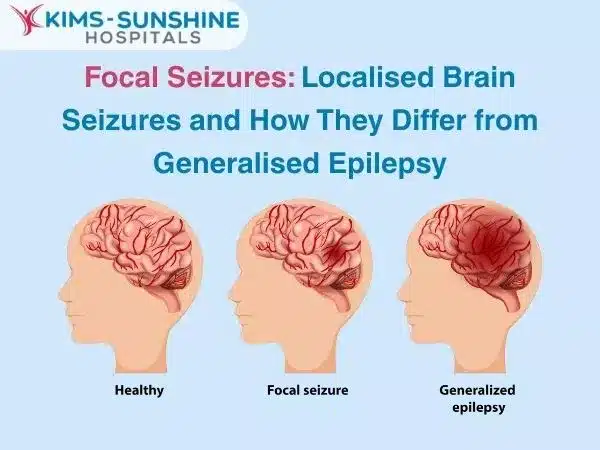
Focal Seizures: Localised Brain Seizures and How They Differ from Generalised Epilepsy

Verified By
KIMS-SUNSHINE
Specialist,
21 February, 2026
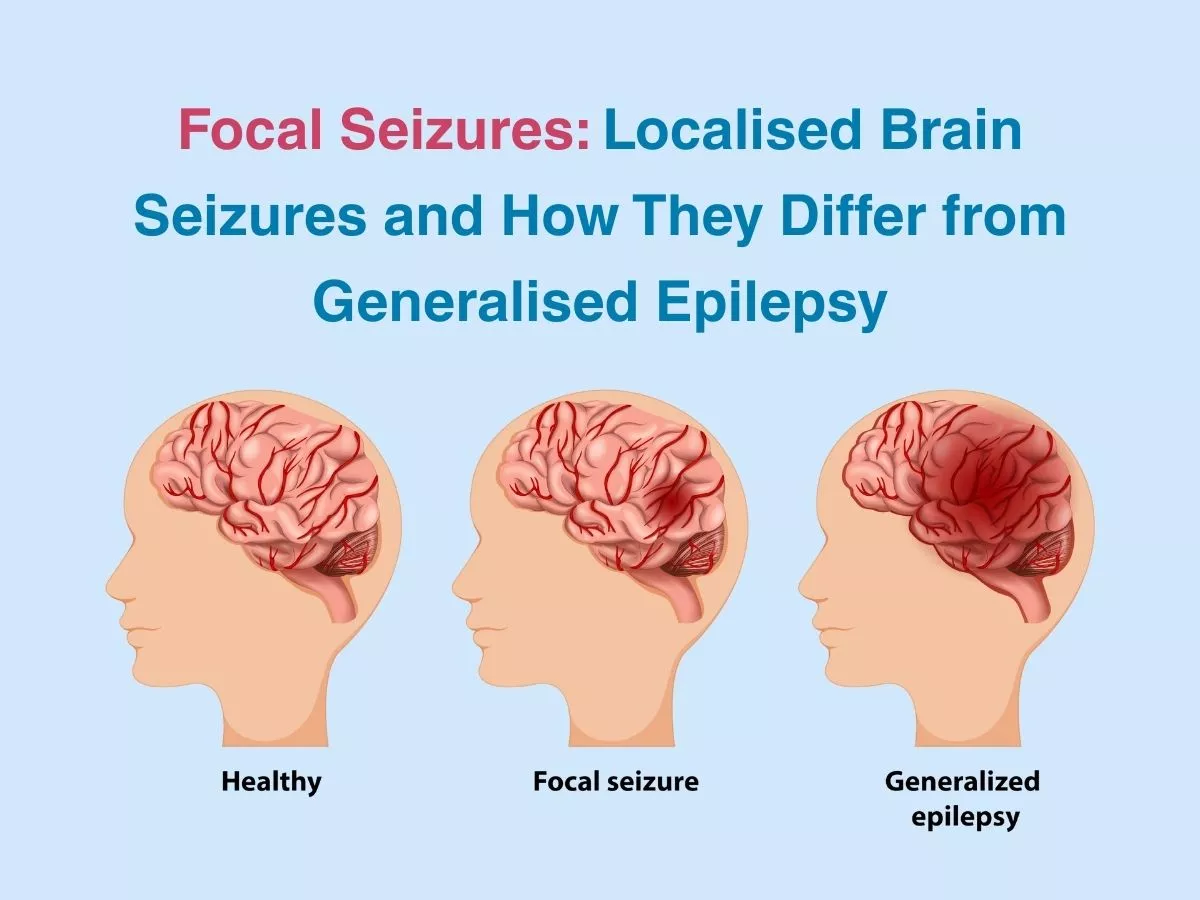
Focal seizures or partial seizures originate from a single point in the brain and hence its effects are highly localised. The main difference between focal and generalized seizures is the fact that the former begins in one spot while the latter can affect both hemispheres of the brain. Focal seizures cause abnormal electrical activity to occur in certain regions of the brain and can be of two types- those which affect awareness or consciousness versus those that don’t. So, read on to see how our neurologists treat focal seizures at the best neurology hospital in Hyderabad.
Focal Seizure Causes
Some of the most common causes include viral infections, autoimmune diseases, having a family history of members having seizures and environmental or lifestyle related influences.
Focal Seizure Symptoms
These are some localised seizure signs that you should know of
- If it is a focal aware seizure where a person is conscious, then they may have an aura before seizure begins. This can manifest as distortions in how sounds, lights and sensations are processed. It can feel like they are having a sense of deja vu or a hallucination, among others.
- Heart rate changes occur
- People may sweat a lot
- The stomach rising or other GI symptoms may be present.
- A person may twitch or jerk involuntarily.
- Tingling, visual disturbances or numbness may be present.
Call for medical help if a person has a seizure that lasts longer than 5 minutes long, has repeated seizures where they are not conscious in between or if they have a severe headache after a seizure. You should also get help if someone has injured themselves while having a seizure.
Diagnosis of Focal Seizures
These are the diagnostic tests normally conducted, to diagnose focal seizures-
- An EEG or electroencephalogram lets doctors look for any unusual electrical activity in the brain, which may explain how seizures begin.
- Further imaging can be done using brain MRI seizure evaluation. This is to check for any lesions or tumours which may be causing seizures.
- A CT scan also serves a similar purpose, like an MRI scan.
- Blood tests may be done to check for causes like infections or harmful metabolites.
Treatment of Focal Seizures
- Antiepileptic medication treatment often works really well in managing symptoms. Examples of such anti-epileptic drugs include lamotrigine, levetiracetam, carbamazepine or oxcarbazepine respectively.
- Other individuals do well with some lifestyle modifications like changing their diet or going for yoga or meditation.
- If none of these work, then surgery may be done- where removal or damage of the part of the brain where the seizure originally begins is done. Laser ablation of the specific seizure focus area is very effective in most cases, though other approaches like temporal lobe resection or cortical resection may also be done in some cases.
Conclusion
Focal seizures can begin in one area of the brain and they don’t spread to other regions. A person may be conscious or not, during such an attack. Symptoms are varied and intensity can also be different between one focal seizure to the next. So, getting proper treatment in time can help reduce damage to brain tissue or reduce your risk of suffering from an injury during an episode. So, call our neurologists at the best hospital in Hyderabad- KIMS Sunshine Hospital today!
Frequently Asked Questions
What is a focal seizure?
What are the symptoms of a focal seizure?
Can focal seizures spread to become generalized?
What tests are required after a first seizure?
Are focal seizures dangerous?