


Numbness or Tingling in Hands and Legs? Signs of a Possible Nerve Disorder

Verified By
KIMS-SUNSHINE
Specialist,
17 May, 2026
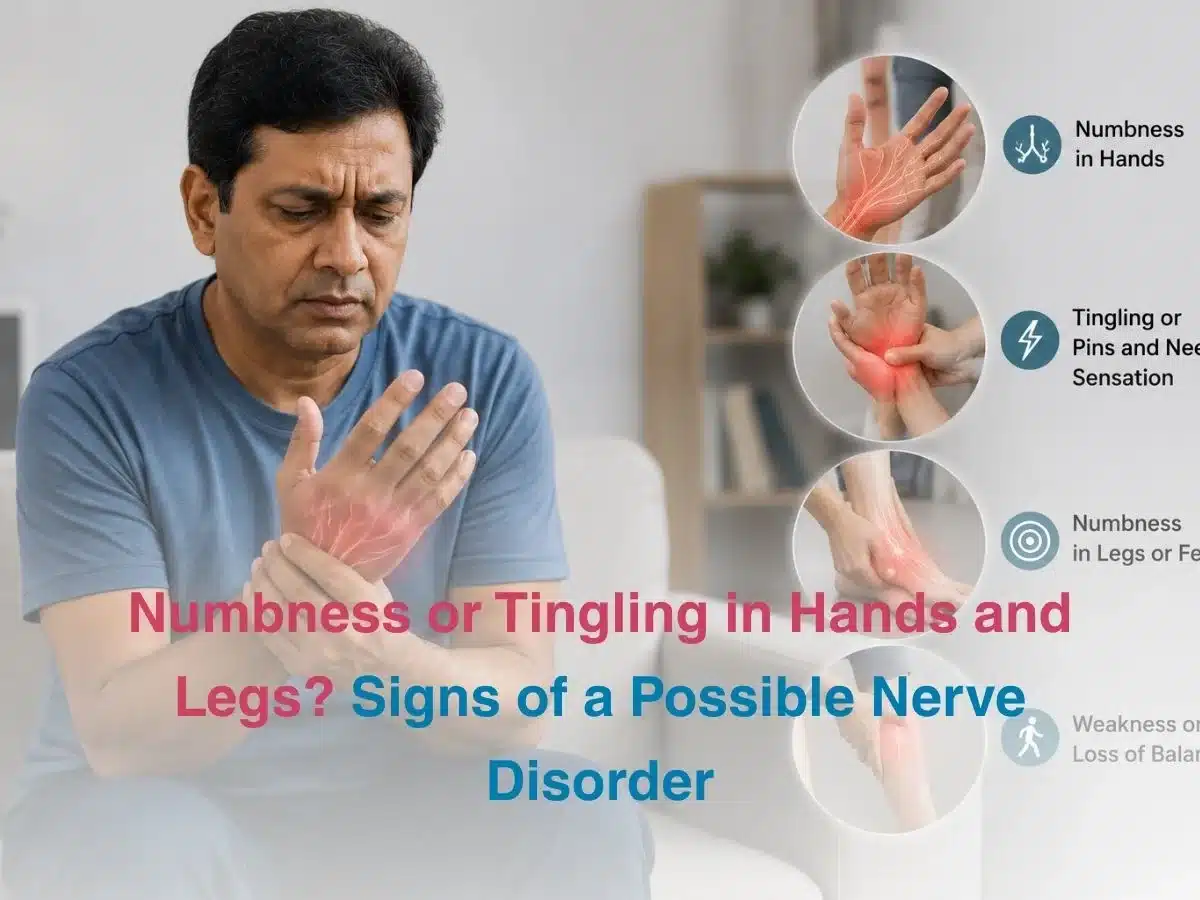
Numbness, tingling, radiating pain, shooting pain – these are symptoms that are commonly classified as under signs of neuropathy. These are pretty common too- if you sit in one position for too long, then your limb may ‘fall asleep’- and will take a few minutes to feel normal. Hitting your elbow or some other place where the nerves are exposed can also cause a sudden flash of funny tingling. This is normal too. But, when should you talk to a nerve disorder specialist to get a weakness and tingling evaluation at the best neurology hospital for nerve disorders?
Let us learn all about that in this blog!
Numbness In Hands And Legs Causes-
This sensation of numbness or tingling is called paresthesia in medical terms. Let us look at some well known causes below-
- Diabetes can cause tingling, numbness due to high blood glucose levels, which can damage nerves and blood vessels. This is a common condition called diabetic neuropathy.
- If you have vitamin deficiencies, like B group of vitamins for example, then you may have this issue.
- If you have a pinched or compressed nerve or neurological disorders like multiple sclerosis, then these symptoms are common.
- Nerve compression due to some spinal issue is also a major trigger.
Symptoms To Know Of-
These are some peripheral nerve compression symptoms you should know of, so you can get help in time-
- If you have pain that feels like there is jabbing, sharp, or like it is an angry throbbing.
- If you notice prickling, numbness or tingling which slowly tends to get worse in your extremities.
- If some part of your body feels very sensitive to touch and is very painful even if there is very light stimuli- like a slight touch or wind blowing.
- If you have no coordination or balance like before.
- If you have a sensation of wearing gloves and socks, even when your hands are feet are free.
If the autonomic nervous system is involved, then you may not be able to regulate body temperature, may sweat too much or not sweat at all, have issues with bladder or bowel incontinence and the gut or even have issues with blood pressure- where you may feel dizzy or faint in more severe cases.
When only one nerve is affected- like carpal tunnel syndrome for example in the wrist, then it is called mononeuropathy. But, most people report symptoms from all over the body- which means multiple nerves are affected. That is when it is called polyneuropathy.
Diagnosis and Treatment Of Neurological Disorders-
Tests include blood tests, imaging and other specialised tests that can confirm some specific condition. Let us look at the tests in greater detail-
- Blood tests- These can check for infections, inflammation, electrolytes, thyroid, liver and kidney function tests, vitamins and minerals, C-reactive protein, ESR (Erythrocyte sedimentation rate).
- Imaging tests– The use of X-rays, CT scans, MRI scans, angiograms, vascular ultrasound, ultrasound and others can help in understanding the location and severity of the condition.
- Specialised tests- Nerve conduction studies, EMG, spinal tap, genetic testing.
Treatment will depend on the severity of your symptoms- the use of supplements like B12, B9, B6 or other medications to help with pain. Immunosuppressive medication is used if an autoimmune disorder is present or suspected.
Conclusion
If you notice any symptoms or have severe pain and neuropathy due to some other underlying condition, please call us at KIMS Sunshine Hospital, as we are the best neurology hospital in Hyderabad.
Frequently Asked Questions
When should numbness or tingling be evaluated by a neurologist?
Which tests are done to diagnose nerve disorders?
Can diabetes cause numbness in hands and legs?
Can untreated nerve disorders lead to permanent damage?
Where can I get expert treatment for nerve disorders?