
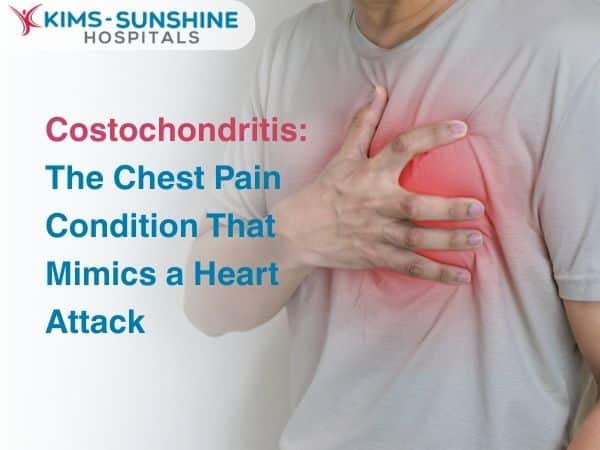
Costochondritis: The Chest Pain Condition That Mimics a Heart Attack

Verified By
KIMS-SUNSHINE
Specialist,
03 December, 2025
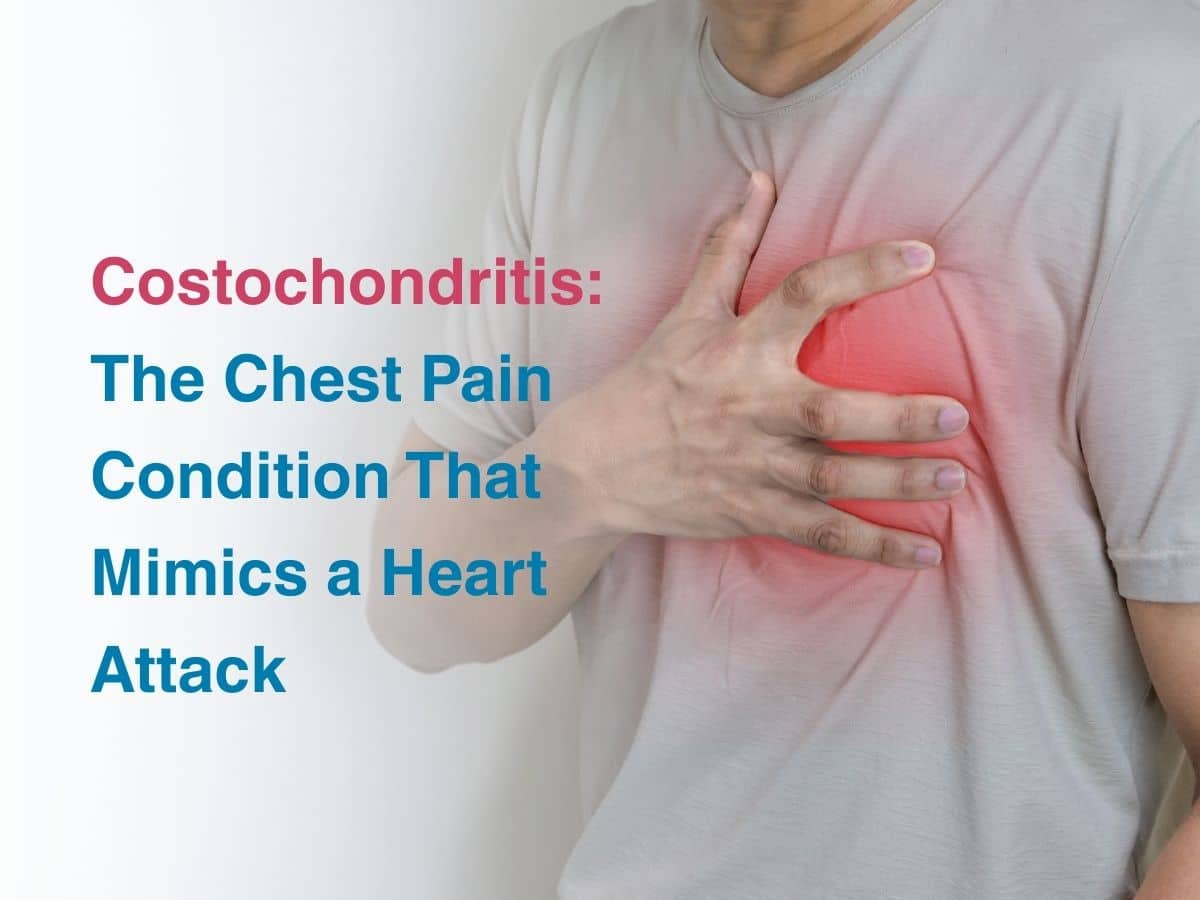
The rib cage is a hard, bony structure interspersed with softer cartilage, which provides great cushioning at the right points. The costochondral cartilage in particular is a set of cartilage tissue that connects the ribs to the breast bone or sternum. It is hard and designed to be protective- so that the lungs and heat can be safe within the rib cage in the chest cavity. When this cartilage gets inflamed, the way you breathe gets affected heavily and you won’t be able to move your chest with ease. Normal breathing becomes very painful and your chest may feel super heavy- almost like a heart attack. It is wrong to assume that such chest pain is being caused because of a heart issue- especially if it goes away in some time.
Causes Of Costochondritis
Costochondritis can be caused due to minor injuries that are caused due to repetitive motion- leading to microtraumas- like when you cough too hard too often or if you have frequent chest infections. Another major cause is intense physical activity, without giving time for your body to rest or lifting really heavy stuff with no prior warning. Athletes are more prone to such injuries if they play contact sports of any kind.
Symptoms Of Costochondritis
Costochondritis feels like a sudden stabbing kind of chest pain. It hits you when you try to breathe in deeply, or when you cough, sneeze or you try to reach above for something on a shelf. It may also be bad when you try to lie down on the affected side, if someone hugs you or when you exercise.
Costochondritis Vs. Heart Attack
A heart attack presents with different symptoms, though chest pain is a hallmark sign that affects individuals. But, a heart attack has other signs- like upper back pain, jaw or neck pain, a sharp kind of pain that radiates from the left side of your chest to the left arm etc. Some people may also complain of heartburn or digestive difficulties. Costochondritis on the other hand just means there is intense chest pain that is localised to the top part of the torso and it gets better with rest or worse with physical activity. It also goes away in a few days as inflammation reduces. Doctors say that almost ⅓ of all cases who present with chest pain actually suffer from costochondritis and NOT any heart related issue.
Treatment For Costochondritis
Diagnosis for costochondritis involves a detailed physical exam but there is no imaging method that can correctly confirm this condition. A CT Scan, X-Ray or MRI, an EKG or ultrasound may be done when you complain of chest pain, though blood tests may also be done if an infection is suspected. The best way to treat this condition is to rest and take painkillers if the discomfort is too severe to deal with. In rare cases, corticosteroid injections may be given directly to the affected joint.
Conclusion
Costochondritis normally affects people for a few weeks at the most, though it may take longer to heal in older individuals. Costochondritis can recur if you get back to the same kind of physically demanding routine like before, without allowing your body to rest adequately. The general rule of thumb that physicians swear by is- get medical attention for chest pain of any kind because you never know if it is actually due to a heart related issue or if it is due to costochondritis or some other such inflammatory condition. Once you get confirmation in the form of a reasonable diagnosis, you can begin proper treatment and not overthink too much!
Frequently Asked Questions
What is costochondritis?
How is costochondritis different from a heart attack?
How long does costochondritis last?
Can physical activity trigger costochondritis?
When should you seek emergency care for chest pain?