
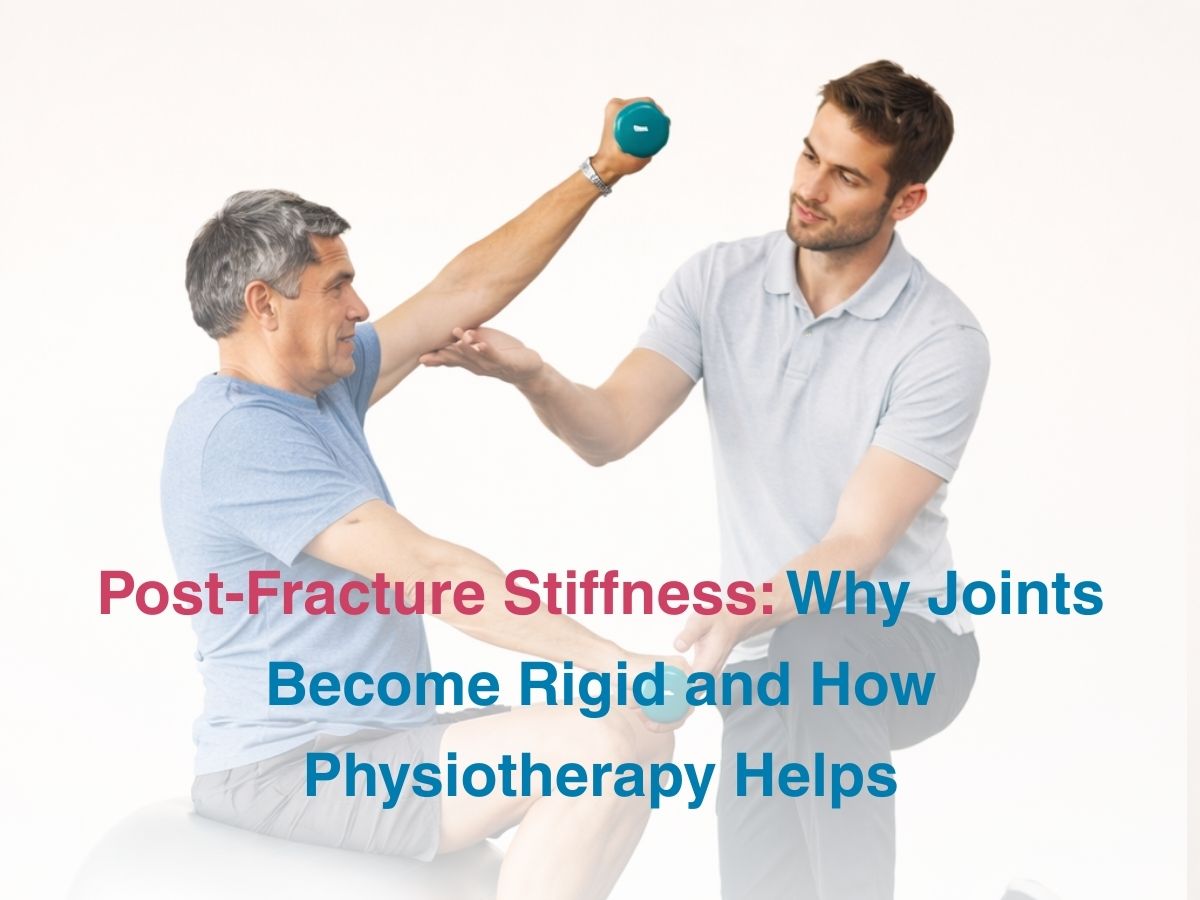
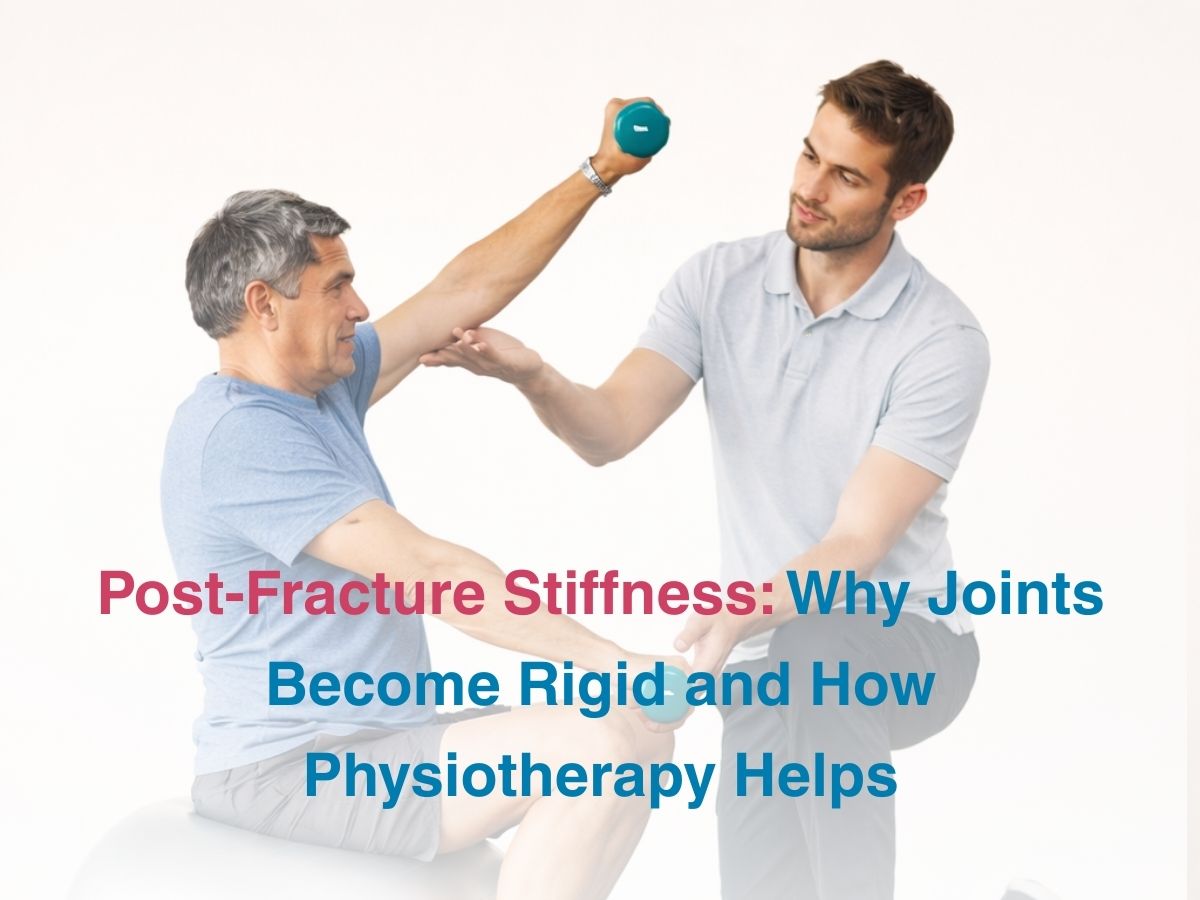
Post-Fracture Stiffness: Why Joints Become Rigid and How Physiotherapy Helps

Verified By
KIMS-SUNSHINE
Specialist,
27 December, 2025
A fracture as we all know is when a bone cracks or breaks- the body needs a few weeks or months to slowly recover. Making new bone tissue takes time and significant effort, but along with bone, there is scar tissue that is formed. This is what leads to joint stiffness after fracture – which is a combination of tight muscles and swelling due to immobilization. Reduced range of motion is common when you are healing after an injury and this is the case for every joint in the body. But the stiffness is most acutely felt in the ones we use always- like the knees, elbows, wrists or ankles. Preventing stiffness after injury involves using a set post-fracture physiotherapy routine. Not exercising during recovery can lead to permanent joint dysfunction and poor range of motion in the long term.
Causes of Post-Fracture Stiffness
Reduced mobility after fracture is a normal occurrence and it can be attributed to
- Formation of adhesions or scar tissue at the injury site.
- Lesser circulation which can mean longer healing times.
- Muscles contract due to disuse and hence you will lose muscle mass when healing.
- Scar tissue formation is a normal immune response that involves the activation of several inflammatory pathways. This by itself can cause swelling and reduced movement.
- Damage to surrounding tissue like the tendons, ligaments or joint lining can mean longer healing times.
The best way to kickstart healing is to ensure early mobilisation using gentle exercises at first. Swelling and inflammation can be dealt with heat or cold therapy. Painkillers help greatly in reducing the extent of pain and swelling or tenderness associated with such injuries.
Best Exercises After Fracture
A comprehensive and thoughtfully personalised physical therapy regimen is necessary for proper recovery and it normally involves
- Passive and active range of motion exercises.
- Strengthening Exercises- Isometric and isotonic exercises which help you regain muscle function and contractility. They can also help reduce the possibility of future injuries.
- Manual therapy is recommended – like massage, mobilisation, acupuncture- etc.- to help improve joint function and mobility. Joint mobilisation is included- to break down adhesions and help increase joint movement.
- Apart from painkillers, TENS, massage, joint glides, ultrasound therapy- can all be used in combination to help your joints recover better.
- Dealing with balance related issues is common- which is why proprioceptive exercises can teach you to walk or move safely and prevent falls in the future.
Conclusion
Some well known and documented early mobilisation benefits include better joint function and mobility, healthier and stronger muscles, reduced swelling and inflammation due to scar tissue formation and lesser pain and discomfort overall. It is important to remember that post fracture stiffness is to be expected but should never be ignored. You need to restore movement and joint function in the most effective way possible and that can be done with physical therapy. An experienced therapist will be able to modify exercises to better suit your needs and you can slowly but surely work up to the normal level in a few weeks or months.
Frequently Asked Questions
Why do joints become stiff after a fracture?
What causes reduced mobility after cast removal?
Can stiffness become permanent if untreated?
How often should physiotherapy sessions be done?
What treatments help reduce stiffness faster?