
When Should You Visit a Pediatric Hospital in Hyderabad? Common Signs Parents Shouldn’t Ignore

Verified By
KIMS-SUNSHINE
Specialist,
02 January, 2026
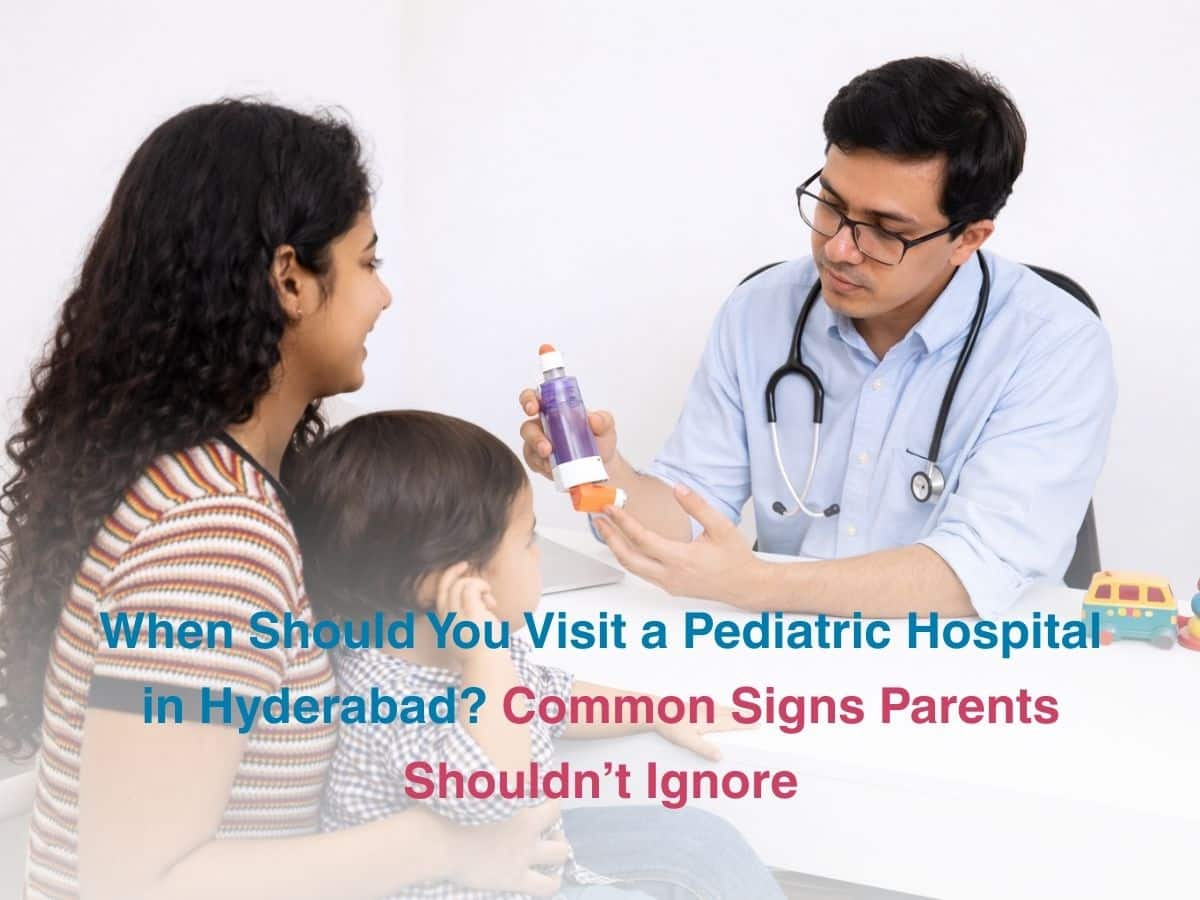
When to take child to hospital- this is a common concern for most parents. While some parents get super worried for even the smallest of sneezes or coughs, there are others who don’t get timely treatment because their child looks fine. While both approaches- of extreme vigilance or ignorance are not going to help your child, it makes sense to understand when pediatric emergency signs demand immediate medical care and when home remedies may do just fine. So, here are some signs you should never ignore- as they can change quickly and become all too problematic or even fatal in extreme cases.
Signs To Not Ignore
Children grow up very quickly, but their body takes time to keep up. This can manifest as poor immunity and frequent infections. Parents joke that their children pick up a new bug every week or so- while this is pretty true, most such cases of infection don’t warrant extreme measures. The most common symptoms that cause parents to worry include- fever, cold, breathing issues, severe vomiting, uncontrollable diarrhoea, sudden and severe bout of pain or rashes etc. Let us look at them all, one by one-
Symptoms That May Point to an Infection
- Fever in children when to worry – If your child has high fever- which is above 102 ℉ or 39℃ which does not get better even with medication and these symptoms last for 2-3 days, it is time to go in for a consultation. But, if a 3 month old newborn or younger one has even a slight fever, it is an emergency. Don’t wait for it to get worse!
- Breathing difficulty in child– If children have a cold, infection or asthma, they exhibit breathlessness and wheezing. If their chest feels too tight or they are not able to catch a break at all, get them to a pediatrician immediately.
- Persistent vomiting child- If your child has severe abdominal or tummy pain and is vomiting with no respite, it may be due to some poisoning. Get to a doctor as soon as possible. If they show such symptoms with a fever, it may be an infection of some kind, which will require targeted treatment. If your kid is not feeling better in 24 hours, get them looked at.
- Severe diarrhoea in children can cause dehydration-if not addressed quickly. If your child looks listless, their skin and lips feel too dry and are not urinating normally, they may be dehydrated. Fewer than usual wet diapers in very young children is also a sign that should not be ignored.
- Weight loss, fatigue or poor growth– Children may have immune related issues or metabolic disorders and in such cases, correct diagnosis and prompt treatment can help them recover quickly.
- Some children are more sensitive and deal with rashes often but if it is making them miserable and causing bruises to appear, then it may be an infectious condition like chickenpox, measles, etc. It is best to get them looked at by a specialist.
- Seizures– If your child has a seizure for the first time, get them checked. If there are symptoms like fever, behavioural changes etc. then it is an emergency.
- Severe pain due to a fall or infection should not be ignored. If there is a fever along with pain and other symptoms, it could be an infection which needs to be treated immediately.
Newborn – Unusual Symptoms to Know
In newborns- be vigilant for any high pitched crying that seems unusual, if they refuse to feed, if they breathe too fast or too slow, if their body temperature seems abnormally high or low to touch and if they do not respond normally to being called- they need emergency care, IMMEDIATELY!
Developmental Disorders
Some children may not crawl, walk or talk as soon as others but growth is recorded on a proper scale which checks if there is any milestone that has been delayed, if speech is present or not, if there is regression in previously acquired skills or if any behavioural or learning difficulties have been observed, among other aspects.
Conclusion
There you have it- when you should go to a pediatrician – for toddlers, newborns and for older children. Though we strongly urge parents to not risk anything and get their children looked at, we also ask you to trust your instincts. After all, you as the parent know your child the best!
Frequently Asked Questions
When should parents take a child to a pediatric hospital?
What fever symptoms require hospital care?
When is vomiting or diarrhea serious in kids?
Should seizures in children always be evaluated?
When should newborns be taken to a hospital immediately?