
Subarachnoid Haemorrhage: Sudden Brain Bleeding and Emergency Warning Signs

Verified By
KIMS-SUNSHINE
Specialist,
14 January, 2026
The brain is encased in multiple layers of tissue or the meninges – called the Dura Mater, Arachnoid Mater and Pia Mater- the other names for the super hard layer farthest away from the brain, the blood less middle layer which is fibrous but softer and the inner most layer which is delicate and covers the brain like a second skin. Between the middle and innermost layers is the subarachnoid space which contains circulating cerebrospinal fluid (CSF) – which ensures that the brain can get all the blood supply it needs, via various blood vessels located close. When there is an unexpected bleed in this region, you have a subarachnoid hemorrhage, meaning you may show emergency stroke symptoms that need to be addressed immediately.
Causes and Symptoms of Subarachnoid Haemorrhaging
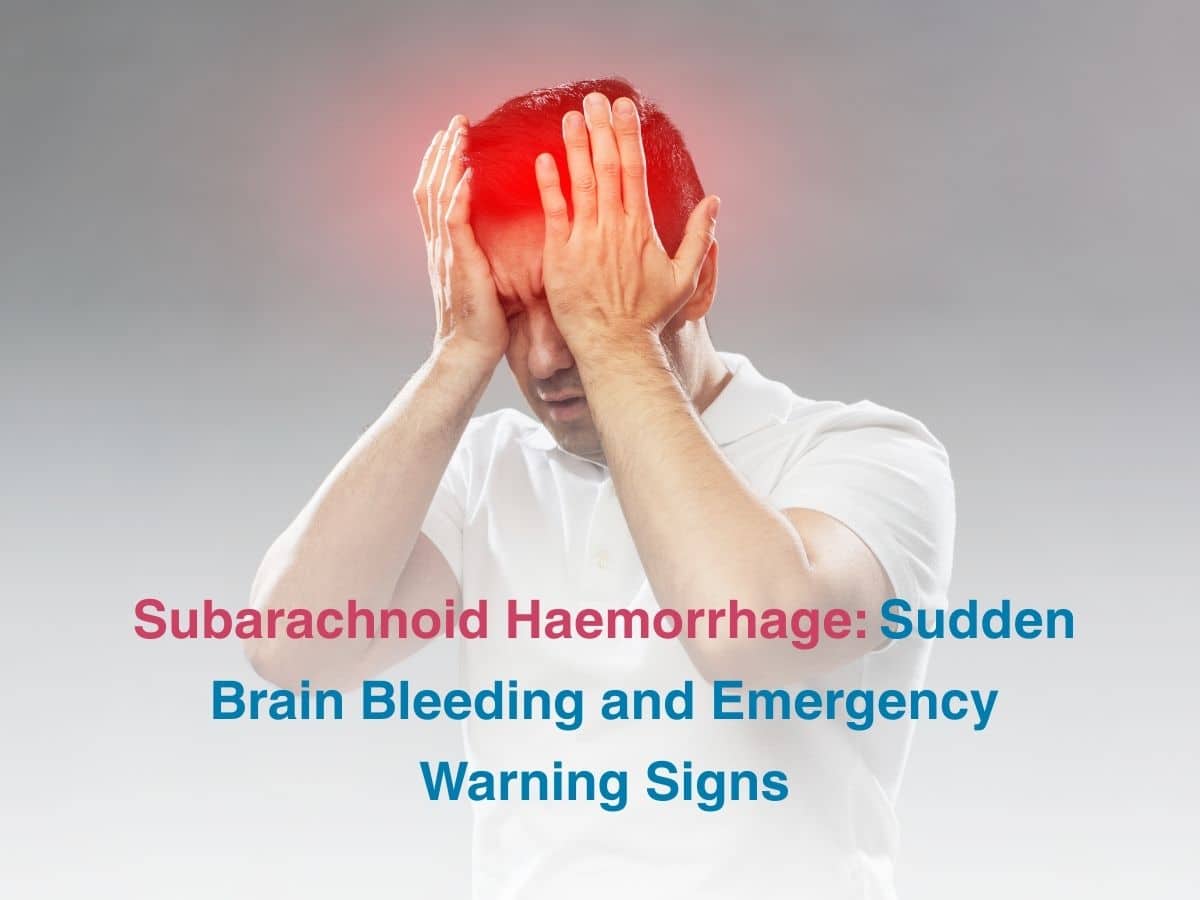
The most common causes include a brain aneurysm that has ruptured or when you have a traumatic brain injury. The most common symptom is something called a thunderclap headache- which comes on very suddenly, just like a clap of thunder in a storm. People refer to it as the worst headache in their life and when such a symptom occurs, it is time to rush to the emergency medicine department of a nearby hospital. Some other causes include being hypertensive, excessive smoking or alcohol consumption or even the regular usage of warfarin which is a potent blood thinner.
The symptoms occur when a blood vessel in the subarachnoid space tears and begins to leak- and this can cause lasting brain damage if not treated immediately. Apart from the super intense headache, you may observe others-
- Extreme nausea or vomiting
- Having a very stiff neck
- You may also experience severe photosensitivity or may find lights extra bright.
- Feel dizzy
- Having seizures is also common.
- People report double vision.
- Some people may also report emergency stroke symptoms like slurring of speech or vision changes.
Diagnosis of SAH
If such overt symptoms are observed, a doctor may ask you to get a CT scan immediately. A CT angiography (CTA) may also be recommended so the ruptured blood vessel can be visualised clearly. But, if the leak is too minor to be picked up by imaging alone, confirmatory tests like a lumbar puncture (to check CSF for a yellowish appearance- if yellow, then you have had a SAH) or a brain MRI which can point to certain older bleeds in the region. An SAH is treated as a neurosurgical emergency and hence a doctor will try to save your life by stopping the bleeding and working to prevent lasting brain damage.
Since an SAH occurs suddenly, it can wreak havoc on your long term prognosis- even if you get medical help, you may be disabled for the rest of your life or you may slowly become normal. Some individuals do not survive and die a sudden death. Long term complications of suffering from an SAH are –
- Having speech and cognitive issues
- Mental health conditions like depression or PTSD.
- Physical manifestations like not being able to swallow, having poor balance, extreme long term fatigue.
Conclusion
Recovery after subarachnoid haemorrhage will involve long term care in the form of rehabilitation- where you may need speech therapy, physical therapy to help with loss of balance and high levels of fatigue, therapy for PTSD or occupational therapy to help you perform better at work. One of the easiest ways to keep yourself safe include wearing a sturdy helmet which can protect your head when you go out and to talk to your doctor about any aneurysm you may have. To prevent the aneurysm from rupturing, you will need to ensure that blood pressure remains within range, eat well and exercise moderately. You should also consider quitting smoking and drinking alcohol. To schedule a consultation with the top neurologist in Hyderabad, call us at KIMS Sunshine Hospital. We urge you to be attentive to symptoms and get the right kind of help at the right time.
Frequently Asked Questions
What is a subarachnoid haemorrhage?
What are the warning signs of subarachnoid haemorrhage?
Is subarachnoid haemorrhage life-threatening?
What emergency treatment is required?
What complications can occur after SAH?