

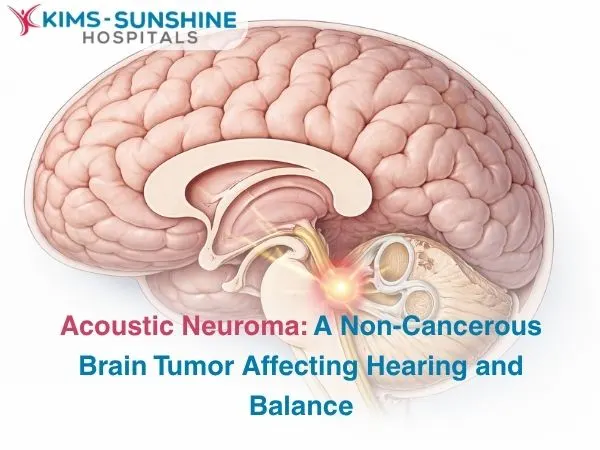
Acoustic Neuroma: A Non-Cancerous Brain Tumor Affecting Hearing and Balance

Verified By
KIMS-SUNSHINE
Specialist,
22 March, 2026
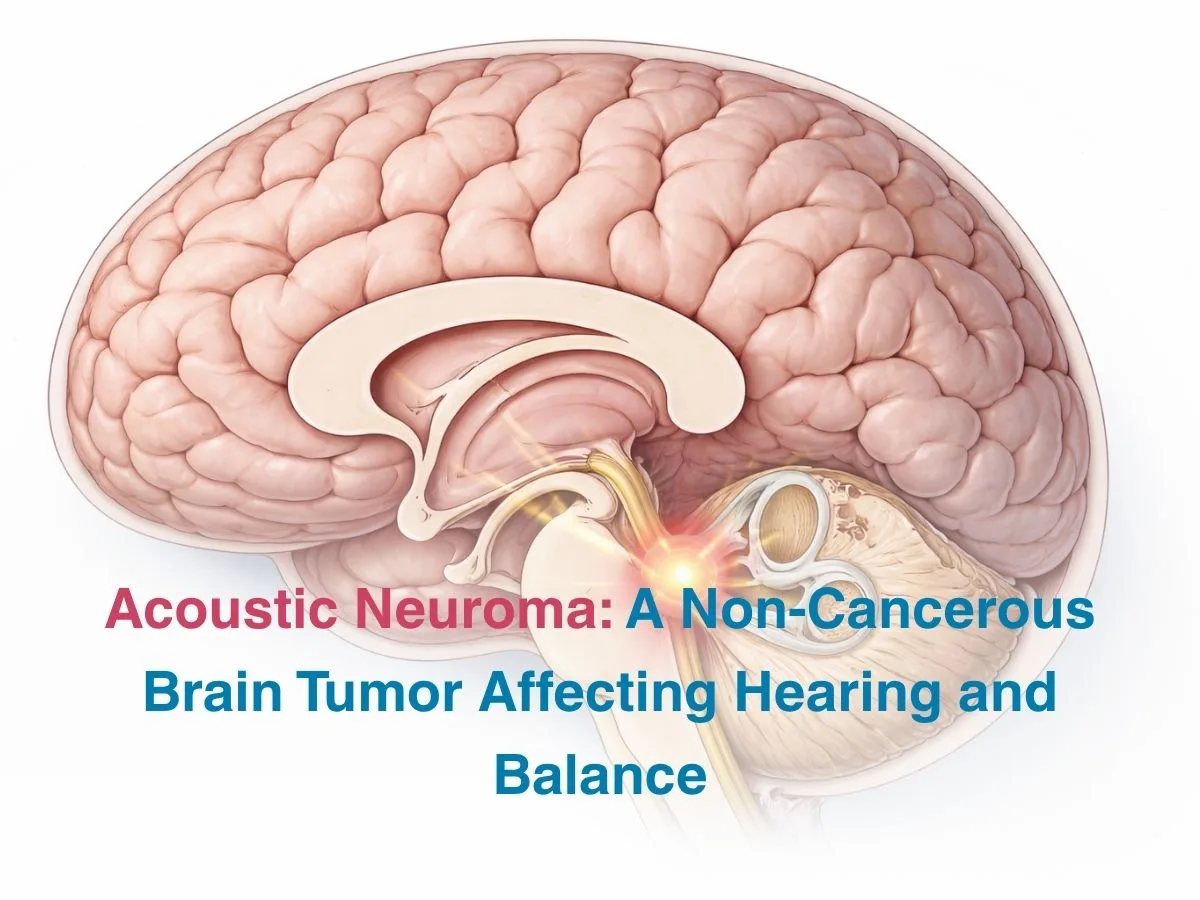
An acoustic neuroma, also called a vestibular schwannoma tumor, is a benign or non-cancerous growth that is normally found on the nerve that travels from the ear to the brain- the eighth cranial nerve which is responsible for your sense of hearing. When such growths press against the nerve, it can lead to a variety of symptoms which can affect your hearing and sense of balance and cause other issues. To prevent permanent hearing loss, call us at KIMS Sunshine hospital today, as we are the best multispecialty hospital in Hyderabad.
Causes for Acoustic Neuroma To Form-
There are cells called the schwann cells in the nervous system- which are responsible for enabling the peripheral nervous system to work better. If these cells somehow lose control of their cellular growth processes, they can grow indiscriminately and form a tumor. These tumors grow very slowly.
Acoustic Neuroma Symptoms-
The tumor can form at any place near the ear and can cause a variety of symptoms depending on its location and size. Some prominent symptoms include-
Tinnitus or a constant ringing sound in your ears.
- You may have balance issues
- You may feel like you are spinning, even when you are not moving.
- Facial paralysis can occur in some cases.
- You may have severe headaches.
- You may have problems with swallowing food and taste foods differently.
- You may have double or blurred vision too.
Acoustic Neuroma Diagnosis-
Apart from a physical exam, your doctors will ask you to describe symptoms in detail. After that, imaging is mostly recommended-
- MRI or CT scans are usually done.
- You may get a hearing test done, if hearing loss is a major symptom. They will aslo check for brainstem response to auditory or sound related stimuli.
- You may have tests to check if you have problems with staying balanced.
- You may have an electronystagmography to check how your eyes react to certain visual stimuli, using electrodes to measure neural response.
Acoustic Neuroma Treatment-
Treatment depends on whether you have symptoms and their severity. In many cases, doctors may ask you to wait if the tumor was found but has still not caused noticeable symptoms yet.
- Regular MRIs are done to check for changes in size, every few months.
- Stereotactic Radiosurgery (SRS)- Acoustic neuroma surgery uses focused beams of radiation to destroy the tumors.
- Microsurgery- Here, small instruments are used to surgically resect the tumor. This method can get the whole mass out in most cases.
- Chemotherapy- Bevacizumab is recommended at times to shrink the tumor. It can also help children keep their hearing for longer.
- Vestibular rehabilitation therapy- to help you improve balance and coordination if nerve damage is present.
Hearing loss is a very real possibility after treatment, so you should be prepared to use hearing aids or bone conduction implants.
Conclusion
If you have been dealing with ringing noises in the ear or hearing loss- however subtle it may seem, don’t hesitate to get checked by a specialist at KIMS Sunshine Hospital. Though acoustic neuromas grow very slowly and are benign, they can press against nerves and cause symptoms which can affect your quality of life on a daily basis. Your doctor may ask you to get regular imaging done and just monitor the tumor closely instead of using any intervention right away. Surgery can cure this condition but it can cause lasting hearing loss so using hearing aids can help in the long term. Call a specialist if you have noticed any of the symptoms mentioned above and talk to us today!
Frequently Asked Questions
What is an acoustic neuroma?
What are the early symptoms of acoustic neuroma?
What treatment options are available for acoustic neuroma?
Is acoustic neuroma life-threatening?
When is surgery required for acoustic neuroma?