
Liver Cirrhosis: Early Symptoms, Stages and Treatment Options

Verified By
KIMS-SUNSHINE
Specialist,
09 June, 2026
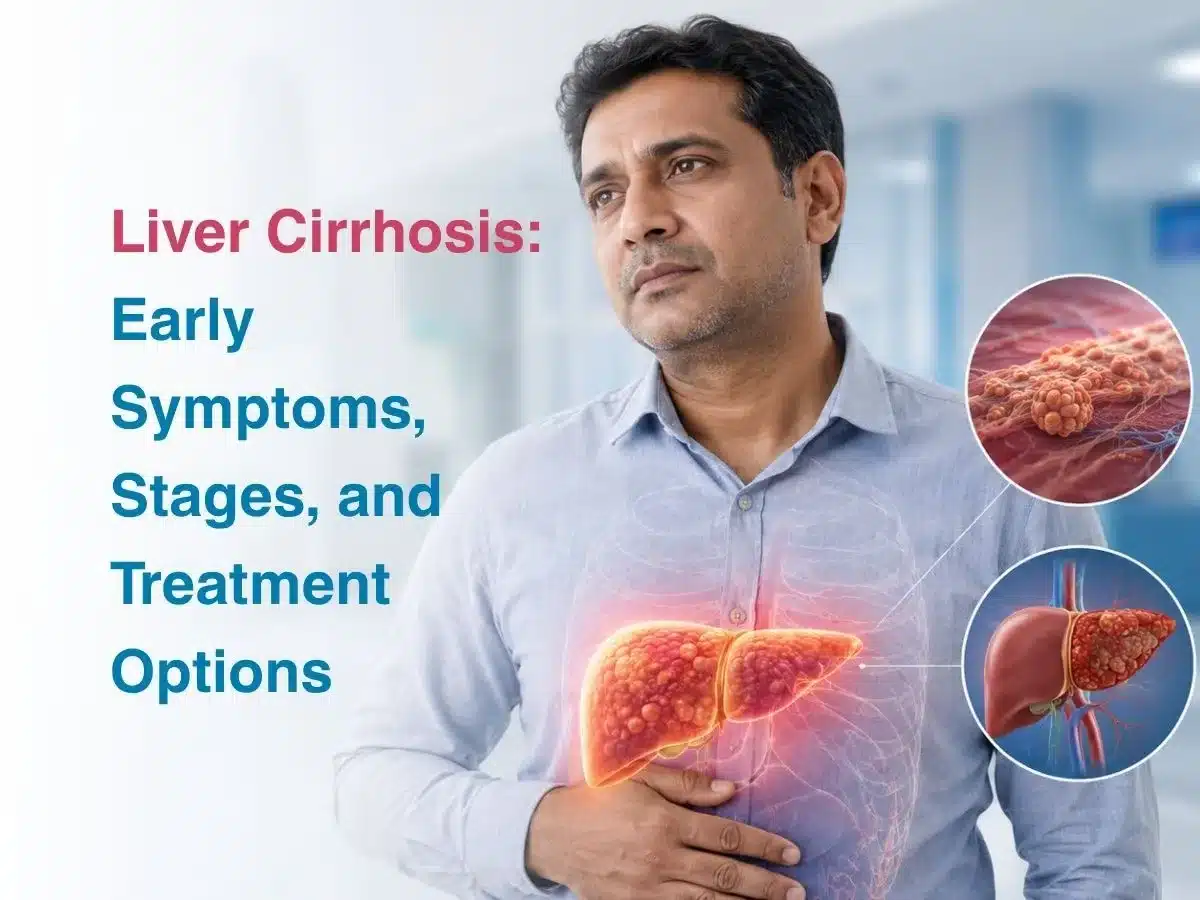
The liver is the largest organ in the body that is located in your abdomen. It is also the only organ that can regenerate very quickly. This remarkable regenerative power is a necessity as the liver is responsible for breaking down many metabolites or substances which may be harmful for the body if not processed in the right way- like hormones, medications, bile salts, bile etc. among others. When the liver gets damaged chronically due to regular exposure to alcohol or drugs, it can lead to repeated bouts of inflammation and scar tissue formation- liver fibrosis and cirrhosis to be more exact.
You need to talk to a chronic liver disease specialist at the best multispecialty hospital in Hyderabad, to manage your symptoms. So, call us today!
Causes of Cirrhosis-
The gradual scarring and fibrosis of the liver happens due to the following causes-
- If you are a heavy drinker, you may have to deal with hepatitis.
- You may suffer from liver cirrhosis even if you don’t drink alcohol at all. This is because of metabolic issues then.
- Hepatitis B and C infection- chronic viral infection can alter how liver cells function and induce inflammation and cirrhosis eventually.
- If you suffer from autoimmune diseases like autoimmune hepatitis, primary biliary cholangitis, primary sclerosing cholangitis or related conditions.
- If you suffer from genetic conditions like Wislon’s disease, cystic fibrosis etc.
- If you suffer from congestive heart failure, then blood flow may be limited to the liver, causing it to overcompensate over time.
Symptoms of Liver Cirrhosis-
Some of the early signs of liver cirrhosis include-
- Feeling nauseous and not having an appetite.
- Feeling ill, very tired or weak.
- Upper abdominal pain is common.
- If you have blood vessels that look like varicose veins radiating outwards from the belly button on the abdomen- caput medusae.
- If the palms of your hands look very red.
These symptoms can develop into the following, if not addressed soon-
- Jaundice
- Light coloured poop and dark coloured urine is observed.
- You may have itchy skin even with no visible rash.
- Small yellow looking fat deposits on the skin or eyelids.
- Loss of muscle mass or weight.
- Women may have to deal with irregular periods.
- Swelling of the abdomen due to fluid accumulation- ascites.
- You may bruise and bleed very easily.
Please opt for liver cirrhosis treatment if you notice any of these symptoms, because by now, liver function must have already declined a lot.
Diagnosis of Liver Cirrhosis-
Doctors normally start with-
- Blood tests to check for liver function- ALT, AST, clotting factors etc.
- Imaging- Elastography is done to check for the amount of scarring in liver tissue.
- A liver biopsy is taken to confirm cirrhosis, if needed. This is one of the many cirrhosis diagnosis tests used.
Treatment of Liver Cirrhosis-
Cirrhosis cannot be reversed and if poorly managed, it can lead to the need for advanced liver disease management. Treatments include-
- The use of antiviral medications if you have recurrent Hepatitis B or C infections.
- Corticosteroids and immunosuppressants are given for autoimmune conditions but may not always help.
- You may need to go in for rehabilitation for alcoholism or substance use disorders- as repeated exposure to the agent can only make it worse for the liver.
- Non-alcohol related liver disease- You will need to lose weight, manage your cholesterol, triglyceride and blood sugar levels.
- You may need a blood transfusion at times.
- Removal of ascites by paracentesis or needle aspiration.
- If liver cancer is causing cirrhosis, then treatment for that may help slow down rapid degradation of liver tissue.
- You may be asked to get a liver transplant evaluation done, if no other approaches work.
Conclusion
Living with liver disease can be hard- as it won’t get better once it has started to cirrhose or fibrose. Untreated liver disease can lead to a number of complications which can be harder to deal with and will need specialised or invasive treatments. Call the best liver specialist hospital in Hyderabad to learn more today!
Frequently Asked Questions
When should I consult a doctor for possible liver cirrhosis symptoms?
Which specialist treats chronic liver disease and cirrhosis?
Can liver cirrhosis be reversed if detected early?
Can fatty liver disease progress to cirrhosis?
What complications can develop if cirrhosis is untreated?