

Gastrointestinal Bleeding: Warning Signs, Causes and Emergency Care

Verified By
KIMS-SUNSHINE
Specialist,
08 June, 2026
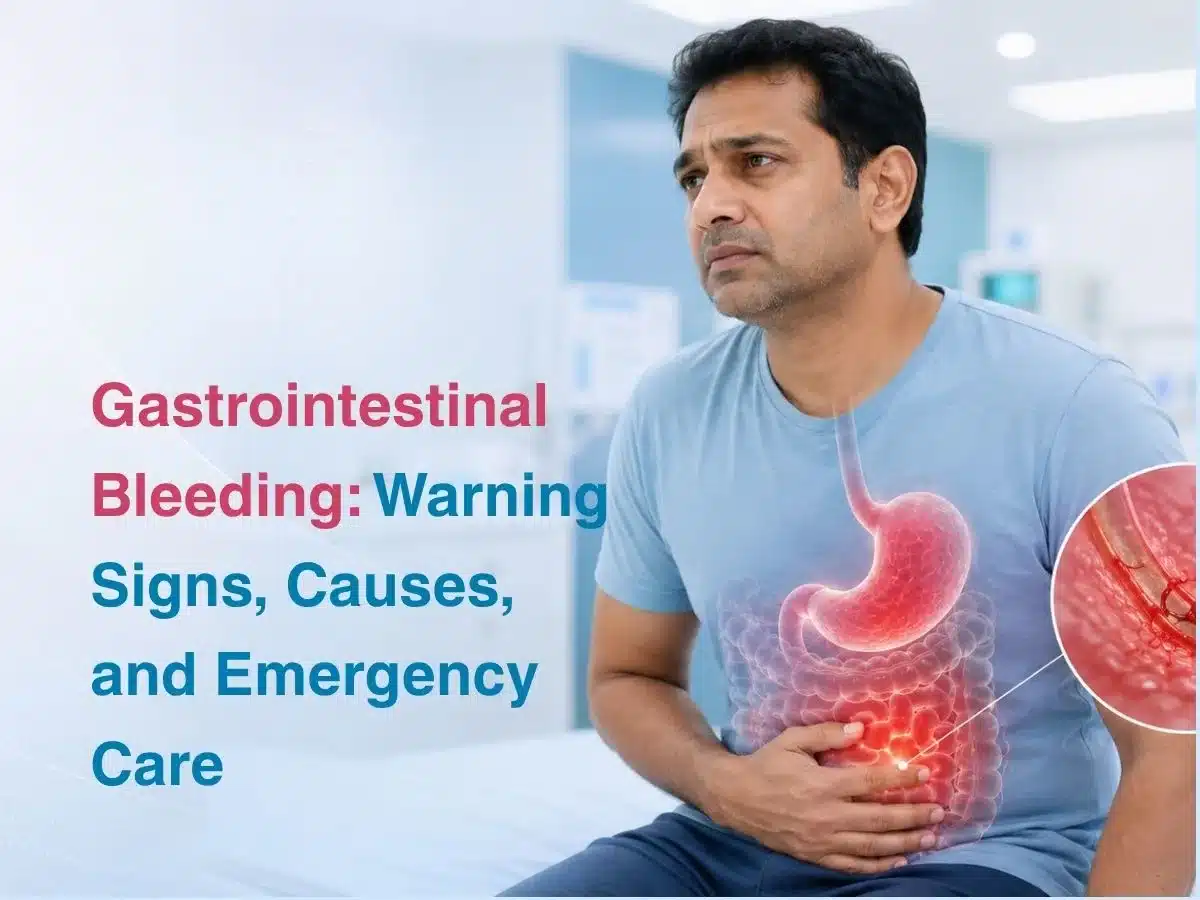
The GI tract is essentially a long tube with different parts or organs, with specialised functions. It starts from the mouth, neck, food pipe, goes into the stomach, small intestine and ends with the large intestine. The GI tract is profusely vascularised and when there is bleeding, it can be mild, stop by itself in some time or it can be severe, sudden and require emergency digestive care. There are many possible conditions that can cause GI bleeding, so you will need to talk to a gastroenterologist for GI bleeding at the best multispecialty hospital in Hyderabad to learn more.
Causes of GI Bleeding-
GI bleeds can be of different types, depending on where the bleeding originates from. If it is from the esophagus, stomach or the duodenum- it is called an upper GI bleed. Small bowel bleeds occur from the jejunum and ileum- the 2 last sections of the small intestine, while lower GI bleeds happen at the colon, rectum or anus of the large intestine respectively.
GI bleeding can occur due to the following conditions-
- Anal cancer
- Fissures and polyps of the anus.
- Colon polyps and colorectal cancer
- If you have Crohn’s disease
- If you have a tumor in the GI stromal cells.
- Haemorrhoids
- Rectal ulcers
- Ulcerative colitis
Symptoms of GI Bleeding-
These are some well known symptoms when there is GI bleeding-
- You may have mild or severe abdominal cramping.
- Black or tarry stools or normal looking stools with bright red blood in them.
- You may look pale and feel very tired.
- You may even vomit – and that will look dark brown in colour, or have blood in it.
- Weakness and prolonged fatigue are common.
Many GI bleeds become alright by themselves, but if you continue to have black stools digestive bleeding, then please talk to a gastroenterologist at KIMS Sunshine Hospital right away!
Diagnosis of GI Bleeding-
Doctors will need to perform a variety of tests to understand why you have bleeding in the first place. Some tests include-
- Blood tests to check for anemia – if there is significant blood loss, it can be problematic.
- Fecal occult blood test– This checks for blood in a stool sample.
- Upper endoscopy for gastrointestinal bleeding- An endoscope is a long tube with a camera attached to it. Helps in imaging the tract in real time.
- GI X-rays- Barium swallow test is used to check for any bleeds or structural abnormalities.
- CT scan- can help study soft tissues like the small intestine better.
- A colonoscopy for bleeding evaluation– Endoscopes are inserted into the large intestine via the anus, to check for a lower GI bleed.
Treatment Of GI Bleeding-
Treatment depends on the cause of the bleeding. Doctors can give you medication to help reduce the potency of stomach acid or its production itself, so the stomach can heal better. If an endoscopy is done, then doctors can remove polyps, cauterise the bleed or seal leaky blood vessels with a clip.
Severe bleeds will require laparoscopic surgery, that is administered as an emergency procedure.
Conclusion
Profuse GI bleeding is a medical emergency as we have mentioned above and you should never ignore stool in blood or vomit. Not drinking alcohol can help your tract heal faster. If you have diverticulitis or some other chronic condition, it makes sense to continue on your treatment, so symptoms are managed well. Since GI bleeds can come back, it is important for you to stay vigilant and get help when you think something is not right.
So, call us today to schedule an appointment at the best gastro hospital for GI emergencies without any delay!
Frequently Asked Questions
When should gastrointestinal bleeding be treated as an emergency?
What are the common causes of gastrointestinal bleeding?
What tests are done to diagnose GI bleeding?
Can black stools indicate internal bleeding?
What are the treatment options for gastrointestinal bleeding?