
Arteriovenous Malformation (AVM): Abnormal Brain Blood Vessel Connections and Surgical Treatment

Verified By
KIMS-SUNSHINE
Specialist,
21 March, 2026
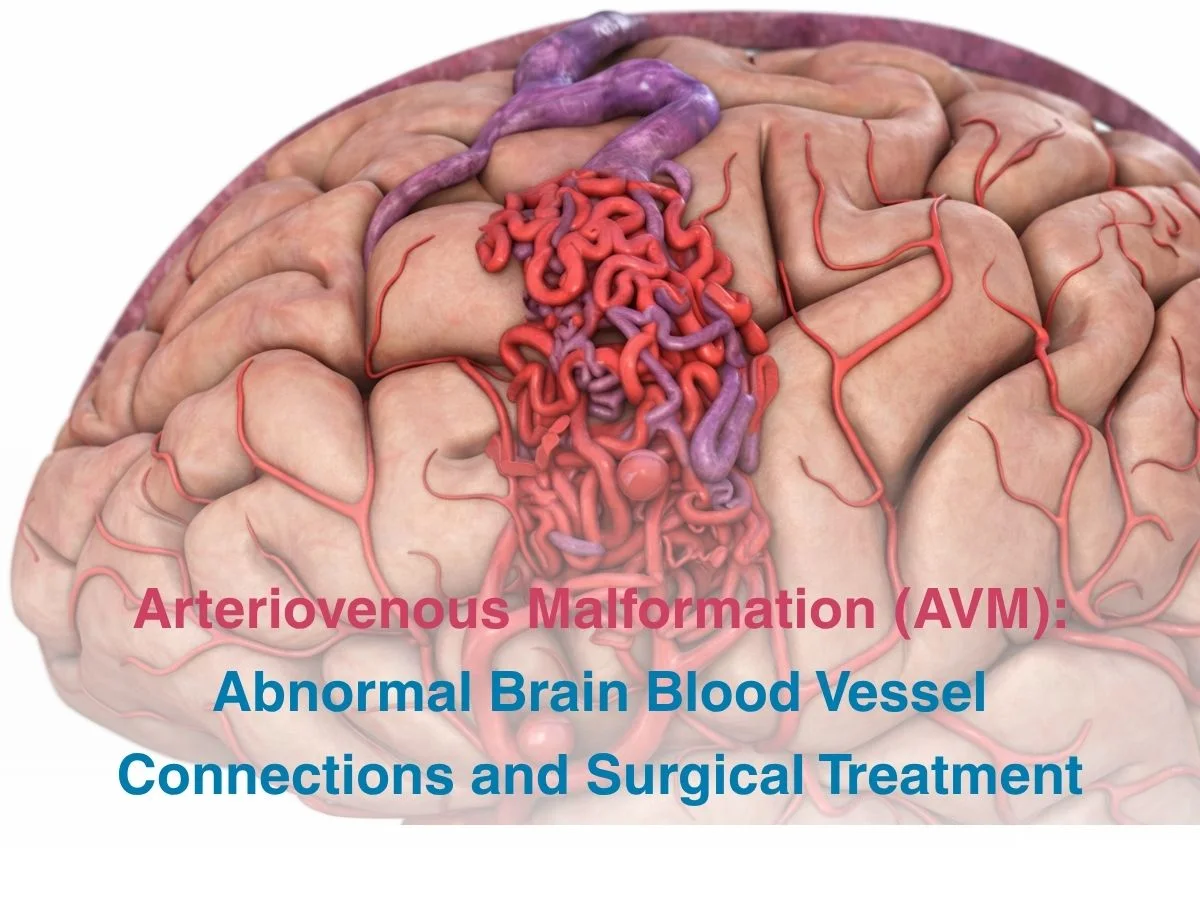
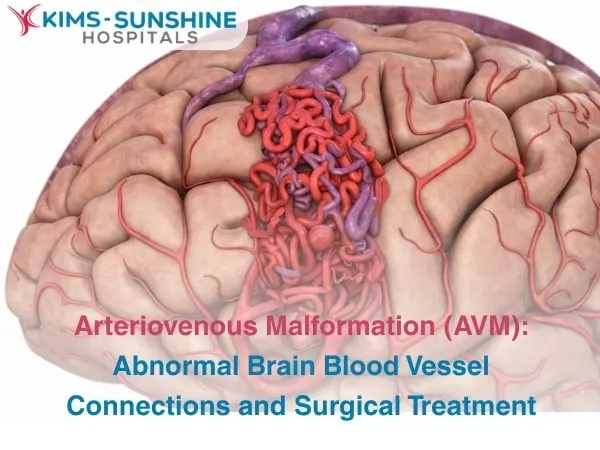
When a particular region in the body has only arteries and veins connected in a messy way, with no capillaries- resulting in abnormal blood vessel connections, it can impact function, as this is called an arteriovenous malformation (AVM). There are no symptoms until the AVM bleeds and people find out about AVMs unwittingly, when they walk in for some other issue or test. If such an AVM forms in the brain, it is a congenital vascular formation. An AVM needs to be diagnosed and treated by a specialist and symptoms can be varied- as it can form anywhere in the body.
Causes for An AVM To Form-
It is just known that an AVM in the brain can form at birth but the exact reason for why such tangled masses of blood vessels form is unknown.
AVM Brain Symptoms-
Since there are no symptoms till the AVM bleeds, this condition is mostly not found at all. The symptoms may however begin once the brain arteriovenous malformation begins to leak and hemorrhage, causing symptoms like-
- Seizures where you may still be conscious of your surroundings.
- Severe headaches which are confined to one part of the head
- You may experience severe or progressive muscle weakness and paralysis
- You may notice neuropathy
- You may have issues with movement, vision, speech, memory etc.
- You could deal with dementia or have hallucinations.
- You may notice weakness in the back or legs too at times.
Your risk of suffering a brain hemorrhage from AVM is a lot higher than normal. An AVM can also cause an aneurysm to form, which may rupture and cause massive bleeding in the brain.
Call a specialist now!
Diagnosis of Brain AVM-
Imaging can normally help diagnose this condition easily.
An MRI, CT or Catheter angiography is done to check blood flow to and from the brain and for any structural abnormalities in the blood vessels.
There are 3 specialised imaging tests that are done, once an AVM is suspected to be present, to confirm its presence-
- Cerebral MRA- This approach uses a magnetic field and radio waves to check for blood vessels in and around the brain.
- CTA– X-rays are used to construct detailed pictures of your blood vessels.
Transcranial Doppler Ultrasound– This test uses high frequency sound waves to check how blood is flowing in the brain.
Cerebral AVM Treatment Options-
Treatment depends on whether the AVM has ruptured or not, how close it is to causing a bleed and if you are showing any symptoms, apart from keeping tabs on your general health. So, treatments focus on getting rid of AVMs totally or will work to prevent bleeding.
If you show symptoms, then you will be given anti-seizure medications, pain relievers for back pain or severe headaches and blood pressure medications. Otherwise, surgical procedures may be recommended.
AVM neurosurgery treatment approaches include-
- AVM embolization procedure– A catheter is wired up into the brain via a blood vessel from the groin and then a coil or some other substance is used to stop and reduce blood flow. This will allow surgeons to then surgically remove the AVM without much risk.
Stereotactic radiosurgery (SRS) for AVM involves the use of highly focused beams of radiation- to slowly shrink, scar and dissolve the AVM. Examples include Gamma knife® radiosurgery, LINAC etc.
Conclusion
An AVM is a congenital malformation in the brain and does not normally cause symptoms. But, if you have symptoms like seizures, poor mental focus, paralysis or muscle weakness, you should waste no time and instead consult a specialist immediately without any delay. An untreated AVM can lead to a stroke or cause a massive bleed in the brain, which can be life threatening. Call us at KIMS Sunshine Hospital today!
Frequently Asked Questions
What is an arteriovenous malformation (AVM) in the brain?
What are the symptoms of a brain AVM?
How is an arteriovenous malformation diagnosed?
What is AVM embolization and how does it work?
What complications can occur if AVM is left untreated?