
Panic Disorder: Understanding Sudden Panic Attacks and Long-Term Treatment Options

Verified By
KIMS-SUNSHINE
Specialist,
24 March, 2026
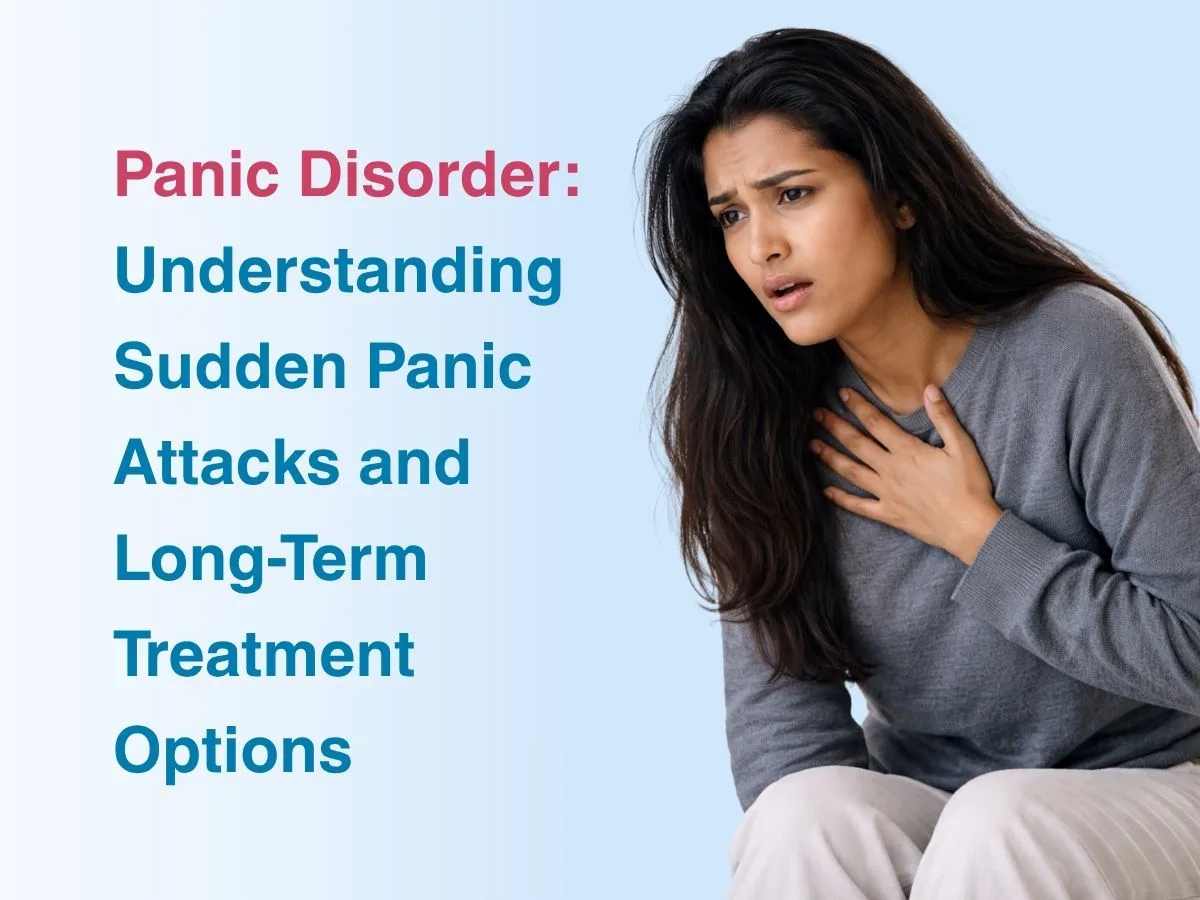
A panic attack is when you are very anxious about something and that begins to manifest as very real, physical symptoms. It is usually triggered by some intense kind of stress and it is not a great response overall. When you have recurrent panic attacks and other anxiety or mood disorders and phobias that leave you feeling paralysed, it is classified as a panic disorder. You should talk to a specialist at KIMS Sunshine Hospital, as we are the best multispecialty hospital in Hyderabad for all your needs – if you are overly anxious or worried about some aspect of your life.
Panic Disorder Causes-
Scientists think that information may be perceived in a different way than usual, by the amygdala- the part of the brain that processes stimuli related to fear or anxiety inducing emotions, and/or certain neurotransmitters like GABA, serotonin and cortisol may not be working in the right way.
You are at a higher risk of suffering from panic disorders or related conditions if you have dealt with depression, there is a family history of anxiety disorders or by exposure to traumatic events at an early age etc.
Panic Disorder Symptoms-
Being under intense stress and panic attacks occurring may be hard to deal with, but if you had one of those, these are probably the symptoms you may have had-
- You may have severe chest pain, have a racing heart and may not be able to breathe normally.
- You may hyperventilate
- You may shake a lot or tremble.
- You may have chills or nausea.
- You may sweat a lot
- You may vomit.
- You may feel intense terror or fear that threatens to choke you. You may also think about dying or ending it all- and may not really know how to separate reality from what is actually going on in your mind.
Call us at KIMS Sunshine Hospital for help, today!
Panic Disorder Diagnosis-
This condition needs to be diagnosed according to certain criteria that are listed out in great detail in the Diagnostic and Statistical Manual of Mental Disorders (DSM-5).
You may be diagnosed with a panic disorder if you have recurrent panic attacks that are unexpected, along with more than a month of-
- Worrying so much about having a panic attack that you have one.
- Always trying to change things- you try to avoid panic attacks by all means- by making changes to your normal routine, by shutting yourself down or coping however it feels right.
- The attacks are random and are NOT caused by some substance abuse or some other condition like PTSD for example.
Panic Disorder Treatment Options-
Anxiety disorder management and dealing with stress and panic attacks needs to be done systematically. Your doctor will use medications and therapy- as combined treatment can help a lot. Specific types of therapy include-
- CBT- Cognitive Behavioural Therapy for panic disorder- Here, you are asked to think and identify possible triggers, after detailed conversations with your therapist. They will then help you use different coping strategies, so that you begin to respond differently when you are exposed to a trigger. With enough sessions and help, you may stop having anxiety or panic attacks altogether.
- Exposure Therapy- Here, you are exposed to the trigger repeatedly, but gradually, whether in your mind or in reality. You then begin to reassess similar situations and understand that there is nothing to worry about. Breathing exercises can help you cope in between.
Medications like anti-anxiety drugs and antidepressants may be prescribed, along with therapy.
Conclusion
People eventually get better with proper treatment. Since symptoms of a panic attack or anxiety disorders can be very similar to so many other conditions, it is important to talk to an experienced specialist- so they can help you understand your triggers and make it easy for you to understand how to manage your condition more effectively in the long term, once a diagnosis has been done.
Frequently Asked Questions
What is panic disorder?
What are the symptoms of a panic attack?
How long does a panic attack usually last?
Can therapy help control panic attacks?
Can lifestyle changes help prevent panic attacks?