


Chiari Malformation: Structural Brain Abnormality and When Surgery Is Needed

Verified By
KIMS-SUNSHINE
Specialist,
28 February, 2026
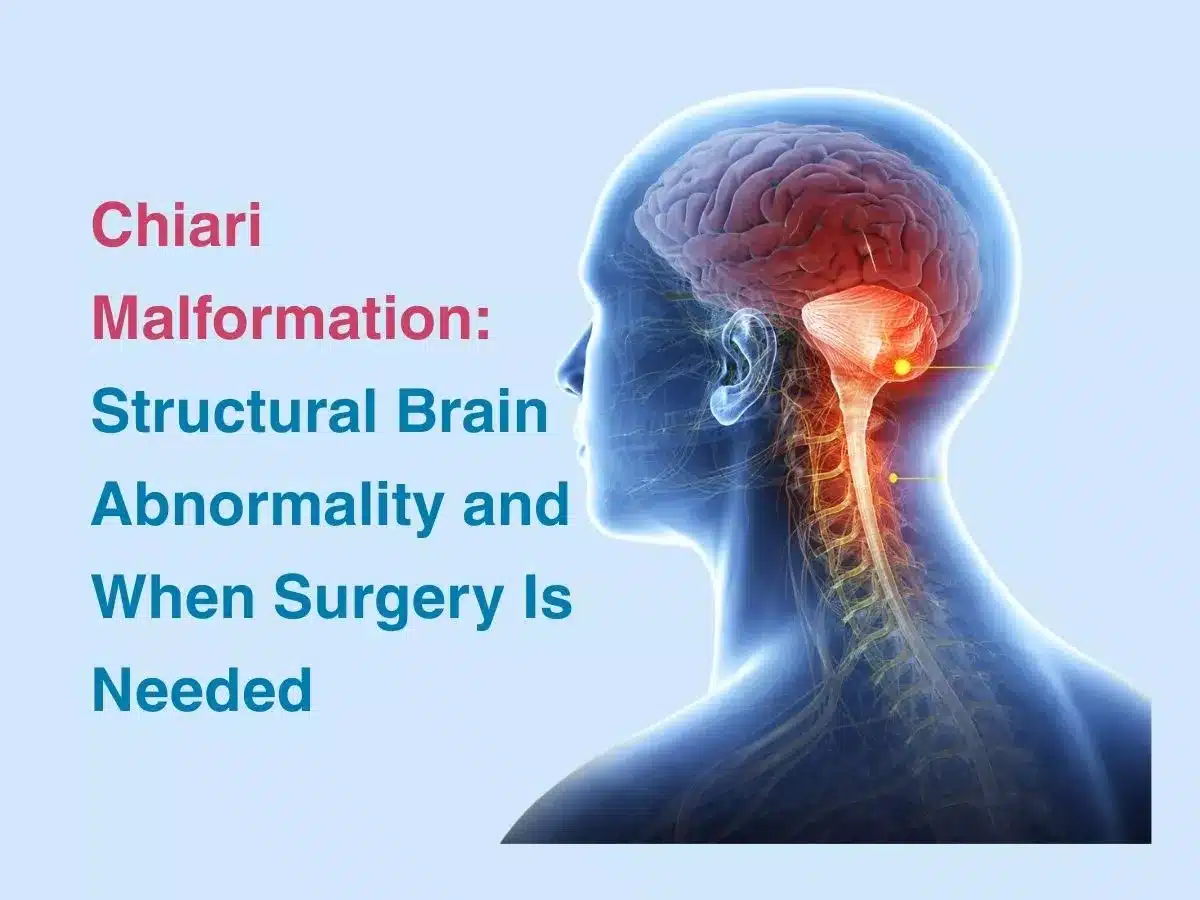
Chiari malformation is a congenital brain malformation characterised by a small part of the brain or cerebellum moving into the spinal canal. Depending on the extent of structural changes, symptoms may be present or absent in affected individuals. The cerebellum gets affected in this condition- which is why you may have issues with speech, balance, coordination.. It can also cause CSF to not flow normally.Diagnosing and treating this condition needs to be done by an experienced specialist at the best neurology hospital in Hyderabad. So, walk into KIMS Sunshine Hospital if you have severe headaches or issues with poor balance and coordination.
Types and Causes of Chiari Malformation
There are 5 types of Chiari malformations-
- Type 0- Your cerebellum is almost not crowding out the hole at the base of the skull- called the foramen magnum. But, you have symptoms because CSF is not able to flow freely into the spinal canal.
- Type 1- The lower part of the cerebellum extends into the foramen magnum and you may or may not have symptoms. Chiari malformation type 1 is the most common of all types.
- Type 2- This form occurs when you have a severe form of spina bifida- where the cerebellum and the brain stem grow in an abnormal fashion and get crowded inside the skull, causing pressure inside the skull. Paralysis is possible, even if surgery is performed, to close the spine.
- Type 3– this is very rare and very severe where the bottom parts of the cerebellum and the brain stem extend outwards, into a hole which is NOT the foramen magnum. There is an abnormal hole in the skull, allowing the other membranes to get out too. This is life threatening and surgery is necessary for affected children.
-
Type 4– This is also very rare and it involves the cerebellum missing some parts or being underdeveloped, causing symptoms which are hard to manage.
Symptoms of Chiari Malformation
Some symptoms include severe headaches, changes in heart rate, having issues with balance and coordination, neuropathy, insomnia and chronic fatigue. Vision changes, hearing issues, neck pain and dizziness, not being able to swallow, eat or speak, scoliosis, poor bladder or bowel control or even complete loss, or sleep apnoea are other symptoms.
Diagnosis and Treatment of Chiari Malformation
Imaging using MRI, CT or X-rays can clearly help the doctor visualise issues with the skull, soft tissues and check for flow of CSF too. Chiari malformations can be detected in prenatal ultrasound scans too, in some cases.
Treatment for mild symptoms involves use of painkillers or using glasses and hearing aids for help.
Severe chiari malformation will require surgery. Procedures include
- Posterior fossa decompression is mostly recommended where the posterior fossa or the back of the skull is removed, to reduce pressure and give the brain more room to be in.
- A laminectomy or craniectomy will help remove small bones in the skull and give more space for the brain to be in and help CSF flow better.
- A duraplasty is where the outermost dura mater is cut open and then a patch is sewed on to it, so there is more room for the brain, improve CSF flow and allow give more space for the spinal cord.
- A shunt may be placed to help CSF flow out of the skull better, especially if you have hydrocephalus.
Conclusion
Chiari malformation is mostly congenital in nature, but in some individuals can develop later on due to a tumour forming, hematoma, cyst, ICP or hydrocephalus, among other conditions. Most individuals may not show symptoms at all and hence won’t know that they have this condition. For others, symptoms may be very painful or with severe malformation, can be life threatening. You may be asked to take medications and get surgery done to manage symptoms better. If you have been diagnosed with this condition and symptoms become worse, contact the specialists at the best neurology hospital in Hyderabad today!
Frequently Asked Questions
What is Chiari malformation?
Why does Chiari malformation cause headaches?
How is Chiari malformation diagnosed?
What is posterior fossa decompression surgery?
Can Chiari malformation worsen over time?