


Pleural Effusion: Fluid Around the Lungs and When Drainage Is Needed

Verified By
KIMS-SUNSHINE
Specialist,
18 April, 2026
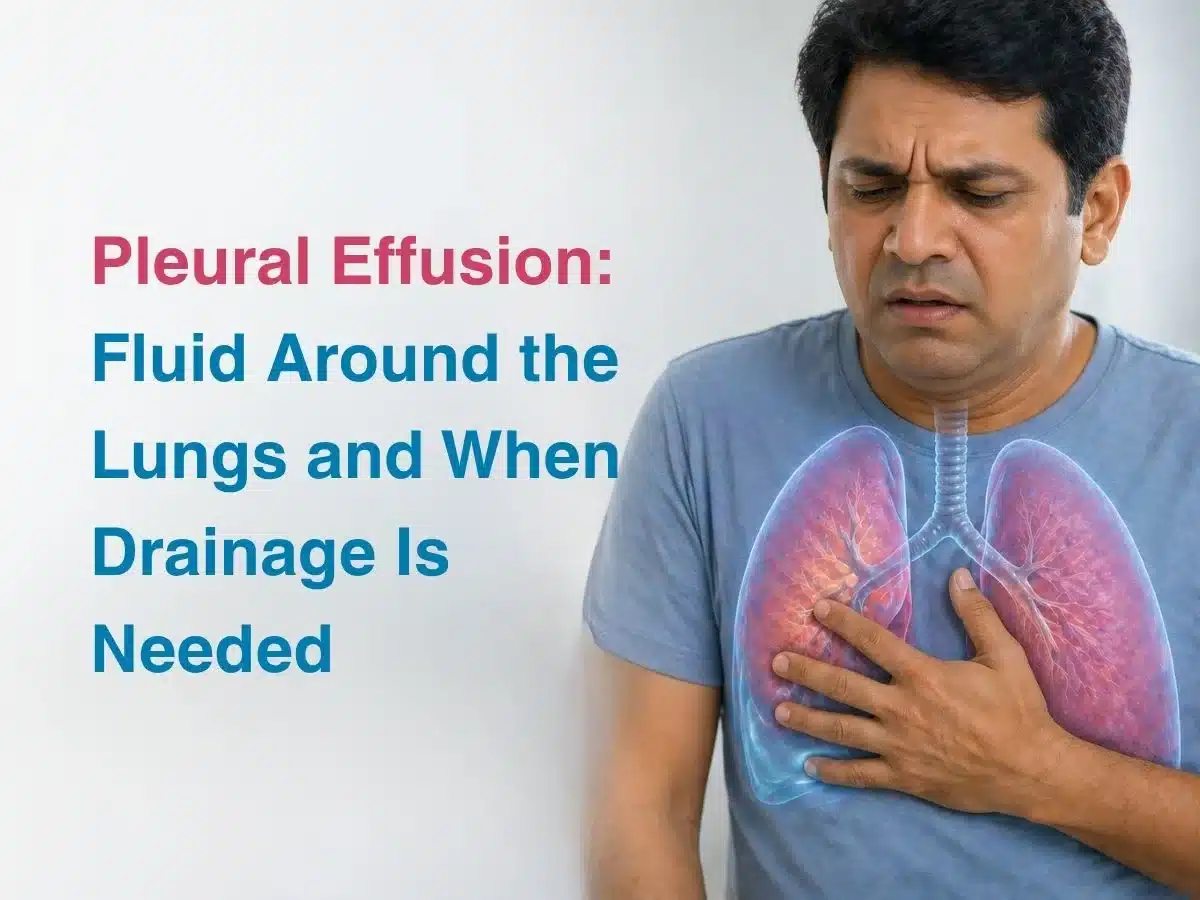
The lungs lie in your chest cavity and are covered with protective membranes called the pleurae. The pleurae normally have minimal amounts of fluid between them to help the lungs move easily, without friction when you breathe in and out. But, in some instances, the amount of fluid being made is more than normal or it is not being absorbed or recycled by the body at the right time- both of which can lead to excess fluid around the lungs. If you suffer from chest pain, breathing difficulty or have related issues, you should come to KIMS Sunshine, as we are the best pulmonology hospital in Hyderabad.
Causes of Pleural Effusion-
Pleural effusion causes include underlying conditions which can cause any one type of fluid to build up-protein poor fluid or protein rich fluid, transudative and exudative fluid, respectively.
- Transudative or protein poor pleural effusion occurs due to pressure differences from excess fluid in instances like cirrhosis, nephrotic syndrome or heart failure.
- Exudative or protein rich fluid occurs due to some cancer or infection, when too much fluid gets out of the capillaries or when the lymphatic system is not draining properly. Some issues include pneumonia, cancer, kidney, pancreatic or lung disease, inflammatory disease or after open heart surgery or as a result of chemotherapy, among other causes.
Symptoms of Pleural Effusion-
You may have the following symptoms-
- You may have chest pain which becomes worse when you breathe in deeply.
- You may have severe shortness of breath- called dyspnea.
- You may also not be able to breathe when you lie down but may feel better when you are upright or standing straight- this is called orthopnea.
Some people may not have any symptoms at all.
call us right away as we at KIMS Sunshine are the best hospital for pleural effusion treatment!
Diagnosis of Bronchiectasis-
A physical exam and medical history will be used to recommend further tests- imaging is the most common option used. These are some of tests-
- Chest x-ray – can be used to find fluid around the lungs or other structural abnormalities.
- Chest CT Scan – is another common option for greater detail.
- Chest ultrasound can also be used to check for fluid accumulation and drainage.
- Pleural fluid analysis– A sample of the fluid around the lungs is taken and checked under a microscope. Other tests are also performed if needed.
- Thoracoscopy– A tube with a camera, also called a scope is used to visualise the thorax or chest cavity. You are anaesthetised and a pleural effusion can be both diagnosed and treated with this approach. This is a minimally invasive technique.
Treatment of Pleural Effusion-
Pleural effusion treatment can involve the use of certain medications like diuretics or heart failure medications – if heart failure or kidney disease is causing the effusion in the first place.
If there is an infection, antibiotics may be used.
If you have malignant cells with the effusion, then chemotherapy, radiation therapy may be used.
Other approaches include-
- Thoracentesis procedure – This involves using a chest tube or needle to drain excess fluid around the lungs.
- Surgery may be recommended if drainage or pleural sclerosis don’t work- a thoracotomy is open chest surgery to remove fibrous tissue, get rid of infection and put a chest tube in place to help with drainage for the next few days or weeks.
- A thoracoscopy or video assisted thoracoscopic surgery (VATS) is also helpful. It is both diagnostic and can be used to treat the condition.
Conclusion
Pleural effusions can make it hard for you to breathe and affect quality of life severely. What’s more, the fluid can get infected, if you delay treatment for too long. Most pleural effusions do well if caught well and treated, but for some people it can come back again. So, listen to your body and how you breathe and please call us at KIMS Sunshine Hospital without any delay if you have any concerns or have been going for cancer treatment or suffer from other chronic conditions.
Frequently Asked Questions
When should pleural effusion be treated urgently?
Is drainage always required for pleural effusion?
Which specialist treats pleural effusion?
How is fluid around the lungs diagnosed?
Where can I get advanced pulmonology care for lung conditions?