


Persistent Acidity or Bloating? When to Consult a Gastroenterologist Before It Becomes Serious

Verified By
KIMS-SUNSHINE
Specialist,
26 April, 2026
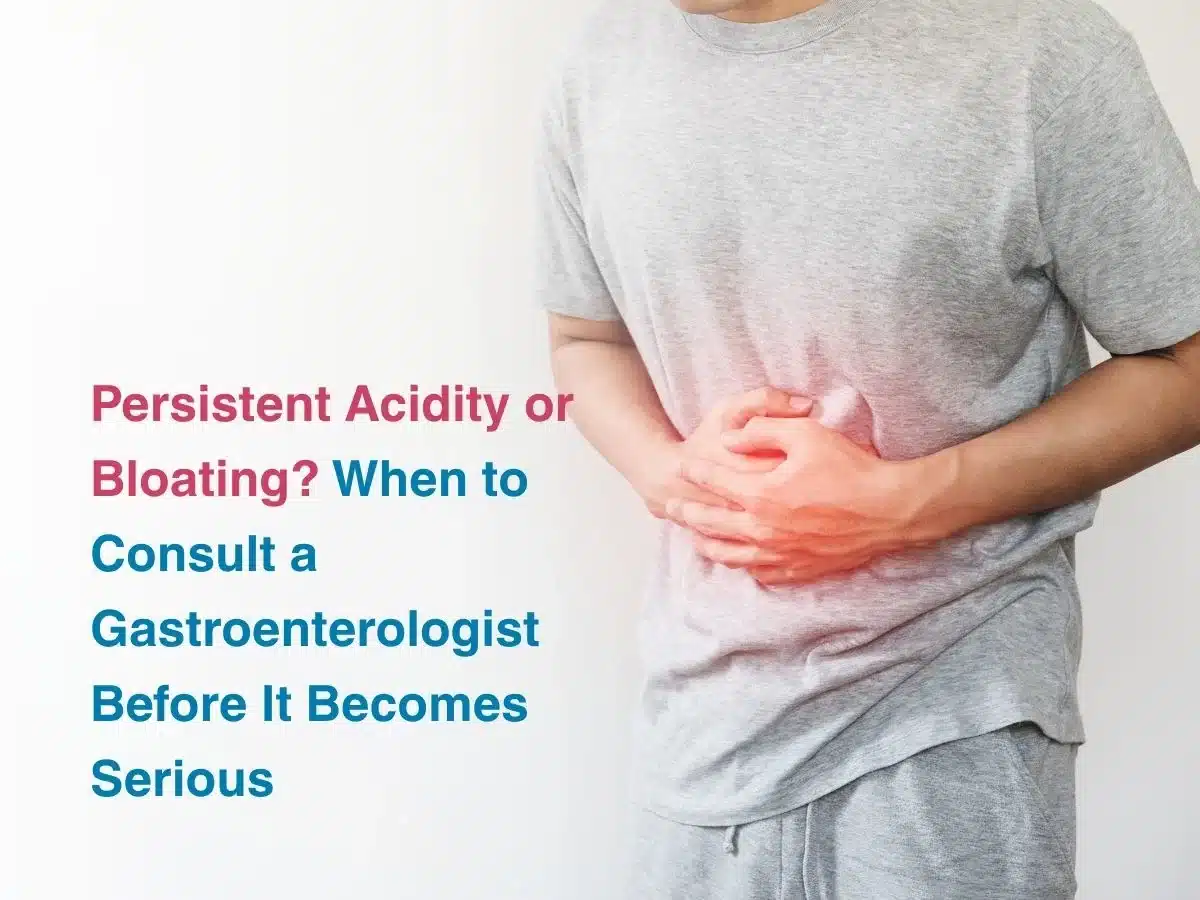
Digestion related problems are universal- as almost every one of us has dealt with some kind of bloating, indigestion or acidity at one time or the other. While such symptoms are temporary and go away in a few hours, or a day, there are instances when you may suffer from these symptoms chronically, for a while. It then becomes important to understand when you need medical attention and when you can stay home and rest. When you have these symptoms on a daily basis, it is time to walk into the best gastro hospital in Hyderabad- KIMS Sunshine, without any further delay.
Causes and Symptoms of Persistent Acidity and Bloating-
Bloating and gas formation are very integral components of digestion- since gaseous compounds are formed when food is broken down. You also tend to swallow air while eating or drinking anything. In the majority of cases, such gas can leave the system without any issue. But when too much gas is produced due to specific foods or it is not able to escape, it can cause bloating and discomfort.
If you eat foods that are very high in fibre or any component that can be fermented and broken down by the bacteria in the gut, drink carbonated juices, sodas or water and don’t chew food slowly, you will swallow large amounts of air- all of these can lead to bloating.
For acidity- the stomach produces stomach acids that are highly corrosive and designed to get rid of pathogens and break food down. Sometimes, too much acid is made, or it moves upwards into the food pipe and back of the throat- leaving a burning, sour sensation behind. This can happen often and if not treated, it can lead to acid reflux and GERD. Symptoms are more prominent when you eat heavy, spicy or fatty meals.
Symptoms include-
- Bloating that does not get better even with different foods.
- Acidity or heartburn that occurs more than twice a week.
- Not being able to swallow food normally and having an obstruction in the gastric system.
- Weight loss due to nausea, indigestion. Feeling full with small meals.
- You may notice blood in stools or vomit- this is a severe symptom.
- Abdominal swelling and severe pain can occur.
- Abnormal bowel movements
Habits That Can Make Symptoms Worse-
Eating heavy meals late at night, lying down immediately or not chewing food properly can worsen symptoms. You should hence drink lots of water, eat slowly, try to avoid spicy, fatty or fizzy foods and go for walks or move around more often- to reduce the risk of developing bloating, indigestion or acidity.
Diagnosis and Treatment of Digestive Problems-
A detailed medical history is taken and imaging is normally used to diagnose these conditions. These are the tests that are done-
- H. pylori testing- Blood and breath tests are used to diagnose this infection.
Imaging- CT or ultrasound scans can be used to check for obstructions, flow of blood and other fluids and to check for pancreas or gallbladder related problems.
- Colonoscopy– A tube with a camera is inserted into the colon to check for cancers, growths, obstructions or other issues.
- Upper GI endoscopy– A tube with a camera is inserted into the esophagus, stomach and other parts of the digestive system to check for obstructions, structural abnormalities, infections and other issues.
Surgical gastroenterologists can also perform surgery and other procedures, to help relieve your symptoms. Examples include a sigmoidoscopy, polypectomy, endoscopic ultrasound, esophageal dilation, etc.
You can talk to a gastroenterologist or general provider first, before getting a referral. If you have been searching for a stomach problem doctor near me, stomach pain after eating treatment or abdominal bloating treatment online, then please get in touch with us at KIMS Sunshine Hospital in Hyderabad.
Frequently Asked Questions
When should I consult a gastroenterologist for persistent acidity or bloating?
Can acidity or bloating indicate serious digestive problems?
Which specialist treats long-term digestive issues?
How is GERD diagnosed in hospitals?
What medications are used for chronic acidity and bloating?