


Difficulty Swallowing Food? Signs Your Digestive Tract Needs Evaluation

Verified By
KIMS-SUNSHINE
Specialist,
29 June, 2026
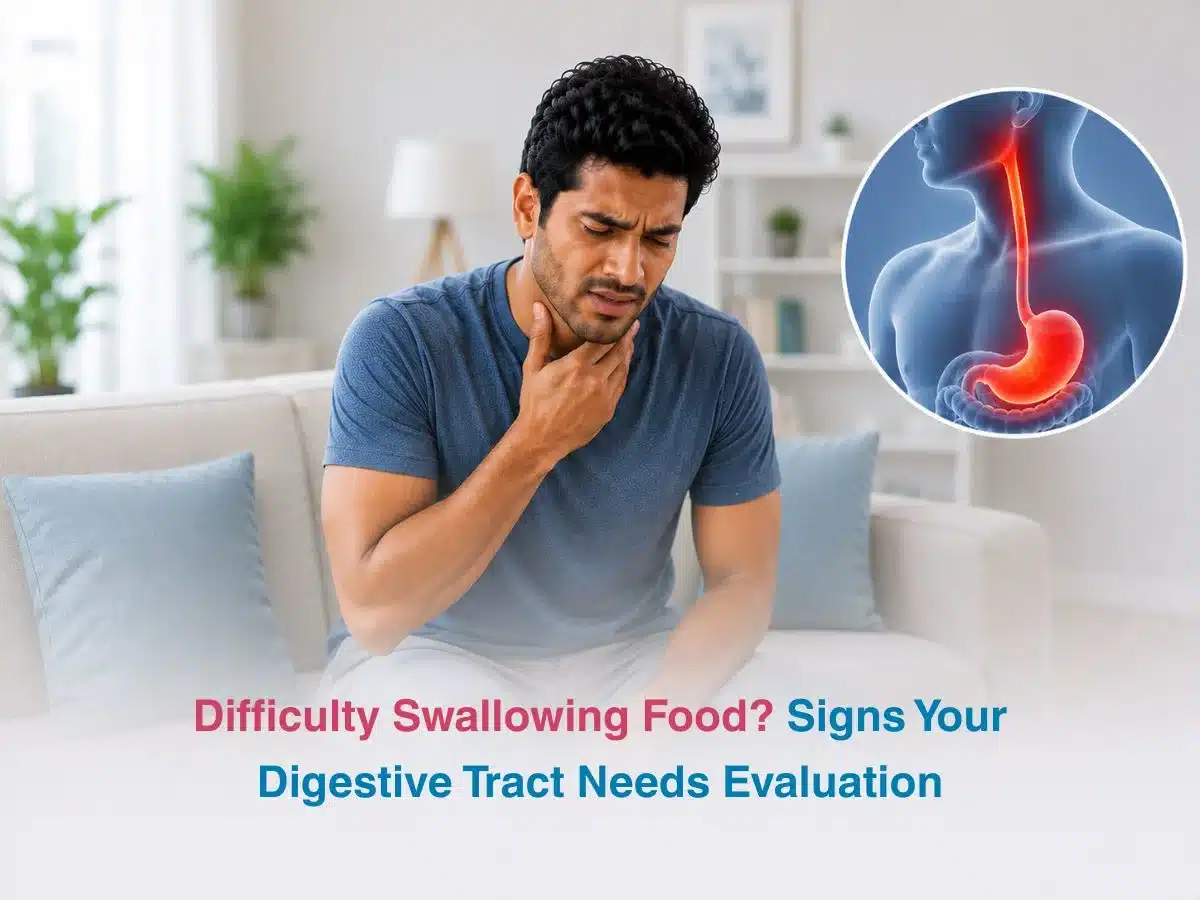
Swallowing feels effortless to most of us, until it isn’t. While eating in a rush or not chewing your meal sufficiently can cause occasional difficulty, chronic and persistent issues must never be brushed aside. Difficulty swallowing, medically termed as dysphagia, is a complaint made by many patients, impacting nutrient uptake, consumption and consequently, a person’s overall quality of life.
Causes of Dysphagia-
The ability to swallow is extremely complex and depends on coordinated muscles, nerves and parts of your digestive system. If any component does not function, it may cause abnormalities in swallowing. Some well known causes include-
- Most people with a food stuck in throat sensation probably have their oesophagus constricted due to muscle disorders, inflammation, infection or scarring due to chronic acid reflux. After a time, acid reflux can cause strictures. Those with a tight oesophageal stricture find that they will have a problem passing solids, and often report feeling very full after a small meal.
- Disorders that affect how food moves through your oesophagus, like the inability of the muscle at the bottom of the oesophagus (the lower oesophageal sphincter) to relax, is called achalasia.
- Other causes of this syndrome are infections.
- Inflammatory disorder called eosinophilic oesophagitis
- Neurological disorders that control your swallowing nerves,
- Tumours
Symptoms of Dysphagia-
Occasional swallowing difficulty can occur, but it’s a good idea to have a physician check if symptoms gradually increase over time. Some people might go through a “period of adjustment” by eating more slowly, drinking water or juice while eating, and avoiding certain types of foods. If it is a transient issue, swallowing difficulty may resolve quickly, so diagnosis may be delayed. Symptoms you should be aware of include-
- Severe and long-lasting chest pain
- Choking while eating
- Coughing while eating
- Regurgitation of undigested food
- Unknown weight loss are other indications.
When you notice any symptoms of swallowing difficulty including a dry cough while eating and a lingering chest “lump” feeling, it’s best to seek help from a gastroenterologist for swallowing problems as soon as possible so that treatment can begin before they worsen and cause disruption in your daily life.
How Swallowing Disorders Are Diagnosed and Treated-
To find the cause, doctors take the patient’s history in detail. After the physical examination, investigations are performed for the throat and oesophagus.
- Through endoscopy, doctors can directly visualise the oesophagus, stomach, and upper digestive tract. It is one of the most useful tools. An endoscopy swallowing difficulty test can diagnose inflammation, strictures, ulcers, or growth that may be causing your symptoms.
- More techniques may be suggested based on your suspected condition, such as barium swallow, oesophageal manometry, and imaging studies.
The treatment depends on the diagnosis.
- Patients with a narrower oesophagus owing to reflux can get medications that lower the acid produced by the stomach.
- Oesophageal strictures can be treated using endoscopic dilation. The function of the oesophagus can be improved by specialist interventions in motility disorders. With the help of diet and swallowing therapy, you can alleviate the symptoms.
Conclusion
One cannot attribute an ongoing difficulty in swallowing to old age or a passing inconvenience. Some of these conditions may not have a permanent cure but can be effectively managed in the long term. Keep your eyes peeled for some of these warning signs, attend to them regularly, and don’t hesitate to consult your doctor if you experience them.
Frequently Asked Questions
When should I see a doctor for difficulty swallowing?
What causes food to get stuck while swallowing?
Which tests diagnose swallowing disorders?
Is endoscopy required for dysphagia?
When should swallowing difficulty be treated as urgent?