


Kidney Stones Keep Returning? When You Need Advanced Kidney Evaluation

Verified By
KIMS-SUNSHINE
Specialist,
25 May, 2026
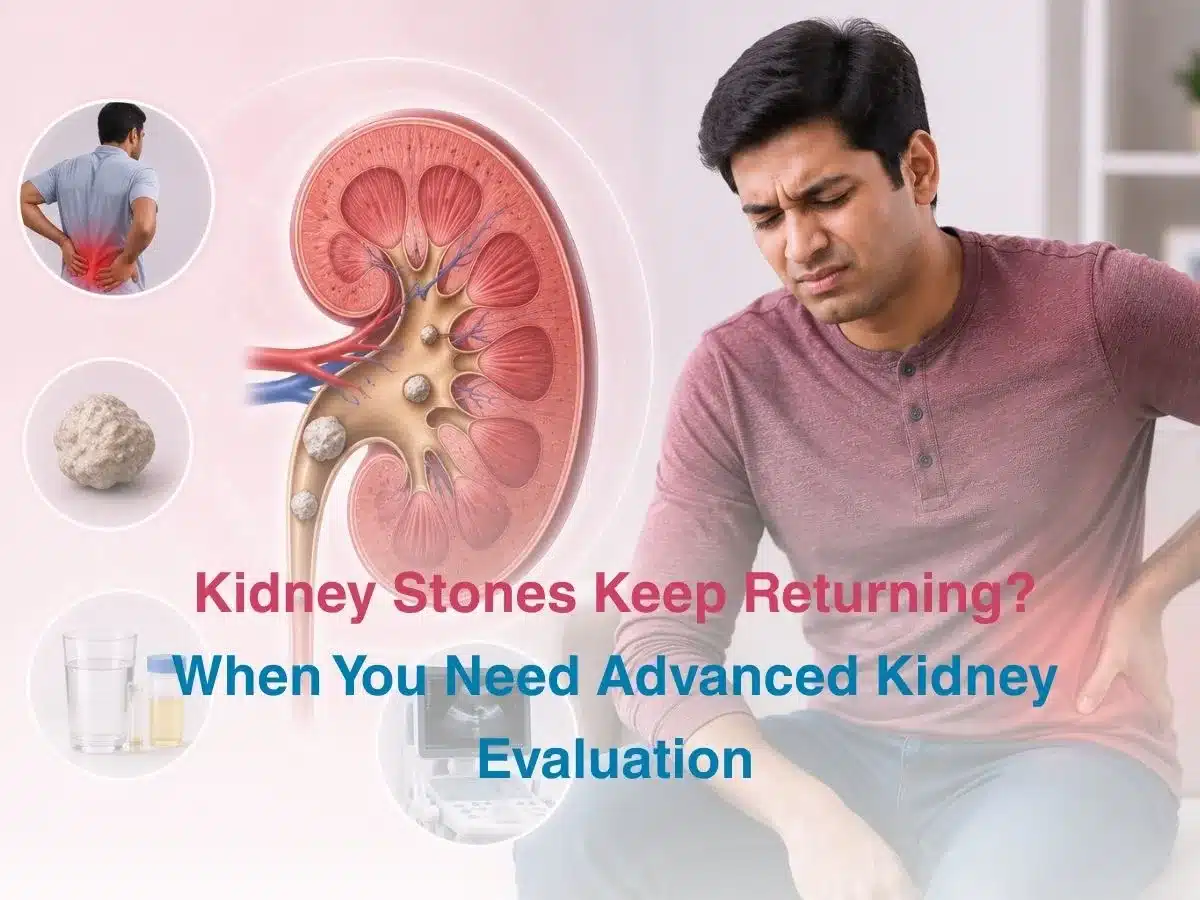
Most people who have experienced a kidney stone remember the pain very clearly and it often begins suddenly, becomes intense within minutes and can disrupt daily life completely. After treatment, many patients hope it was a one time problem.
But for some, the stones return.
Sometimes it happens after a few months and sometimes after a year or two and in other cases, patients begin noticing a pattern of repeated pain, emergency visits, scans, and procedures without really understanding why the stones keep forming in the first place.
That is when talking to a nephrologist for kidney stones at the best multispecialty hospital in Hyderabad becomes important!
Why Kidney Stones Sometimes Keep Coming Back-
One of the most frustrating parts of kidney stone disease is recurrence. Many patients follow basic advice after their first episode, drink more water for some time and assume the problem has been solved. Then another stone develops unexpectedly.
There are several possible kidney stone recurrence causes, including:
- Chronic dehydration
- High salt intake
- Excessive animal protein consumption
- Certain metabolic disorders
- Recurrent urinary tract infections
- Elevated calcium or uric acid levels
- Obesity and diabetes
- Family history of kidney stones
In some people, the body naturally has urine chemistry that makes stone formation more likely. Others may have underlying conditions that were never identified after the first stone episode.
That is why repeated stone formation should not simply be treated as “bad luck”.
When You Should See A Specialist-
A small kidney stone that passes once may not require extensive evaluation. But recurrent stones are different.
Specialist evaluation becomes especially important when:
- Stones recur frequently
- Pain episodes become severe
- Multiple stones are detected
- Stones develop at a younger age
- Kidney function appears affected
- Infections occur repeatedly
- Previous treatments have not prevented recurrence
Many patients only focus on getting relief from the immediate pain. But long term management becomes equally important once the condition starts repeating itself.
When Kidney Stones Need Emergency Attention-
Seek immediate medical care if you experience:
- Severe uncontrolled pain
- Fever or chills
- Persistent vomiting
- Difficulty passing urine
- Blood in urine with worsening symptoms
- Reduced urine output
A blocked kidney combined with infection can become serious if treatment is delayed.
If you have had stones before or are experiencing symptoms now, please call us at KIMS Sunshine Hospital, as we are the best hospital for kidney stone treatment!
What An Advanced Kidney Evaluation Looks For-
An advanced kidney stone evaluation is designed to understand why the stones are forming, not just where they are located.
This evaluation may include:
- Detailed blood investigations
- Kidney function testing
- Urine analysis
- Imaging studies
- Stone composition analysis
- Dietary assessment
- Hormonal and metabolic screening
Doctors may also recommend a metabolic evaluation kidney stones assessment using a 24 hour urine collection test. This helps identify abnormalities in calcium, oxalate, uric acid, citrate levels and other substances involved in stone formation.
The advantage of this approach is that treatment becomes personalised instead of generic.
This may involve:
- Fluid intake planning
- Dietary changes
- Medication to control mineral imbalance
- Treating urinary infections
- Long term follow up
For patients with recurrent stones, prevention can significantly reduce future procedures and hospital visits.
Modern Treatments Have Become Less Invasive-
Kidney stone treatment has advanced considerably over the years. Many procedures today are far less invasive than patients expect.
Treatment depends on:
- Stone size
- Stone location
- Degree of obstruction
- Infection risk
- Kidney function
Smaller stones may pass naturally with medications and hydration support. Larger stones may require intervention.
Advanced Urinary Stone Procedures-
Complex cases may require specialised urinary stone removal treatment depending on the stone burden and kidney involvement.
When stones recur repeatedly, treatment quality becomes extremely important.
Patients searching for the best hospital for kidney stone treatment should ideally look for centres offering:
- Advanced imaging
- Emergency kidney stone care
- Metabolic evaluation services
- Experienced urologists
- Nephrology support
- Minimally invasive procedures
Conclusion
To learn more about making dietary and lifestyle changes, so that life is more kidney friendly than before, please get in touch with experienced nephrologists at KIMS Sunshine Hospital without any delay. This is because we won’t just treat your symptoms at present, we will also work to make sure to reduce the risk of formation of stones in the future.
Frequently Asked Questions
When Should Recurrent Kidney Stones Be Evaluated By A Specialist?
Why Do Kidney Stones Keep Coming Back?
Which Tests Are Done For Recurrent Kidney Stones?
What Are The Best Treatment Options For Kidney Stones?
When Should Kidney Stones Be Treated As An Emergency?