


Uncontrolled Blood Pressure? Your Kidneys Could Be the Hidden Cause

Verified By
KIMS-SUNSHINE
Specialist,
24 May, 2026
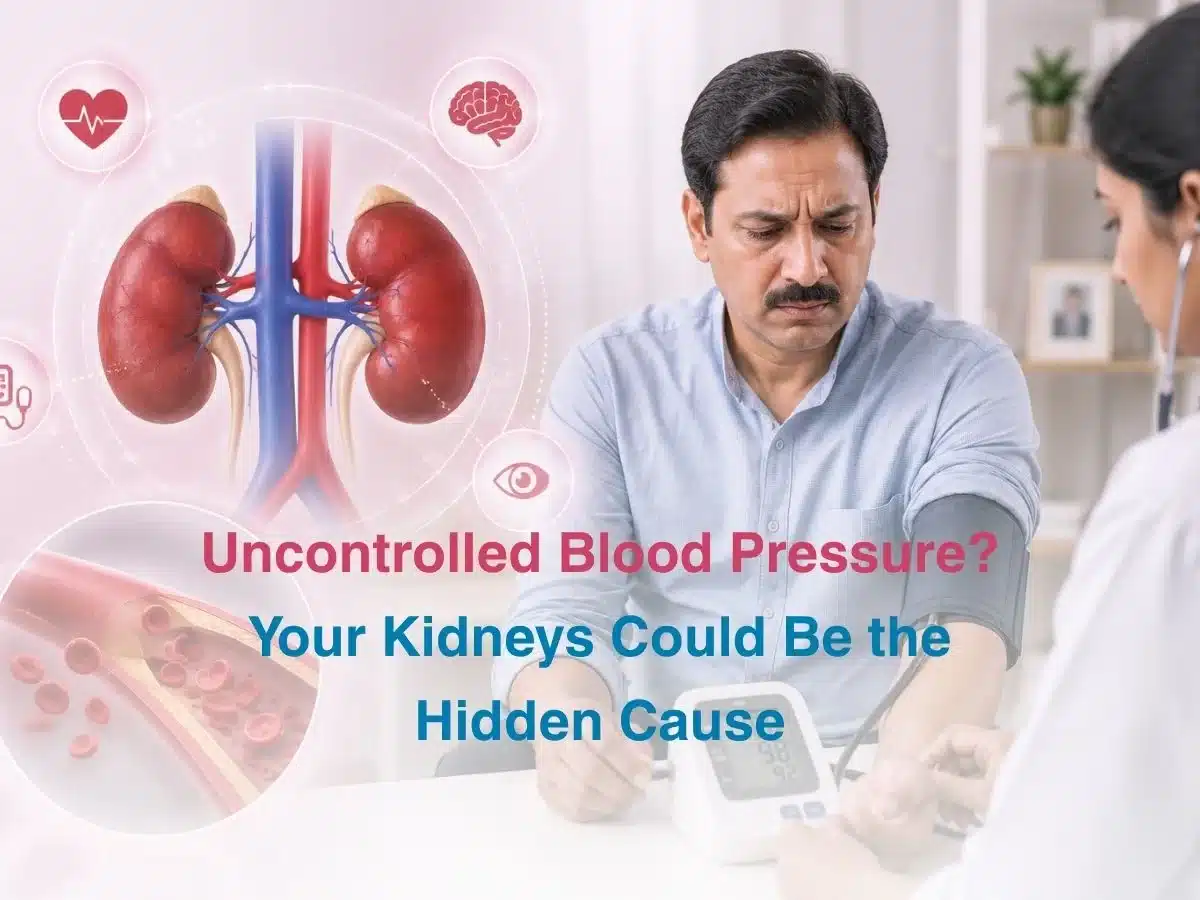
Most of us associate blood pressure with the cardiovascular system, which is to a degree true, but blood flows to different parts of the body- so in effect, blood pressure can influence how they work and can in turn be impacted by how organs function overall. Renovascular hypertension is one such condition where your high blood pressure may actually be caused by kidney related problems – cholesterolemia or heart disease may NOT be the problem here.
You will hence need to talk to a nephrologist for high blood pressure, so you can manage your symptoms better and ensure the kidney does not fail completely eventually.
Kidney Related Hypertension Causes-
When the arteries taking blood to the kidneys begin to narrow, it can reduce blood flow to them- prompting the kidneys to activate the RAAS system- renin-angiotensin-aldosterone which are hormones that are needed to maintain blood pressure and volume. This is when you will need a secondary hypertension evaluation.
Some of the prominent resistant hypertension causes include- vasculitis, renal artery aneurysm, a tumour pressing on the renal artery or if there is extensive scarring due to fibrosis from previous surgeries.
Symptoms Of Renal Hypertension-
These are some symptoms that point to a connection between kidney disease and blood pressure-
- If there is high blood pressure that affects you before you hit your 30s or after the 50s.
- If your blood pressure used to be in range before but is now increasing.
- Blood pressure does not decrease even with medications.
- If you have sudden pulmonary edema- fluid in lungs.
- If multiple bouts of a hypertensive crisis have occurred.
- If you have severe chest pain even with normal cholesterol levels.
- A whooshing sound, called bruit, that the doctor hears when they listen to blood flowing in the belly.
If you have any of these symptoms or are not able to keep your blood pressure under control, please opt for kidney function and hypertension tests at KIMS Sunshine Hospital today!
Diagnosis And Treatment Of Renal Hypertension-
Diagnosis will involve doing blood tests to check for renal function- like serum creatinine tests, to check for protein in urine- proteinuria, check for crystals or any other problems that may point to some underlying issue with the kidneys.
You will also be asked to get a kidney ultrasound done- to check how blood flow occurs in the kidney and in other parts of the body like the carotid arteries for example.
Treating chronic kidney disease blood pressure involves the use of medications like ACE inhibitors, angiotensin receptor blockers – both of which ensure that RAAS does not switch on unnecessarily. You will also be asked to take statins to ensure easier flow of blood, and diuretics to reduce fluid accumulation due to kidney function loss.
If your heart gets affected because of renal hypertension, you may need to get surgery done-like an angioplasty with stenting to help improve blood circulation. You may also get a rena bypass surgery done- where a piece of blood vessel from another part of your body is used to provide an alternative pathway for blood to flow in, instead of the narrow renal artery which is faulty and causing symptoms.
Conclusion
Managing hypertension is important as a vicious cycle can begin- high BP can damage your kidneys and kidneys in turn will try to raise BP so they can function in a compensatory fashion. This does not end well for anyone- you will need to be cautious and check your BP regularly, keep a tab on your medications and see if they need to be adjusted when you go in for follow ups with your doctor.
Call us so you can learn more about a kidney and heart friendly diet, as we are the best nephrology hospital for hypertension in Hyderabad. Talk to us today!
Frequently Asked Questions
Can kidney disease cause uncontrolled high blood pressure?
What tests are done to check kidney-related hypertension?
What are the best treatment options for renal hypertension?
When should high blood pressure become a medical emergency?
Where can I get expert nephrology care for hypertension?