

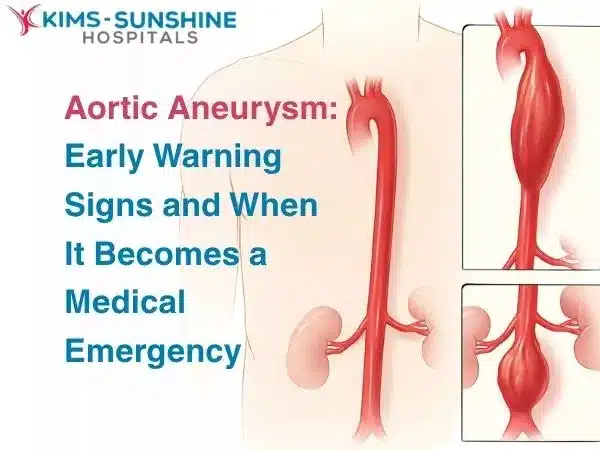
Aortic Aneurysm: Early Warning Signs and When It Becomes a Medical Emergency

Verified By
KIMS-SUNSHINE
Specialist,
01 March, 2026
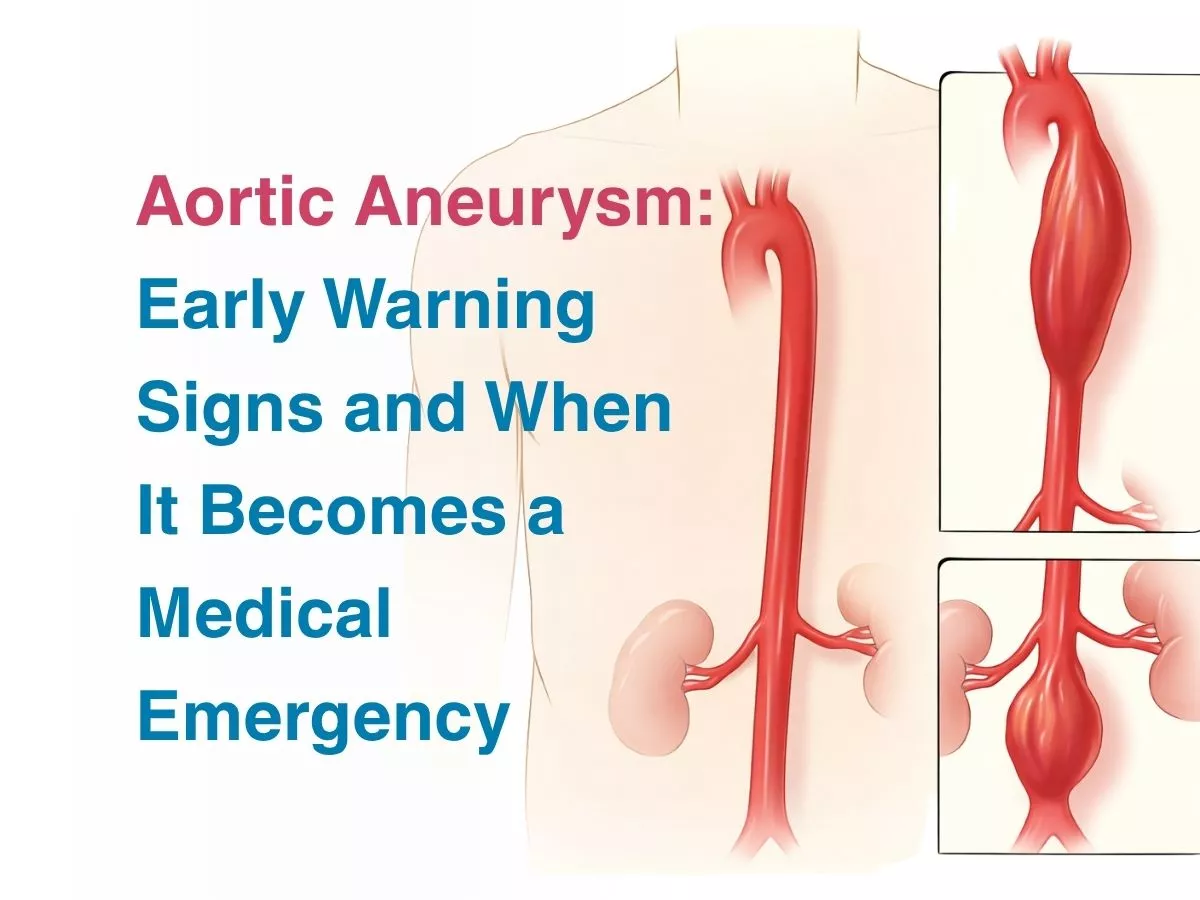
An aneurysm is a bulge that forms on the walls of an artery- making it look like a bubble. This weakens the blood vessel and when there are sudden pressure changes, it may rupture. When such a bubble forms in the aorta – the largest artery in the body, it is called an aortic aneurysm. An aneurysm is generally harmless, until it ruptures. When that happens, you can bleed internally very quickly, needing prompt treatment. Know what the early warning signs are, so you can seek emergency medical help at the best multispecialty hospital in Hyderabad.
Risk Factors For Aortic Aneurysm
Some of the most well known risk factors include- smoking, being over 65 years of age, being hypertensive and being male, respectively. Other causes include having autoimmune conditions which can cause arteries to get inflamed, having infections like syphilis or if you have atherosclerosis and associated cardiovascular conditions.
The aorta is shaped like a walking cane – and depending on where an aneurysm is found- it is named differently. An abdominal aortic aneurysm (AAA) can occur in the longer, cane-like bottom of the aorta while a thoracic aorta aneurysm occurs on top- near the heart, at the ‘handle’ part of the cane. Symptoms will also hence differ, depending on the location of the aneurysm. Some of the early warning signs are-
- Not being able to breathe normally.
- Feeling really full after a small meal.
- Not being able to swallow food or drink.
- Swelling in the arms, neck or face.
- Pain at the point where the aneurysm may be present- like the back, neck, chest or abdomen).
These are however the symptoms once the aneurysm has burst-
- Feeling very dizzy all of a sudden.
- Very sudden onset of severe back, chest or abdominal pain.
If you don’t get immediate medical help, you risk suffering from complications like an aortic dissection- where the aorta literally tears and leaks into the abdomen. The bleeding can be massive and life threatening.
Diagnosis of an Aortic Aneurysm
In most cases, aneurysms are diagnosed when imaging is done for some other condition, as there are no symptoms anyway. Some diagnostic tests include-
- Imaging with a CT scan
- A CT or MRI angiography- where blood flow is visualised in the blood vessels of interest.
- An ultrasound is also incredibly helpful while imaging blood vessels.
Treatment of an Aortic Aneurysm
An unruptured aortic aneurysm can mean that you will undergo monitoring in the form of regular screenings- mostly a few months apart. Medications that allow blood to flow better, lower blood pressure or help reduce cholesterol levels in blood can help at this stage, when the aneurysm is small in size.
Large aneurysms need to be treated differently, as the risk of them tearing or leaving is much higher. Surgical approaches include-
- An EVAR- Endovascular aneurysm repair (EVAR) is minimally invasive and involves the use of a catheter that is threaded up an artery to help place a graft which can repair or reinforce the artery. It is also called a TEVAR or FEVAR.
- An open aneurysm repair- The aneurysm is surgically removed and a graft is sewn in place, to repair the artery and improve blood flow. This is also the standard of care when an aneurysm bursts.
Conclusion
An aortic aneurysm is mostly benign and symptomless, but you may deal with some early warning signs like dizziness, chest pain or abdominal pain. If you have been diagnosed with an aneurysm before, then you should go in for regular check ups- as doctors will assess if the aneurysm has grown larger in size. Treatment depends on whether rupture has occurred or if there is a risk of it happening. If you have symptoms or need specialised aneurysm care, walk in to KIMS Sunshine – the best multispecialty hospital today. Call us for a consultation now!
Frequently Asked Questions
What is an aortic aneurysm?
How dangerous is a ruptured aortic aneurysm?
How is an aortic aneurysm diagnosed?
What is endovascular aneurysm repair (EVAR)?
How often should aneurysms be monitored?