

Achalasia: When the Lower Esophageal Sphincter Fails to Relax

Verified By
KIMS-SUNSHINE
Specialist,
06 March, 2026
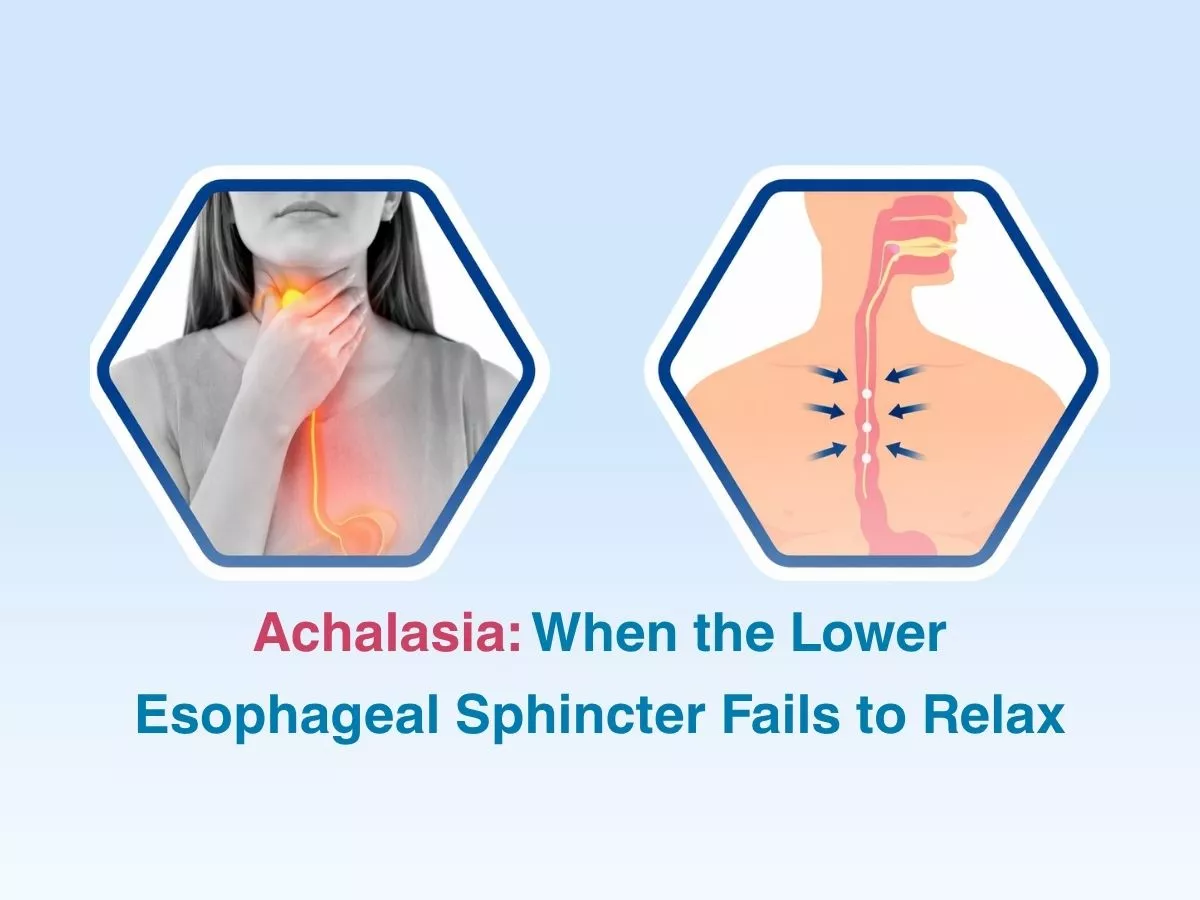
Achalasia, also called achalasia cardia is a rare esophageal motility disorder that can affect how a person swallows solid or liquid foods. It can lead to other unwanted complications, if it is not diagnosed and treated immediately. The esophagus serves as a highway for food to travel from the mouth to the stomach. It contracts or uses peristalsis to push the food down. When these muscles don’t work well, food does not reach the stomach properly. This condition has to be treated by gastroenterologists, so walk in to KIMS Sunshine, as we are the best gastroenterology hospital in Hyderabad.
Causes of Achalasia Cardia
The exact cause for this condition is not known. But research has shown that it can occur as a result of esophageal nerve damage due to autoimmune disease. It may also be due to some other underlying cause.
Symptoms of Achalasia Cardia
These are the symptoms that are normally observed-
- Difficulty swallowing solids and liquids
- Regurgitation of undigested food
- Chest pain which may be moderate or severe.
- You may have issues belching.
- You may suffer from severe heartburn
- You may hiccup often
- You may have unexplained weight loss.
Complications of achalasia cardia include aspiration pneumonia, lung infections, malnutrition and due to chronic inflammation, there may be a higher risk of you developing esophageal cancer.
Diagnosis of Achalasia Cardia
A physical exam is done, where your symptoms are noted. Then, the following tests are suggested, if achalasia is suspected-
- Manometry test for achalasia- This is a test where your ability to swallow is assessed. So it checks for esophageal motility, using a manometer- which detects how much pressure is used to push food down towards the stomach and also checks how the valves at the top and bottom of the food pipe work. Abnormal values can point to esophageal motility disorders.
- Barium swallow or esophagram test– You will be asked to swallow a solution that contains barium. This will allow the doctor to visualise the food pipe better while imaging, by using short bursts of X-rays to see the esophagus and how it is working.
- Upper endoscopy– A thin tube with a camera is inserted down the throat, via the food pipe to check for inflammation or excessive muscle contraction, without relaxation.
Treatment for Achalasia Cardia
Achalasia treatment options include the use of non-surgical and surgical approaches.
Non-surgical treatments include-
- Balloon dilation– where a balloon is used to slowly dilate the food pipe, allowing muscles to relax. You will be sedated and the diameter of the balloon is slowly increased in successive sessions.
- Botox injections – Using botulinum toxin can cause muscles to loosen up and stay like that.
- Other medications may also be prescribed – like nifedipine or isosorbide.
Surgical treatments include-
- Laparoscopic Heller Myotomy – An endoscope is inserted into the food pipe. Specialized instruments are then sent in to cut the contracted muscle fibers, so they can relax.
- Peroral endoscopic myotomy (POEM) – This is more invasive- as the muscles on the side of the food pipe and the sphincter muscle at the stomach are cut.
- In very severe cases, the esophagus may be removed completely.
Conclusion
Most people respond really well to treatment and by making changes to how they eat- eating softer foods more often can help. You should also drink a lot of water. Sitting up straight while eating can let gravity do its work better and push food down the food pipe. Eating meals at least 5 hours before bedtime can also help with heartburn or regurgitation. An extra pillow can be super helpful too, in keeping food down. Talk to a nutritionist and redesign your diet to suit your needs better. Consulting an experienced gastroenterologist can help you design a treatment plan that will work for you long term. So, call us today at KIMS Sunshine Hospital, if you have any issues with swallowing food.
Frequently Asked Questions
What is achalasia?
What are the early symptoms of achalasia?
What treatments are available for achalasia?
Can diet help manage achalasia symptoms?
Is surgery required for achalasia?