


Bronchiectasis: Chronic Airway Damage Leading to Persistent Cough and Infections

Verified By
KIMS-SUNSHINE
Specialist,
17 April, 2026
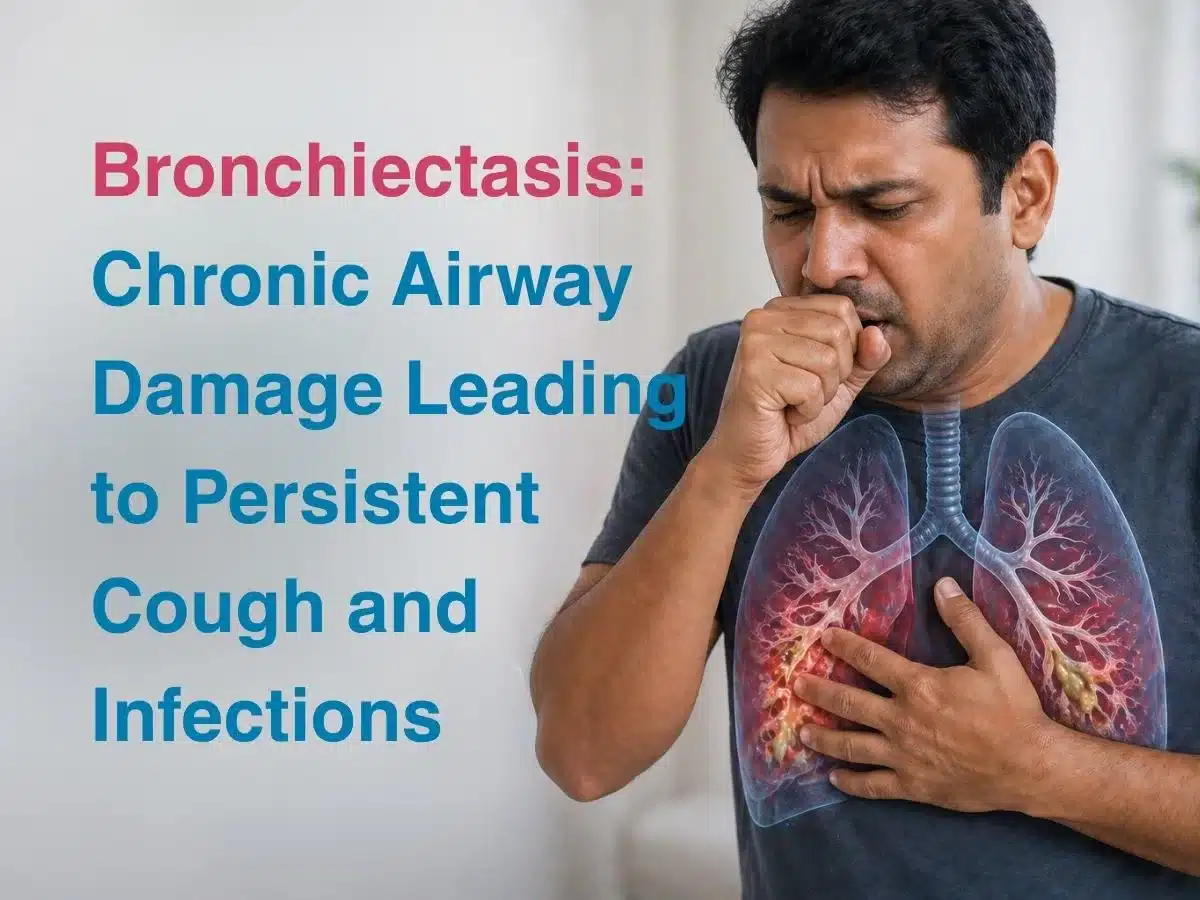
The lungs are an essential pair of organs that help you breathe and when the airways or the passages that carry air to your lungs get damaged due to some chronic condition, it can affect your quality of life- as you may not be able to breathe normally or go about your daily routine with ease. Mucus is produced normally as a protective measure but needs to get drained. With airway damage, mucus cannot get out and remains, getting infected. You end up coughing a lot, which is why bronchiectasis is also called chronic cough lung disease.
This is a chronic condition and needs proper long term lung disease management measures to be followed, so you don’t develop any unwanted complications.
Causes of Bronchiectasis-
There are two phases to how bronchiectasis is caused. Phase 1 is when you are exposed to a trigger like an infection or allergen that affects your lungs and causes high levels of inflammation. No specific cause is known for this stage.
Phase 2 is when this trigger primes your airways to get affected- which leads to more inflammation, and worse symptoms. This makes it a vicious cycle that has no end.
Underlying conditions where the airways are already damaged or likely to get damaged more than usual are the major causes for bronchiectasis. So, if you suffer from cystic fibrosis, autoimmune disease of some kind, if cells have problems with cilia – motility disorders, fibrosis from radiation therapy for cancer or enzyme deficiency respectively, among other possibilities. You are also more prone to suffering from asthma or COPD later on.
Symptoms of Bronchiectasis-
You will have some or most of the following symptoms-
- Repeated bouts of the flu or bad colds.
- You may cough out a lot of pus or mucus- the mucus smells bad.
- You may wheeze and feel very short of breath.
- You may cough up blood too.
You may feel normal for a few days or weeks and then you may have a flare up – with added issues like extreme fatigue, night sweats, fever and breathlessness, respectively.
call a pulmonologist for chronic cough at KIMS Sunshine Hospital today!
Diagnosis of Bronchiectasis-
Apart from a detailed physical exam, doctors will listen to your heart and lungs and then recommend imaging.
- Chest x-rays and bronchiectasis diagnosis CT scan are used to image the lungs and look for any structural issues or to detect fluid or damage.
- Sputum culture and blood tests- Both blood and mucus samples are taken to check for infections.
- Lung function tests are done to check how well your lungs are working.
- If cystic fibrosis (CF) is suspected for your symptoms, then a sweat chloride test is done. High amounts of chloride can confirm the diagnosis for CF.
- Bronchoscopy- A long tube with a camera at one end is sent into the airways to check them and your lungs for structural abnormalities. Samples of mucus, pus or other fluids are also taken.
Treatment for Bronchiectasis-
Most of your symptoms will go away if mucus is cleared from the airways. So, these are some ways for bronchiectasis treatment to proceed-
- If you have an infection causing inflammation and lung damage, then antibiotic therapy is recommended.
- Chest physiotherapy for bronchiectasis- chest percussion therapy or postural draining can help mucus loosen up and drain out. Breathing exercises are also helpful.
- Macrolides are drugs that can thin mucus and also reduce inflammation.
- Mucolytics or expectorants- can be used to thin mucus out, so you can cough and get it out.
- The use of PEP or positive expiratory pressure machine is also done- to pull mucus out of your lungs and airways.
- You may also be asked to consider getting surgery, if inflammation and tissue damage is highly localised.
Conclusion
Chronic cough can affect your quality of life severely- as you may feel breathless, tired and even lose weight in severe cases. You should not delay a visit to the hospital. Getting help earlier can help you manage bronchiectasis or other chronic conditions better, as treatment methods won’t be as aggressive. So, call us today if you have any concerns.
Frequently Asked Questions
When should I see a doctor for chronic cough and infections?
Which specialist treats bronchiectasis?
How can flare-ups be prevented?
Are long-term antibiotics required for bronchiectasis?
Where can I find expert care for chronic lung diseases?