


Cholangitis: Infection of the Bile Ducts and Its Emergency Symptoms

Verified By
KIMS-SUNSHINE
Specialist,
20 April, 2026
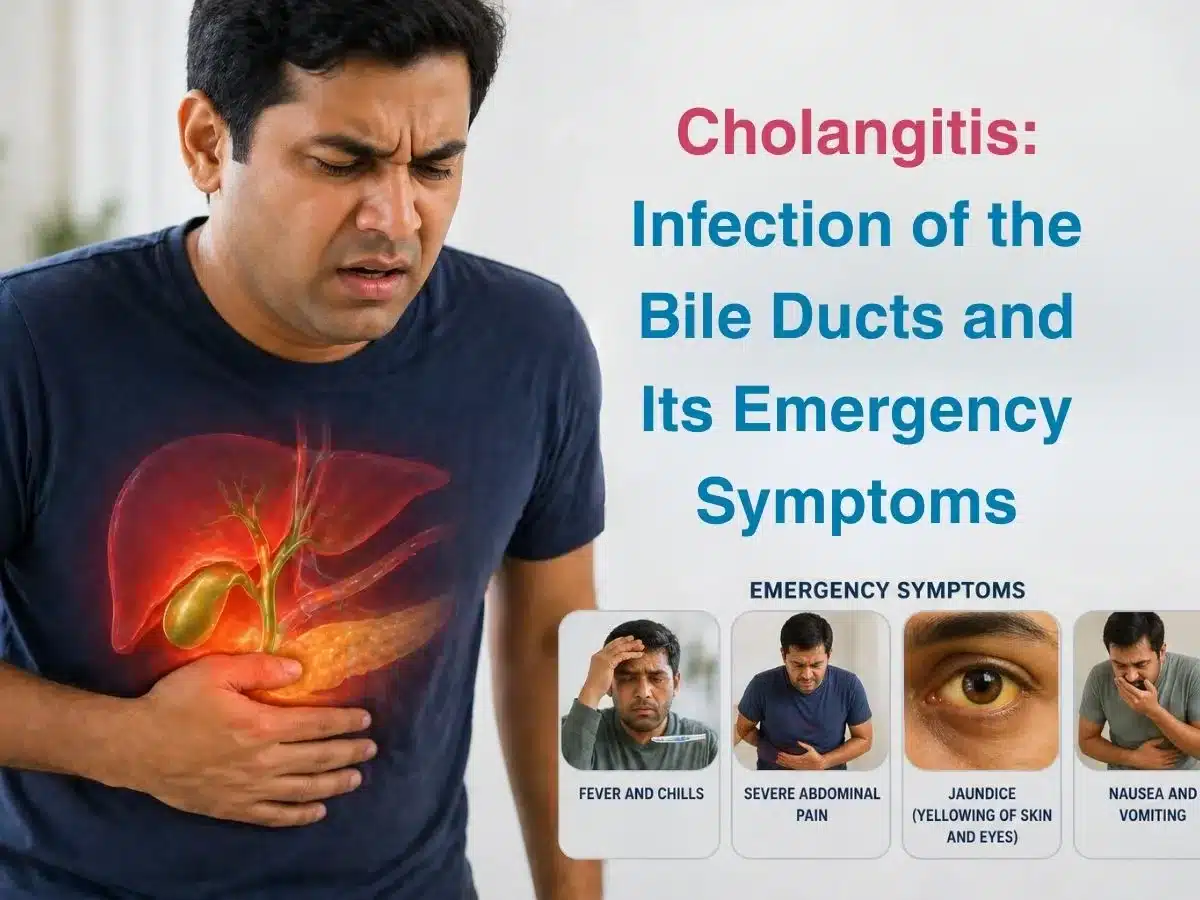
The liver is a very metabolically active organ that makes bile and bile salts for digestion to occur, while also playing a key role in breaking down harmful components and purifying blood before it goes to different parts of the body. Bile from the liver moves via small tubules called bile ducts to different parts of the digestive system. When these passages or tubules get inflamed due to an infection or injury, it can affect free movement of bile. It hence makes sense to call the best hospital for bile duct infection immediately, if you have symptoms like severe fatigue, abdominal pain, jaundice etc.
Causes of Cholangitis-
Cholangitis can be acute or chronic. Some acute cholangitis causes include infections, gallstones, tumours or strictures and cholestasis or blocked bile flow which can happen due to some other underlying issue. Static pools of bile can be breeding grounds for pathogens.
At times, with a combination of certain conditions like autoimmune disease, infections and liver disease, you may have inflammation, scar tissue formation and acute cholangitis. If this is left untreated, it can become a case of chronic cholangitis.
Symptoms of Cholangitis-
Most people don’t really go in to get diagnosed for cholangitis alone- they may go in because they have liver disease and then find out that they have cholangitis too. You may have some or most of the following symptoms if it is acute cholangitis though-
- Upper right quadrant abdominal pain- this is where your liver is.
- You may have a fever due to an infection
- You may have jaundice- yellow skin, sclera and nails.
- You may have itchy skin- called pruritus, since bile acids can escape into your bloodstream and cause related symptoms.
- Bile acids can also travel to the brain in blood and lead to hepatic encephalopathy.
- You may have low blood pressure and high heart rate.
Chronic cholangitis can lead to symptoms like spider veins, swollen abdomen, fluid accumulation, dark coloured urine, light coloured stools, severe exhaustion and diarrhoea respectively.
please call a specialist at KIMS Sunshine Hospital for emergency GI infection treatment today!
Diagnosis and Treatment of Cholangitis-
Blood tests are done to check for liver function- liver enzymes, bile and other components.
- A complete blood count (CBC) can be used to check for infections.
- Imaging– an abdominal ultrasound, MRCP and (or) ERCP for cholangitis may be done.
- With MRCP (Magnetic resonance cholangiopancreatography), the bile ducts and pancreatic ducts can be imaged. ERCP (Endoscopic Retrograde Cholangiopancreatography) is a diagnostic approach that can also be used to treat cholangitis by removing gallstones or other obstructions in the bile ducts.
- Abdominal ultrasound can be used to check for abnormalities in the abdomen and all the organs, not just the liver or bile ducts alone.
Treatment involves using the bile duct drainage procedure, using an endoscope for better visual clarity. Excess bile can be drained using stents if you have acute cholangitis. For chronic cases, you may need the procedure done a few additional times, to relieve pressure and symptoms.
You will also be given antihistamines to reduce itching, ursodeoxycholic acid (UDCA) is given to slow down progression of cholangitis. You may also be given antibiotics for cholangitis. IV fluids and supplements may also be prescribed for dehydration and nutritional deficiencies.
Conclusion
When acute cholangitis is not diagnosed in time, bile can leak out into the abdominal organs and cause a massive infection- and then you will require severe abdominal infection care. With chronic cholangitis, you can live for many years, but you may need biliary drainage done from time to time. If liver disease is not managed, you may need a liver transplant in very severe cases. Living with liver disease is never easy- you will need to exercise regularly, eat a liver friendly diet which is low in fat and sugar and take medications that do not affect your liver as much.
If you have any concerns or want to learn how to manage your condition better, please get in touch with an experienced hepatologist at KIMS Sunshine Hospital, as we are the best multispecialty hospital in Hyderabad.
Frequently Asked Questions
When should cholangitis be treated as an emergency?
How is cholangitis diagnosed in hospitals?
What is ERCP and how does it help in cholangitis?
Can cholangitis recur after treatment?
Where can I get emergency care for bile duct infections?