
Lymphoma: Understanding the Difference Between Hodgkin’s and Non-Hodgkin’s Types

Verified By
KIMS-SUNSHINE
Specialist,
12 June, 2026
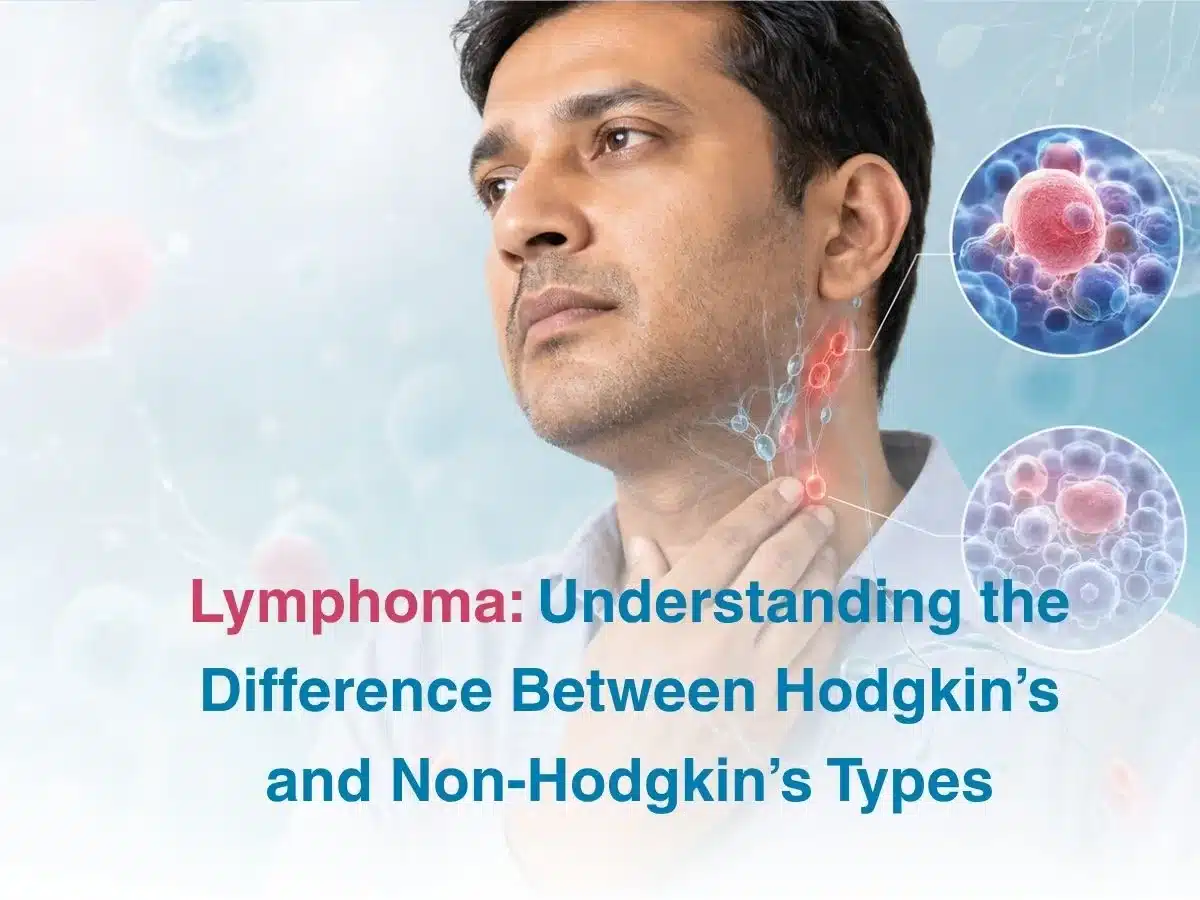
The lymphatic system is an offshoot of the circulatory system- where blood gets filtered to form lymph. This lymph can be thought of as the home of the white blood cells or lymphocytes. Lymphomas occur due to white blood cells being produced in massive numbers, when they are still immature. The cancer can be a slow growing one or develop very quickly. There are two main types of lymphomas- Hodgkin’s and non-Hodgkin’s, respectively. They are called as such because very specific populations of cells are affected in each of these types.
You will need advanced oncology treatment for lymphoma from experienced specialists at KIMS Sunshine Hospital, so reach out to us without any delay, once you notice any of these symptoms.
Causes of Lymphoma-
Most cancers – including lymphomas occur due to mutations in cellular DNA- which accumulate with age. There is no way to pinpoint which genes will change or why it happens. A few risk factors like suffering from viral infections, having a weak immune system due to aggressive treatment for some other condition or even suffering from an autoimmune condition can also prime your cells to mutate and become cancerous eventually.
Symptoms of Lymphomas-
These are the common symptoms of both types of lymphomas-
- The lymph nodes at the neck, armpits or groin may swell up and stay like that for weeks. But there won’t be any pain.
- You will feel extremely tired all the time, even if you have slept well.
- Fever tends to come and go and it may be above 103 degrees fahrenheit (39.5℃).
- Night sweats that are profuse – you wake up drenched with your sheets soaking wet.
- You may feel very breathless.
- Unexplained weight loss- where you have lost about 10% of your body weight in about 6 months or less, with no changes in diet or activity levels.
To learn more about lymphoma symptoms and treatment, please call us at KIMS Sunshine Hospital right away!
Diagnosis of Lymphoma-
Doctors normally start off with blood tests which check for a number of parameters-
- CBC– complete blood count to check for the numbers of different cell types in blood. Too many white blood cells can be a warning sign.
- ESR– erythrocyte sedimentation rate- inflammation that is a sign of lymphoma. Too many cells can also make blood thick and sluggish and hard for it to flow.
- LDH -Lactate dehydrogenase- This is an enzyme that shows up when many cells grow or die. Very high levels can point to cancer.
- Liver and kidney function tests are done.
- SPEP– Serum protein electrophoresis to check for M proteins – monoclonal proteins that abnormal plasma cells produce. This is done to check for myeloma and rule it out.
Imaging can include- CT scans to check for enlarged spleen and lymph nodes. PET and MRI scans can also be used to image cancerous growths in other parts of the body.
Getting a positive Hodgkin lymphoma diagnosis includes finding owl’s eye-like cells called the Reed- Sternberg cells, which are surrounded by many normal inflammatory cells. The abnormal cell type hence causes the cancer. Hodgkin’s Lymphoma also tends to affect people in the 15-35 and 55 and above age groups.
Non-Hodgkin’s lymphoma (NHL) is different- the immune cells- B and T lymphocytes themselves are abnormal due to mutations and cannot stop dividing. NHL affects anyone who is very young or old. There is no distinct peak in the age groups affected, like Hodgkin’s Lymphoma.
Treatment of Lymphoma-
Hodgkin’s lymphoma is predictive and spreads from one lymph node to the next. NHL is unpredictable and can affect any part of the body. The bone marrow does not normally get affected with HL but when it does, prognosis can be poor.
Chemotherapy, radiation therapy, targeted therapy, immunotherapy and stem cell transplantation are different treatment approaches used for non-Hodgkin lymphoma treatment and HL too. A positive lymph node biopsy diagnosis means you will need to start treatment immediately.
Conclusion
Dealing with any type of lymphoma can be hard. But, HL is generally easier to treat, as the disease tends to spread very predictably. NHL is more random and can involve many populations of cells- causing large scale spread and damage to different parts of the body. This will require more aggressive treatments. Call us at KIMS Sunshine Hospital as we are the best cancer hospital for lymphoma treatment, to learn more!
Frequently Asked Questions
What is the difference between Hodgkin’s and Non-Hodgkin’s lymphoma?
Which tests are used to diagnose lymphoma?
What are the most effective treatment options for lymphoma?
Which specialist treats Hodgkin’s and Non-Hodgkin’s lymphoma?
What are the warning signs that require urgent evaluation?