

Bile Duct Obstruction: Causes, Symptoms, and Treatment Options

Verified By
KIMS-SUNSHINE
Specialist,
07 March, 2026
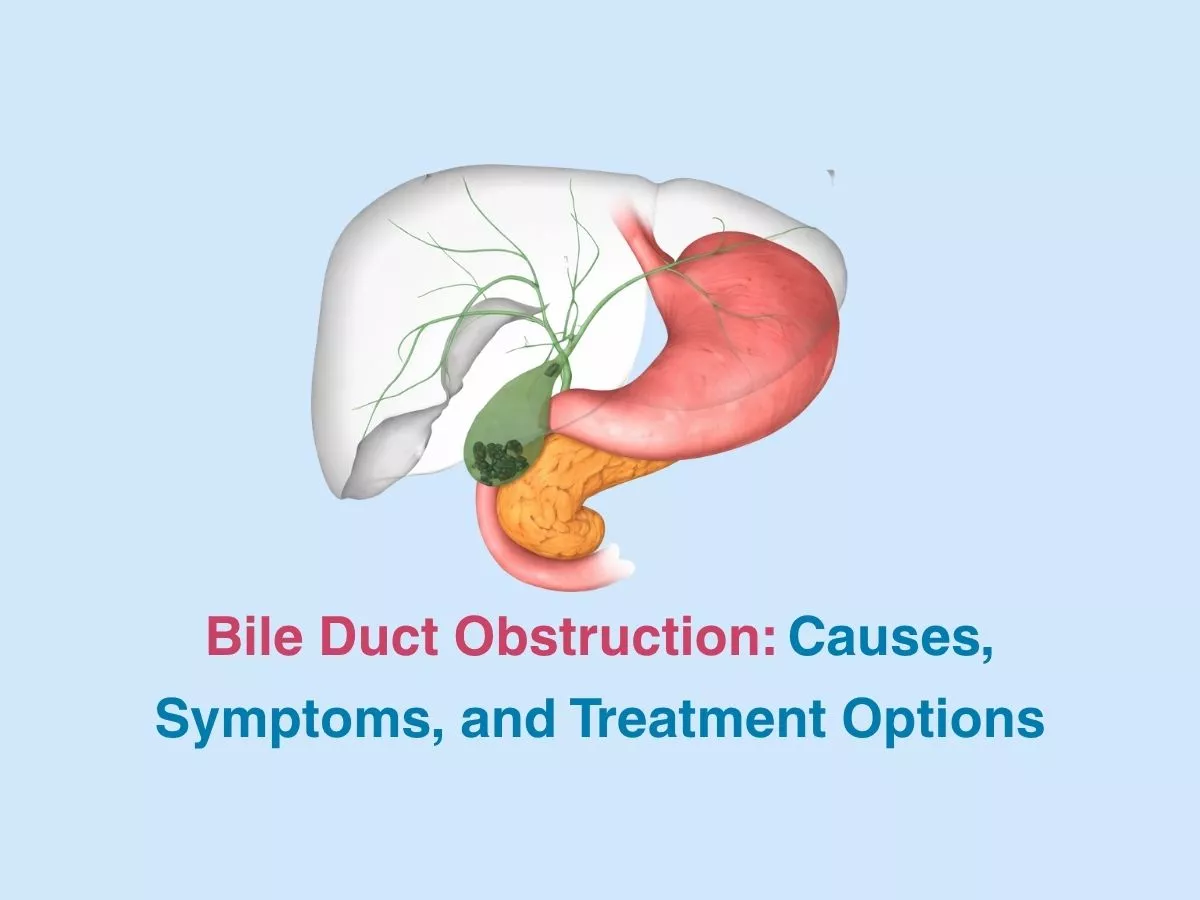
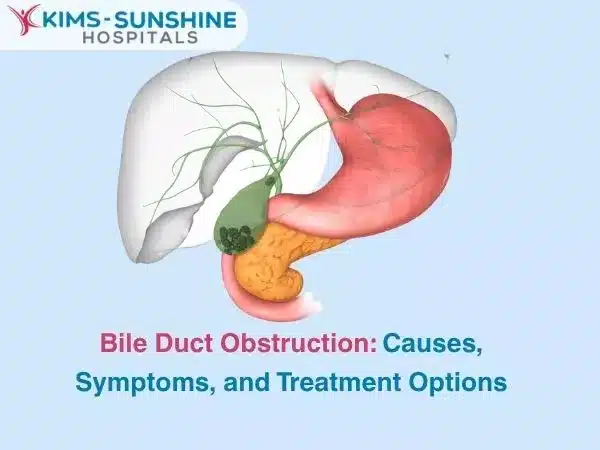
Bile is a yellowish green digestive fluid needed to break down fats and it is made by the liver. It then flows via bile ducts or tiny canals into the gallbladder, where it is stored and released during digestion. When the bile ducts get blocked due to some reason, it can cause bile to build up in the liver. The by-product bilirubin also remains behind, as it is not able to get excreted. When you have jaundice or severe pain in the abdomen, you should consult an experienced gastroenterologist at KIMS Sunshine – the best Gastroenterology Hospital In Hyderabad immediately.
Causes for Bile Duct Obstruction
Some of the main causes for a blocked bile duct include-
- Gallstones blocking bile duct
- The presence of congenital cysts in the ducts, which don’t allow the free flow of bile into the gallbladder.
- The presence of bile duct strictures is caused due to chronic inflammation that can lead to extensive scar tissue formation.
Bile duct strictures themselves may be caused by cancer, chronic inflammation, infection, autoimmune disease or radiation therapy, among others.
Symptoms of Bile Duct Obstruction
These are some of the hallmark symptoms of bile duct obstruction
- Accumulation of excessive bilirubin can lead to the sclera, nails and the skin looking pale yellow. This is how jaundice and bile obstruction are closely linked- as bilirubin excretion does not take place.
- Severe upper abdominal pain which tends to be episodic in nature- with it being severe and moderate at times.
- When you have fever and chills, it may be due to an infection
- You will have itchy skin.
- You may feel really tired all the time and have a poor appetite.
- You may have dark coloured urine or clay coloured stool.
Diagnosis of Bile Duct Obstruction
Apart from a physical exam, these are the following tests that are used to diagnose this condition-
- A complete blood count (CBC) can check for the presence of infections and help establish a few general health parameters.
- Blood tests to check for liver function- liver enzyme elevation is a primary symptom. Tests check for bilirubin, alkaline phosphatase (ALP), gamma-glutamyl transferase (GGT) and others.
- Pancreatic function tests check for lipase and amylase, as the pancreas can get affected due to a poorly functioning liver.
Imaging is also extensively used-
- An ultrasound can be used to detect any obstruction or structural anomaly.
- A CT scan may be done to eliminate symptoms and narrow down on the correct diagnosis.
- ERCP (Endoscopic retrograde cholangiopancreatography)- The ERCP procedure involves using a long, thin tube with a camera- the endoscope which is inserted into the liver via the esophagus. The cause of the obstruction can be visualised and if it is minor, can be treated immediately. A biopsy may also be taken if needed. You will be anesthetized for the procedure.
- MRCP– Similar to an ERCP, except it is not as invasive. A special dye is injected and then imaging is done to check if it moves through the bile ducts or cannot due to an obstruction. It can identify gallstones and bile duct strictures.
- HIDA (Hepatobiliary iminoacetic acid) scan– A radioactive tracer is used to image the bile ducts.
Treatment of Bile Duct Obstruction
These are some of the treatment approaches
- The ERCP procedure itself can break down gallstones, while imaging.
- The gallbladder may be removed surgically, using a laparoscopic approach, if you suffer from recurrent gallstone formation.
- Bile duct stenting is when a tube made of plastic or metal is used to widen the ducts, if strictures are the main issue affecting biliary drainage.
- If a tumour is causing symptoms, then radiation therapy, surgery or chemotherapy can be used.
Conclusion
Bile duct obstruction can be problematic- as it can be painful and interfere with digestion and absorption of nutrients by the gut. Most obstructions can be dealt with surgically, but extensive treatment plans may be needed if a tumour or stricture is causing the problem. Bile duct strictures cannot be prevented but you can try to reduce the risk of gallstone formation- by eating healthy and getting enough exercise. Talk to an experienced gastroenterologist if you want to learn more! Call us today at KIMS Sunshine Hospital, without further delay.
Frequently Asked Questions
What is bile duct obstruction?
What are the symptoms of a blocked bile duct?
Can gallstones block the bile duct?
What is the ERCP procedure?
Can bile duct obstruction cause infection?