

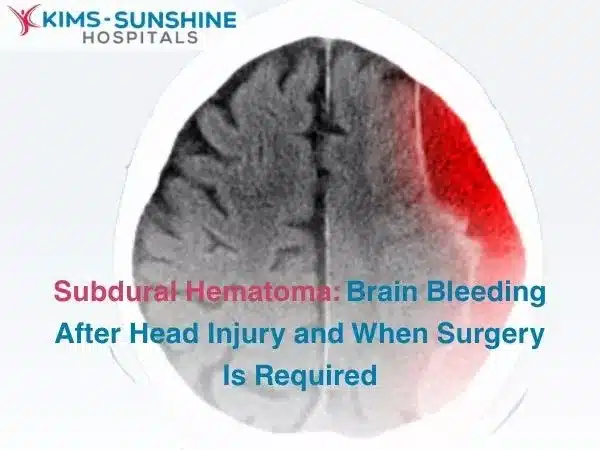
Subdural Hematoma: Brain Bleeding After Head Injury and When Surgery Is Required

Verified By
KIMS-SUNSHINE
Specialist,
02 April, 2026
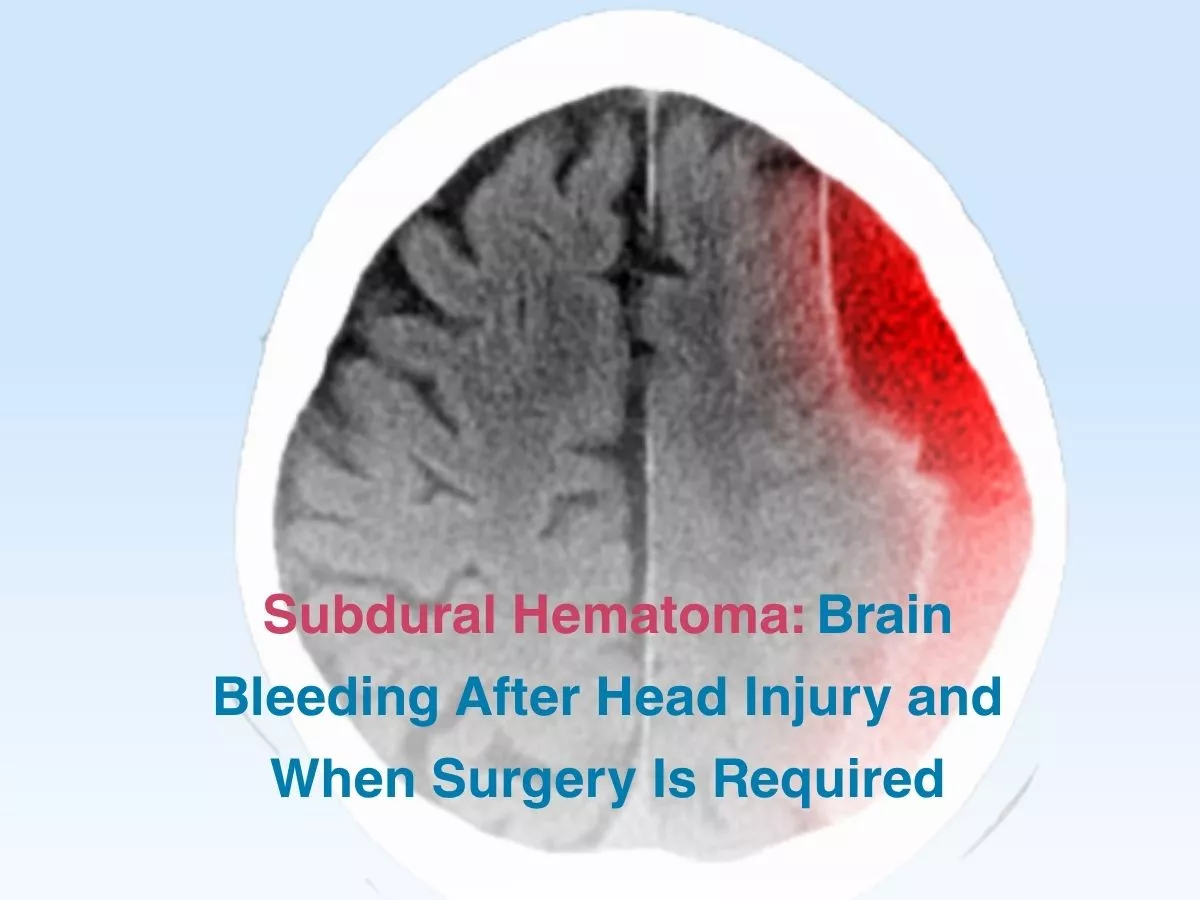
The brain and spinal cord is encased in multiple layers of tissue called the meninges- the dura mater which is the outermost layer, closest to the skull, arachnoid mater which is in between and the very delicate pia mater- the innermost layer respectively. When any blood vessel tears and bleeds into the subdural space or the area between the dura and arachnoid layer, it can lead to increased intracranial pressure and other complications. If there is active bleeding in this space, it is called a subdural haemorrhage, while it is a hematoma if bleeding has stopped but some blood has pooled in the area and is not getting drained.
If you show any head injury emergency signs that will be discussed in greater detail below, please get in touch with specialists at KIMS Sunshine Hospital, right away, without any delay, as we are the best neurology hospital in Hyderabad.
Causes of Subdural Hematoma
A subdural hematoma is caused due to a head injury and is hence one of many head trauma complications. You may have such an injury when you fall hard and hit your head, have a vehicular accident or while playing a sport or if you get assaulted at any point. You are also at risk of having a bleed if you are old and have a minor injury.
Subdural Hematoma Symptoms
There are two types of subdural hematomas- acute and chronic respectively. Symptoms hence differ based on severity of injury and bleeding and how quickly it is taken care of medically. Immediate help ensures there is no long lasting neurological and tissue damage but a delay can be very problematic. These are some symptoms to watch out for-
- An acute subdural hematoma causes severe headaches which don’t go away at all.
- You may slur your words.
- You may notice major changes in vision.
- If you feel very dizzy, or have poor balance and coordination.
- If you notice pronounced weakness in one side of the body.
In contrast, a chronic subdural hematoma is more prevalent in older folk and causes memory loss, marked personality changes or leaves you feeling very disoriented. Very young babies can also develop bleeds if they are shaken too much- and acne their skull is very soft, swelling can be noticed prominently.
At times, some people may not show symptoms immediately after injury but develop them a few days later. This is bad- as bleeding continues and this causes increased intracranial pressure which can lead to seizures, stroke, paralysis, loss of consciousness or even a coma in very severe cases.
Diagnosis of Subdural Hematomas
The doctor will check how and where your head got injured, they will also look at what your symptoms are, how severe they are and check if you take any medications like blood thinners. They will then recommend that you get a CT or MRI scan done. These diagnostic tests will allow them to check where the bleed is, how severe it is and assess for other head and neck injuries which may have been missed earlier.
Treatment for Subdural Hematoma
Doctors monitor vital signs closely and see if neurosurgery for brain bleeding is warranted. Small hematomas can get better with just rest or medications.
- Craniotomy– This is when a section of the skull is taken out, so that there is space for blood to move- reducing intracranial pressure.
- Burr hole surgery- Tiny holes are drilled into the skull- tubes are inserted, from which blood flows out. This can help relieve pressure. A drain may be left in place for many days after surgery to help blood drain better – and this is a standard procedure if a person has a chronic subdural hematoma.
Conclusion
Subdural hematomas can be life threatening if not treated immediately. More than half of all individuals who have a large hematoma get better with surgery and immediate treatment, but they will have permanent issues like speech problems, paralysis etc. Occupational, speech and physical therapy can help individuals regain confidence. The best long term prognosis is achieved when you are still awake when receiving treatment- and this is common in chronic hematoma cases. So, if you have any concerns, call us at KIMS Sunshine Hospital today- the best multispecialty hospital in Hyderabad!
Frequently Asked Questions
What is a subdural hematoma?
How is subdural hematoma diagnosed?
Can subdural hematoma occur without major injury?
Is subdural hematoma life-threatening?
When should someone seek emergency care for head injury?