

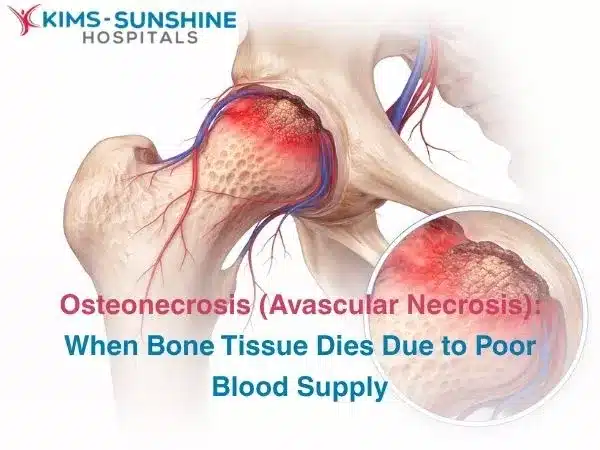
Osteonecrosis (Avascular Necrosis): When Bone Tissue Dies Due to Poor Blood Supply

Verified By
KIMS-SUNSHINE
Specialist,
11 March, 2026
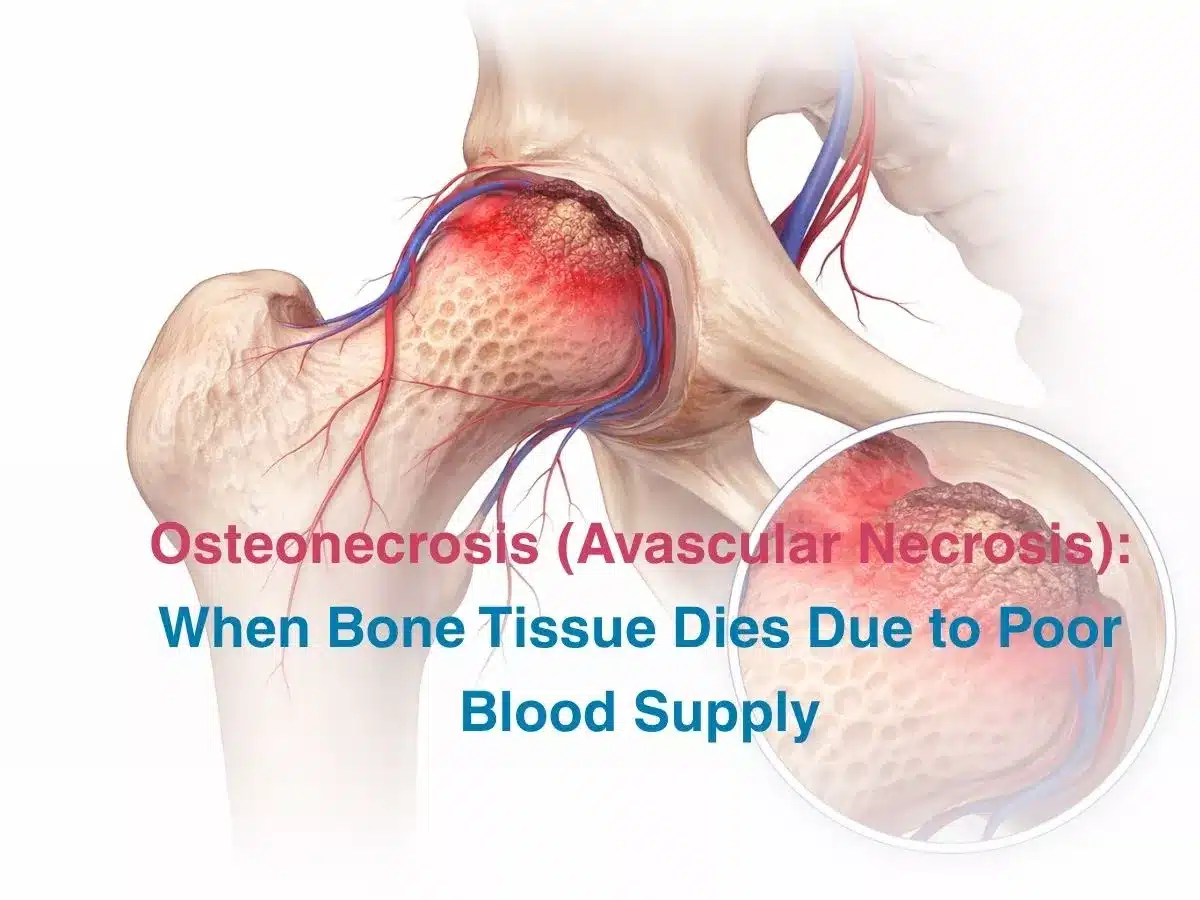
Osteonecrosis or avascular necrosis (AVN) is a condition where bone tissue death occurs due to loss of blood supply to the particular region. It affects how bones and joints function, as it can destabilise them over time. This is chronic and lasts for several years or for life. This condition is mostly asymptomatic, but it tends to affect the hip, thigh, knee or arm and shoulder regions. Other bones in the body can get affected too. Avascular necrosis needs to be treated by specialists, so walk into KIMS Sunshine today, as we are the Best Orthopedic Hospital In Hyderabad.
Avascular Necrosis Causes
If you have chronic diseases that affect the structure of bones or how blood circulates, you are at higher risk of suffering from avascular necrosis. Properly established blood flow that is regular, is a necessity for bone- as old bone tissue needs to be removed and replaced by new bone tissue. When there isn’t enough blood for this process to occur, bone tissue death occurs faster than what is replenished- causing bones to crumble.
AVN can occur due to a traumatic injury like a fall or a fracture of the bone or may happen due to a non-traumatic injury- like when you have an autoimmune condition or if an organ transplant has been done before. The use of corticosteroids is hence actively used to manage an overactive immune system in both cases.
Continuous exposure to corticosteroids can cause fatty tissue to build up in blood vessels, leading to reduced blood supply to bone and other tissues in the body. Prednisone can also impact how calcium or Vitamin D is absorbed by the body- causing bones to become more brittle.
Osteonecrosis Symptom
These are the common symptoms associated with AVN
- You may have severe joint pain when you put pressure on it and try to move around.
- You may not be able to climb stairs.
- You will have stiffness and severe joint pain generally.
- You may not be able to straighten or bend the arms and legs.
Early stages of osteonecrosis normally remain asymptomatic and it is easy for people to dismiss pain or stiffness as a byproduct of advancing age.
Diagnosis of Osteonecrosis or AVN
The use of imaging can help in visualising the degree of damage to bones due to necrosis. So, along with taking a detailed medical history, you will be asked to get an X-ray, CT or MRI done.
Treatment of AVN
Avascular necrosis treatment involves the use of conventional, non-surgical methods to manage symptoms initially. When you are not able to move around at all or are in severe pain that affects the quality of life on a daily basis, you will be asked to consider getting surgery.
Non-surgical treatment approaches include the use of painkillers, heat or cold therapy, regular physical therapy and using crutches or assistive devices for you to walk.
Surgical approaches include-
- Bone grafting- Here, dead bone tissue is surgically removed and replaced with healthy bone that either comes from your own body (autologous) or from a healthy donor.
- Core Decompression– This is when small holes are drilled into bones, to help improve blood flow. This is done with bone grafting and osteochondral grafts for any cartilage issues, as part of joint preservation surgery for younger patients or individuals who are pretty active in general.
- Vascularised Bone Grafting– Another approach used when bone and its blood vessels are transplanted on to the affected region, after removal of dead tissue. This is technically more challenging.
- Joint replacement surgery– This is when the highly damaged joint is surgically removed and a prosthetic implant is put in place. This can stay for many years or even a couple decades and can help in the long term, if you value stability and less pain with ease of movement.
Conclusion
Avascular necrosis or osteonecrosis is a chronic condition that can cause death of bone tissue. This can in turn affect your quality of life severely, as there is chronic pain and increasing amounts of stiffness- both of which don’t get better with just medication, rest or physical therapy. Surgery is the best solution for AVN – and the type of surgery used depends on severity of symptoms and how much and where bone death is present. Talking to an experienced orthopedic surgeon can help you come up with a surgical plan. Early diagnosis and prompt treatment can help improve patient outcomes, so contact our specialists today!
Frequently Asked Questions
What is osteonecrosis (avascular necrosis)?
Which joints are most commonly affected by avascular necrosis?
How is avascular necrosis diagnosed?
What treatments are available for osteonecrosis?
Can steroid use increase the risk of osteonecrosis?