
Slipped Capital Femoral Epiphysis (SCFE): A Hip Condition in Growing Children

Verified By
KIMS-SUNSHINE
Specialist,
13 April, 2026
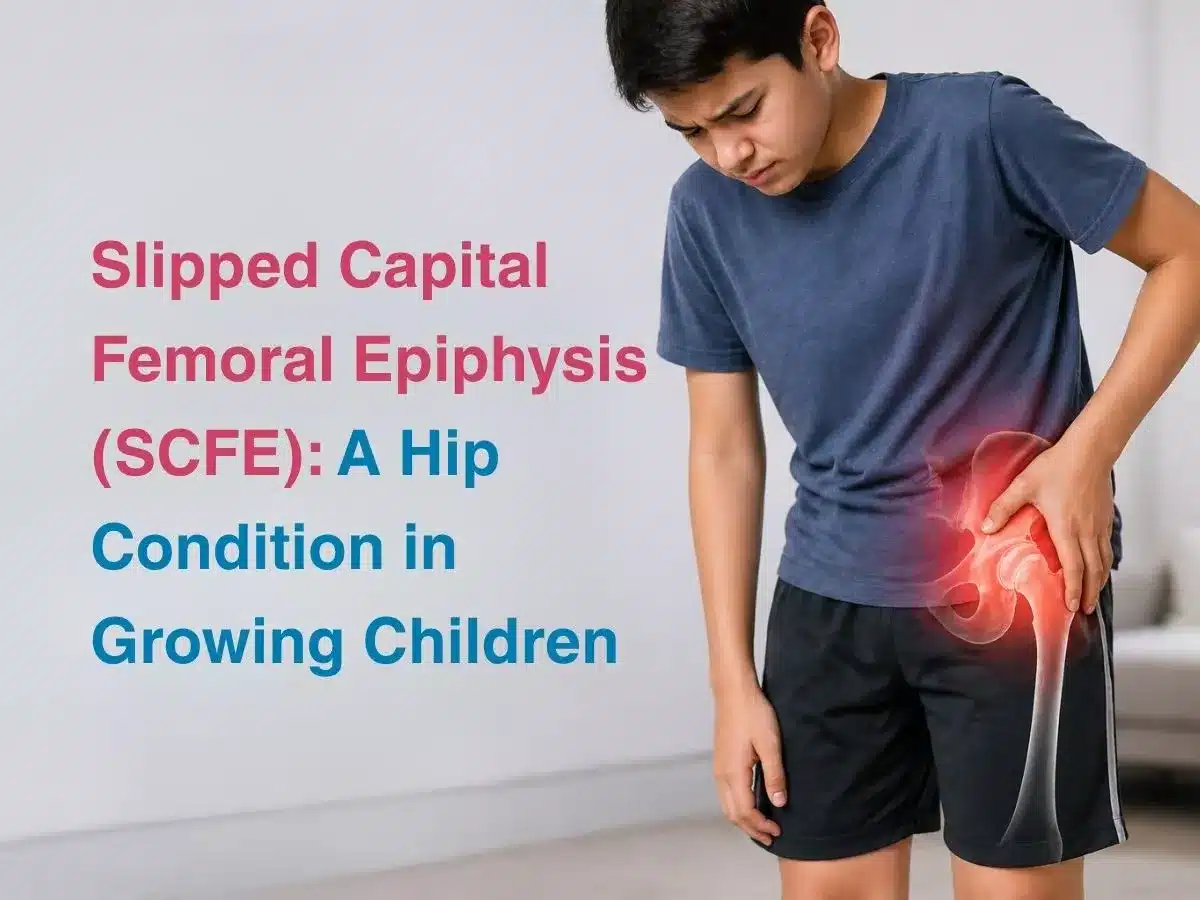
A slipped capital femoral epiphysis (SCFE) is a pediatric hip disorder that affects the epiphysis or ball like head of the thigh bone- as your teenager grows, the softer bone that grows newly can weaken how the femur is attached to the hip joint and it can slip out of alignment. The top part of the femur is more likely to slip out at such periods of high bone growth related activity and affected teens will require slipped capital femoral epiphysis surgery. So, if your teen or child has severe hip pain or is not able to walk normally, call an orthopedic pediatric specialist at KIMS Sunshine Hospital today!
Causes for SCFE To Occur
Some well known causes include-
- Being overweight or obese in childhood.
- Having huge growth spurts.
- Puberty can cause massive hormonal fluctuations – which can in turn impact growth and strength of bones.
- If your child has an injury that is actually a blow to their hips.
- If there is hip dysplasia.
- If someone in your family has had SCFE before- there is a genetic component to this condition and it can be inherited in some cases.
SCFE is more common in males than females.
Symptoms of SCFE
This condition tends to develop over time and can affect one hip first and then the other. So, you may notice them
- Having hip pain when walking or moving.
- Limping when walking.
- Extreme stiffness that gets worse when walking.
- Not being able to put weight on the affected leg.
- The hip or leg is turned outward or the affected leg looks shorter than the other.
SCFE Diagnosis And Management
Doctors will normally ask you and your child for a detailed medical history and note down relevant symptoms. They will follow up with x-rays or an MRI scan, to confirm that the epiphysis has slipped out of its place.
Treatment is absolutely necessary- and children or teens will require hip pinning surgery. These are the two techniques that are normally used-
- In-situ fixation- Arthroscopy is performed, where pins are used to keep the femur in place in the hip joint.
- Open reduction and internal fixation – if your child has unstable SCE, then doctors will need to physically move the femoral head back into place.
Rehab and physiotherapy are necessary for the first 3 months after surgery. Crutches will be used when they walk, so that weight does not fall on the hips. Once the hp has healed well, they will be given specific exercises which can help children improve mobility, flexibility and joint function.
Conclusion
SCFE can affect very young children who have hip dysplasia or teens who have had sudden growth spurts. SCFE needs surgery, as self correction or healing is very rare and almost never happens. Early treatment for SCFE is very necessary- so there is no long term damage to the hip joint. Unstable SCFE can be more complicated and lead to hip arthritis in some cases- and then your child will need hip replacement surgery.
So, listen to your child or teen when they complain of pain- as it may not just be passing by. Come to KIMS Sunshine Hospital for the best child hip pain treatment. Call us today if you have any concerns.
Frequently Asked Questions
When should a child with hip pain be evaluated for SCFE?
Is surgery always required for SCFE?
How is SCFE diagnosed in hospitals?
What is the recovery time after SCFE surgery?
Where can I find expert pediatric orthopedic care?