

Stress Fractures: Overuse Injuries Common in Athletes and Active Individuals

Verified By
KIMS-SUNSHINE
Specialist,
12 April, 2026
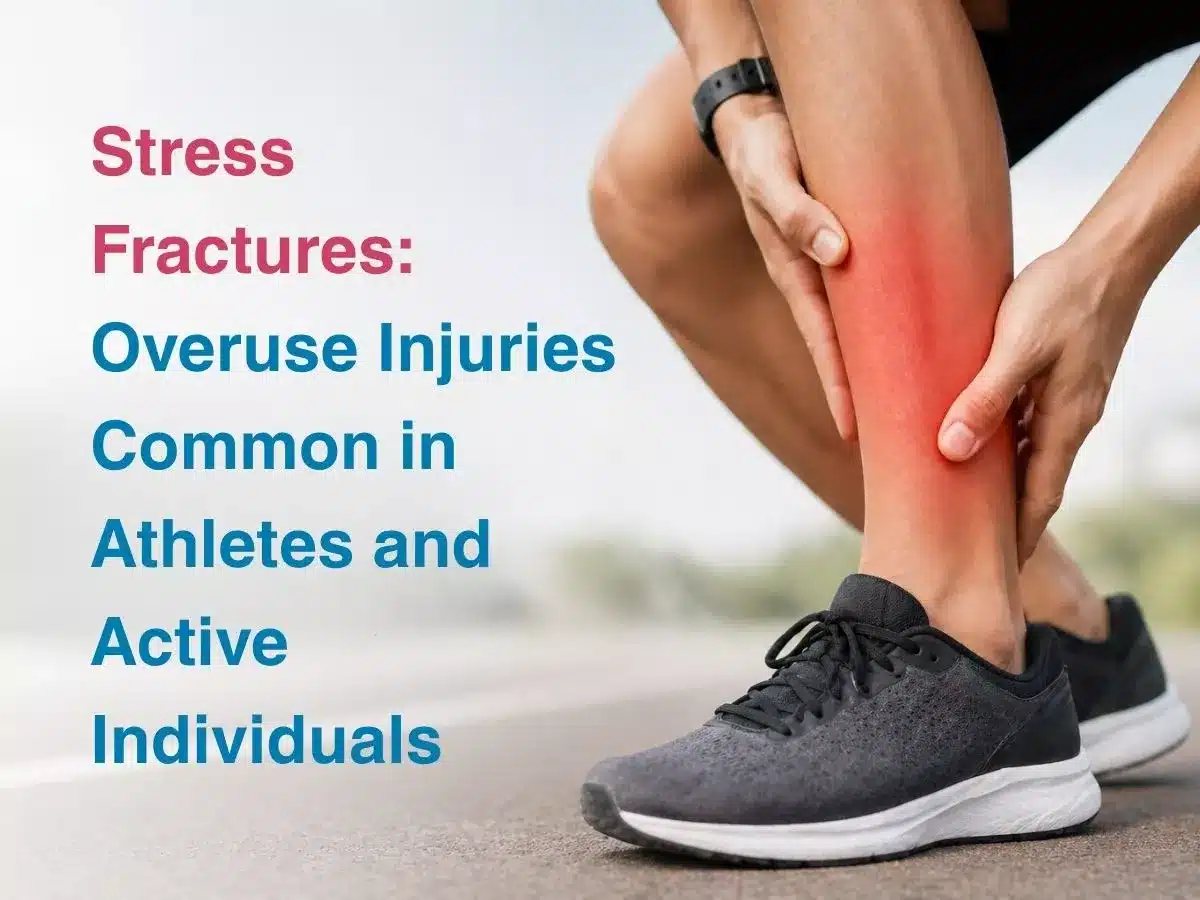
Stress fractures are cracks or very minute bone fractures that normally occur due to excessive use of a particular limb or part of the body. In such cases, even if the injury is minor, the body is not able to recover, as that part is used even when injured. Stress fractures begin as minute bone bruises, which later worsen to form discernible cracks. Stress fractures are hence common in the feet, lower leg, heel, lumbar spine, hips – wherever your bones need to carry a lot of weight or in your wrists and hands. Call an orthopedic sports specialist at KIMS Sunshine Hospital, for the best treatment for hairline fractures, today!
Causes for Stress Fractures to Occur
Hairline or stress fractures are overuse injuries in the majority of cases. So, if you use a lot of repetitive actions while working or play a sport regularly, you are at high risk of developing such an injury. Stress fractures start off as stress reactions or bruises- sites where there is heightened inflammatory activity due to repeated stress or pressure in that area. If you keep stressing the area out, without giving it time to recover, the bruise can get larger and then the stress reaction becomes a stress fracture.
Such injuries can affect young children too- if they play one sport throughout the year without any break, if their activity picks up pace too quickly, or if they train using the wrong equipment or technique for a while, respectively.
For adults, osteoporosis, high arches in the feet, bunions, flat feet, vitamin D deficiency, being overweight or obese- all of these are well known causes which can lead to stress fractures forming over a long time.
Symptoms of Stress Fractures
You may notice a few or all of these symptoms-
- You may have pain that tends to get worse when you exercise or begin some activity.
- Pain does not stop or get better even when you stop the problematic activity.
- You may feel more pain when you rest.
- You may notice swelling or tenderness in the affected area.
Diagnosis of Stress Fractures
Imaging is normally used to find where the crack is and how severe it is. So, you may be asked to get an X-ray, MRI, CT or a whole body stress fracture diagnosis scan- which can image all bones at the same time and give you accurate results.
Stress Fracture Treatment
Treatments used depend on how severe the fractures are and the magnitude of your symptoms. Some of the most common bone stress injury management tips include-
- Resting the affected limb or part of the body, so it can recover.
- You can use an ice pack to reduce inflammation – but never put cubes of ice directly on the affected part. Wrap them in a cloth or towel and then keep on the affected part.
- You can use NSAIDs – painkillers to reduce pain and swelling.
- You can keep the affected leg or arm on cushions, so it stays elevated.
- You could immobilise the affected limb using a cast or brace.
- If your leg has stress fractures, you can use crutches to keep weight off the affected one.
These are some non-surgical ways to manage such stress fractures and related injuries.
Conclusion
For more severe cases, surgery may be necessary- and this is recommended only if no other treatment works or if you may develop other complications. This is common if the hip joint gets affected. Doctors will perform an internal fixation- where plates, screws or pins are used to hold the bone in place, so it can heal over a period of time.
The stress fracture healing time is normally 1.5-2 months or longer – and you will obviously heal better when you don’t perform the activity that caused the injury in the first place. If you feel even slight pain, it means the bone is still injured and it could break again. So, consult a specialist at KIMS Sunshine Hospital today!
Frequently Asked Questions
When should I consult a doctor for a suspected stress fracture?
How long does it take for a stress fracture to heal?
Which specialist treats sports-related fractures?
Can physiotherapy speed up recovery?
When can athletes return to sports after a stress fracture?