

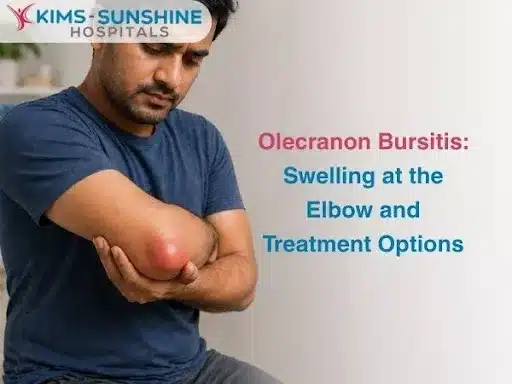
Olecranon Bursitis: Swelling at the Elbow and Treatment Options

Verified By
KIMS-SUNSHINE
Specialist,
11 April, 2026
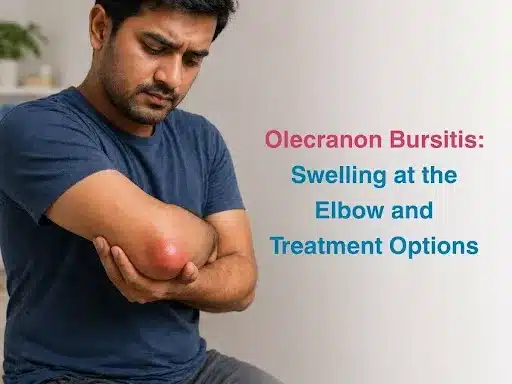
The olecranon bursa is found at the elbow and it contains fluid, which serves as a means to cushion and protect the joint. This bursa can get inflamed due to repetitive use of the elbow over a long period of time. Orthopedic care for elbow swelling can be considered when you have chronic pain and are not able to go about your day normally. The bursa may also get affected because of a traumatic injury or symptoms may worsen because of an infection. In such instances, you will need specialised infected elbow bursitis treatment- so call an experienced elbow pain specialist at KIMS Sunshine Hospital today!
Causes of Olecranon Bursitis
These are some well known causes for olecranon bursitis-
- Playing sports or having jobs that involve repetitive motions like lifting stuff up, throwing a ball, racquet sports etc.
- If you have an unresolved infection at the elbow.
- If you suffer from a traumatic injury to the elbow.
Symptoms of Olecranon Bursitis
Well known symptoms of this condition include-
- Swelling of the elbows.
- Painful elbow movements.
- If there is an infection, you may notice that the skin around and at the elbow looks discoloured or feels warm to the touch.
Diagnosis of Olecranon Bursitis
Olecranon bursitis is normally diagnosed by an orthopedic specialist after understanding what your symptoms are, with a physical exam and by recommending imaging, to check for extent of injury. So these are the tests that may be done-
- An X-ray of the elbow is taken.
- An ultrasound can also be done.
- An MRI may be done in some cases, to check if other soft tissue is injured.
- You may have to get blood tests done, if your doctor suspects an infection.
- Fluid may be aspirated from the bursa and visualised under a microscope.
Treatment for Olecranon Bursitis
Olecranon bursitis treatment methods are decided based on how severe your symptoms are. So, you may be asked to
- Rest your elbow – so that it can heal. This works for minor cases of inflammation and swelling.
- Using painkillers like NSAIDs for a short period of time can also help relieve symptoms.
- Using a brace or splint to immobilise the elbow can help it heal better.
- If you have septic or an infected bursa, then antibiotics need to be taken. Elbow bursitis drainage is also done- to remove as much of the fluid as possible from the bursa. It is important for you to complete the course of antibiotics, even if you begin to feel better in between.
These are some commonly used non-surgical bursitis management approaches.
In very rare cases, surgery may be needed. This is considered only if none of the above mentioned conventional modes of treatment work or if you have a very severe infection that cannot get better with just antibiotics alone. In such cases, the infected elbow bursa is removed and you will be asked to wear a splint for a month- so that the elbow can recover.
Conclusion
If your elbow bursa got injured due to work, you will need to make a few changes to how you work- so that you can heal better and your symptoms don’t recur. But, if it was due to an infection or injury, you may be able to go to work as usual, provided you can work with a splint or brace. Bursitis can come back if the same set of conditions prevail, even after treatment, so call an orthopedic doctor for more information. Schedule an appointment today!
Frequently Asked Questions
When should I see a doctor for elbow swelling?
Is drainage required for elbow bursitis?
Can olecranon bursitis be treated without surgery?
How is elbow bursitis diagnosed?
What is the recovery time after treatment?