

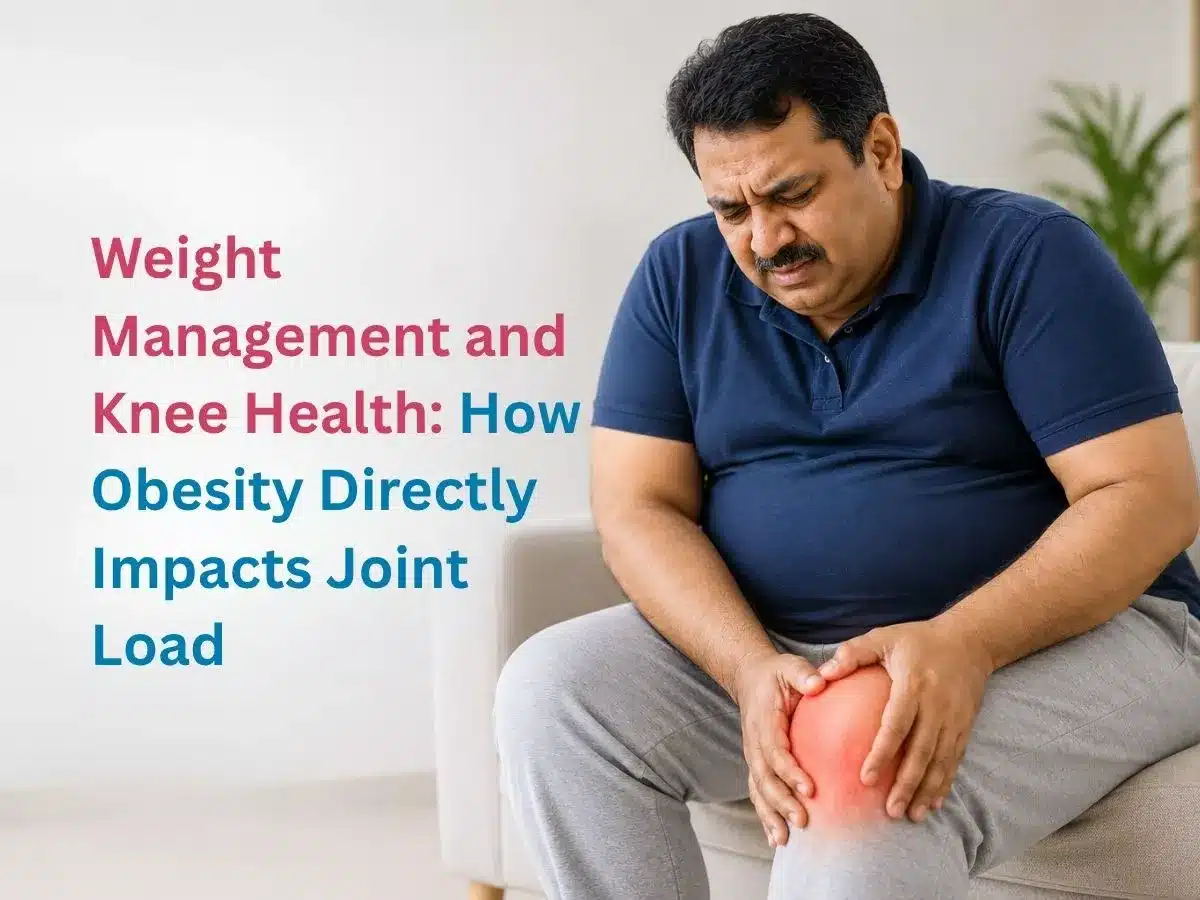
Weight Management and Knee Health: How Obesity Directly Impacts Joint Load

Verified By
KIMS-SUNSHINE
Specialist,
21 December, 2025
The classical medical definition of obesity has always centred around BMI– the body mass index and if it is higher than 25, then you are said to be overweight. Anywhere above 30, and you are obese. Degrees of obesity vary too, with values above 40 being classified as morbidly obese. One direct side effect of being obese or overweight is the additional stress on the joints that the extra kilos can add – and this can affect individuals in the form of knee arthritis. Musculoskeletal disorders like joint pain and other related issues in the long term. With the prevalence of obesity increasing in the Indian subcontinent, it is no surprise that there are increasing cases of arthritis or joint inflammation and stress related maladies.
Obesity And Knee Pain
When there is obesity, a bunch of chronic but complex conditions may begin their interplay- you are at higher risk of developing metabolic diseases like hyperlipidemia or becoming diabetic and this can in turn crank up inflammation in the body. The relationship between excess weight and joint stress is pretty clearly established, as even losing 1 kilo of weight can help the joints behave like you have lost 4 kilos or more.
Obesity can influence joints in various ways-
- It can put increased pressure on the joints leading to pain.
- It heightens the risk of you suffering from osteoarthritis- which is a chronic and painful condition by itself.
- Your bones cannot stay strong because they are constantly under lots of stress.
- Your joints may try to compensate and you may adopt postures that may be harmful in the long run and increase wear and tear.
- Your body tends to recover slowly, when compared to normal as there is high levels of inflammation.
- With pain, stiffness and general discomfort, people make the mistake of preferring a sedentary routine- which can actually make joints suffer worse.
Obesity also affects how your spine behaves – this can translate to lower back pain due to poor posture, nerve compression or disc related strain, which can be very painful. Almost 60% of the Indian population is said to suffer from back pain- with varying degrees of severity and it affects more women than men.
Best Exercises For Knee Pain
One of the best ways you can take care of your joints is to ensure that you get regular bouts of moderately paced physical exercise. If you have already been diagnosed with osteoarthritis or joint pain, then it becomes important to continue exercising in the right way- as it can improve blood flow to the areas and reduce inflammation in turn. But not all exercise is good- you will need to be smart about opting for low impact workouts for joints- like swimming, cycling, aerobics, yoga, walking, stretching and related routines. Weight training or resistance training can help strengthen your muscles, which can in turn influence how your joints behave. The knee joint especially is under a lot of stress on a daily basis- as it has to carry your whole body weight and keep you stable throughout. So, doing leg raises, calf raises, stretching to reduce stiffness and step ups, along with ankle stretches can greatly help improve leg mobility.
Another important aspect to remember is exercising slowly and regularly and not overdoing it in one day- as this can trigger pain and then you will be forced to rest up.
Conclusion
Inflammation and joint damage can become chronic if you don’t stop and take a good, hard look at how you got here. You should first talk to your doctor about medications for knee pain, so that you can resume physical activity. Next, you can try to plan your meals out systematically- where you use whole grains, fresh produce and good quality products on a daily basis- with enough spices and condiments to improve flavour and also promote anti-inflammatory pathways in the body. The good news is- if you lose weight gradually and stay at a healthy weight, your joints will recover well. Plus, such a well balanced routine is also heart and hormone friendly too- both of which can help reduce inflammation in the body.
Frequently Asked Questions
How does obesity affect knee joints?
Can losing weight reduce knee pain?
How much weight loss helps knee joint pressure?
What foods support knee and joint health?
Is walking good for knees if you are overweight?