

PRP vs Knee Replacement: Why PRP Won’t Work in Last Stage Arthritis

Verified By
KIMS-SUNSHINE
Specialist,
21 May, 2026
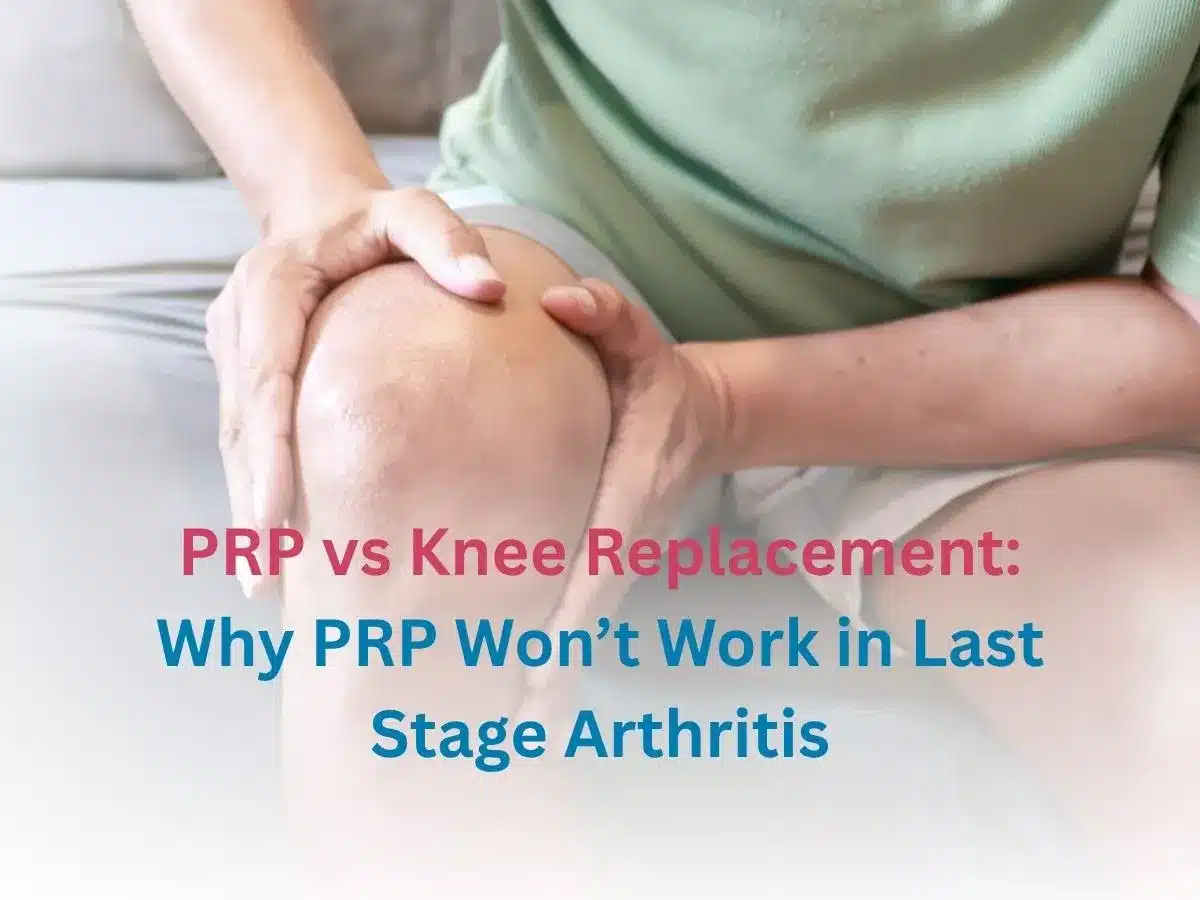
Conventional methods for severe and chronic knee pain exist- as they are not as invasive as surgery. Most individuals get better with regular physiotherapy, a properly designed diet, pain medication and corticosteroid injections. Some people may even try PRP injection for knee arthritis. PRP or platelet-rich plasma therapy is a simple procedure- your own blood is taken, platelets are purified and then injected back to the knee, to help tissues heal in a natural way. But, PRP cannot be an equivalent for knee replacement surgery.
So, let us learn about PRP vs knee replacement – which procedure is the right one for you and understand when PRP is a good choice and when it is NOT.
When Does PRP Injection for Knee Arthritis Help?
Platelet rich plasma therapy is a simple, straight forward procedure- your blood sample is taken, platelets are isolated and then they are injected back to affected tissue- in this case, the knee. PRP works very well in certain cases, but not all.
It is hence important to understand the stages of arthritis, which are classified according to severity of inflammation and accompanying symptoms. The different stages are Stage 1, 2, 3 and 4- with the last one requiring advanced osteoarthritis treatment, so you can get better. Stage 1 is minor, 2 is mild and 3 is moderate. PRP has helped Grade 1-3 patients by reducing inflammation – which translates to lesser pain, stiffness and better joint movement.
PRP is however not very helpful when you look at stage 4 and its severity- as cartilage is almost absent, there is severe pain and bones rub against each other during movement, making it very difficult.
Why Is PRP Good For Some Cases?
Platelets are anti-inflammatory cells. They send out signals as they contain many growth factors like-
- Platelet-derived growth factor (PDGF)
- Transforming growth factor (TGF-β)
- Insulin-like growth factor (IGF-I)
- Vascular endothelial growth factor (VEGF)
These growth factors can change the environment of the knee joint- in such a way that chronic or reactive inflammation stops and healing can actively begin and continue.
This is why PRP is a great option when damage is not too severe.
Studies have shown that PRP treatment done at the right time can help immensely and delay the need for knee replacement surgery. This is because PRP can help cartilage tissue grow in the affected area, after inflammation has reduced. Research has also shown that people do better with multiple injections of PRP, rather than just one shot.
When is Knee Replacement Surgery Better?
The debate between opting for a non-surgical vs surgical knee treatment is always present- as choosing non-invasive methods definitely feels and is safer. When PRP and all other methods fail, then you may need to consider getting knee replacement surgery.
Surgery is the only long lasting solution if you want stage 4 knee arthritis treatment- this is when cartilage is completely lost. If you have severe pain, your quality of life is suffering and joint misalignment has also occurred, surgery can be the savior you have been looking for. PRP can help with some cartilage regeneration but not complete tissue, like before.
Knee Replacement Surgery Benefits To Know Of
Correction is absolute- all diseased or worn down bone is removed and new prosthetic implants are used. These joints can last for about 15-20 years or even longer with the right care. You will definitely notice pain relief as a major product and you will feel better too. Knee replacement surgery has high success rates with severe joint damage.
Conclusion
There is no need for you to live in chronic pain, stiffness and deal with poor joint function just because you are scared of opting for surgery. We at Dr. Kushal’s Clinic have the best orthopaedic surgeon for knee replacement in Hyderabad. So, call us today for an appointment!
Frequently Asked Questions
Is PRP effective for advanced (stage 4) knee arthritis?
When should I choose knee replacement over PRP therapy?
Why doesn’t PRP work in severe osteoarthritis?
Which patients are suitable for PRP injections?
When is knee replacement surgery the best option?