

Budd-Chiari Syndrome: When Liver Veins Become Blocked

Verified By
KIMS-SUNSHINE
Specialist,
05 April, 2026
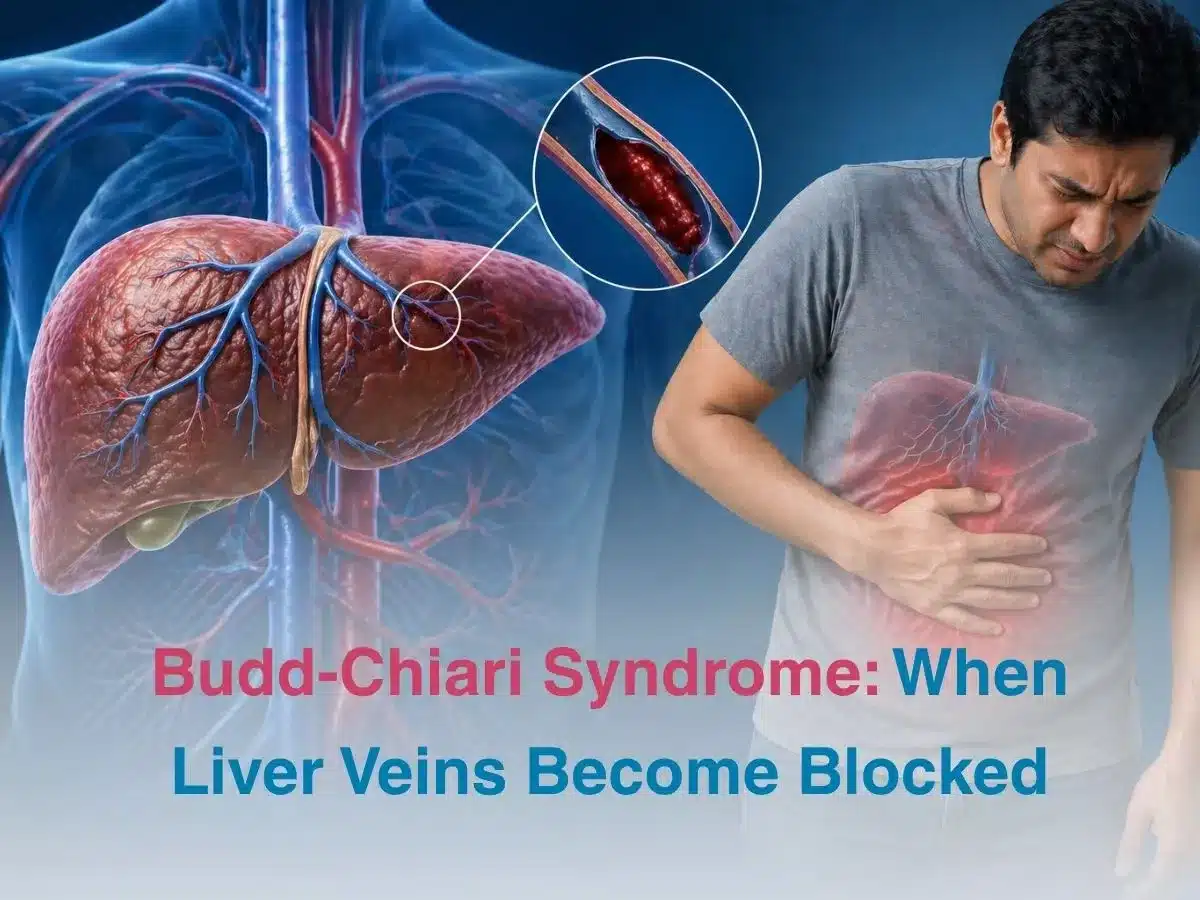
The liver is the largest organ in the body which is responsible for a variety of physiological functions. Since it is very metabolically active, the liver needs a continuous supply of oxygen and nutrient rich blood. When there is some kind of hepatic vein obstruction and blood is not able to leave, it can cause your liver to get larger- due to blood retention. This is Budd Chiari syndrome. It can cause other issues, if not treated in time. So, if you notice symptoms like jaundice, fluid retention, extreme fatigue etc., please reach out to us at KIMS Sunshine Hospital, as we are the best gastroenterology hospital In Hyderabad.
Causes of Budds-Chiari Syndrome
Any medical condition that causes blood clots to develop is a potential cause for Budd-Chiari syndrome to develop. So, these are some well known causes
- If you suffer from conditions where too many blood cells are being made- like polycythemia vera, essential thrombocytosis, myelofibrosis or other cancers.
- If you have hypercoagulable disorders like a protein C or S deficiency, lupus, antithrombin iii deficiency, etc.
- If you have benign tumours or masses in the liver or kidneys, which can press against veins.
- If you suffer from IBD- where you have high amounts of inflammation in the gut.
- If you are pregnant.
- If you have sickle cell disease.
- If you take birth control pills regularly.
However, many cases of Budd-Chairi are totally idiopathic- since doctors don’t know the actual cause.
Budd-Chiari Syndrome Symptoms
These are some of the symptoms associated with this condition
- If you have abdominal pain- in the upper right quadrant of the abdomen.
- You may notice abdominal swelling due to ascites or fluid accumulation.
- You have jaundice.
- You may feel really confused or have drastic mood changes due to hepatic encephalopathy.
- Liver enlargement pain can occur due to hepatomegaly.
- Your spleen may enlarge too- splenomegaly.
- You may notice bleeding from the stomach, rectum or esophagus.
- Edema and fatigue are common.
- You may have liver failure, if the condition has gone undiagnosed for a long time.
Budd-Chiari Diagnosis
Doctors will look at your symptoms and then recommend detailed imaging to look for blockages in liver veins, if you show a few of the above symptoms. Some imaging tests include-
- Doppler Ultrasound– To image blood vessels in greater detail- and to check for any irregular blood flow in liver veins.
- CT Scan- X-rays are used to check if you have hepatomegaly, ascites or other irregularities. A contrast agent may also be used at times for better visualisation of blood vessels.
- MRI– for very high resolution images of he liver and its circulatory pathways.
- Venogram– A contrast agent is injected into the veins, to check for blockages.
Treatment of Budd-Chiari Syndrome
These are some treatment options that are used, based on the severity of your symptoms
- Medications – like anticoagulants are used, to prevent blood clots from forming and allow blood to flow freely.
Non-surgical treatments include- The TIPS procedure and a percutaneous transluminal angioplasty respectively.
- TIPS Procedure liver – It is a Transjugular intrahepatic portosystemic shunt- where the portal vein is connected to one of the 3 liver veins that exit the organ. A stent is used for the connection and imaging is used in real time to help them place the stent in the right spot.
- Percutaneous transluminal angioplasty– A catheter with a balloon is inserted into your vein. Once it reaches the narrow part of the liver vein, it is inflated- so the balloon can widen the vein. A stent may also be added, to make sure that the vein stays open.
- Liver transplant– This is the last resort- if no other treatments have worked and you have severe liver cirrhosis or failure or bleeding that does not get better with medications.
Conclusion
Budd-Chiari syndrome is a chronic condition that can be treated with minimally invasive procedures or medications alone. After getting the procedure done., you will need to go in for regular blood tests, imaging and get the fluid drained, eat a low sodium diet or take diuretics – so that fluid volume remains controlled overall. Whatever your concerns, don’t forget to call us at KIMS Sunshine Hospital today!
Frequently Asked Questions
What is Budd-Chiari syndrome?
What are the symptoms of Budd-Chiari syndrome?
Is Budd-Chiari syndrome life-threatening?
What is the role of the TIPS procedure in treatment?
Can blood clotting disorders lead to this condition?