
Leg Length Discrepancy: Causes, Symptoms, and When Correction Is Needed

Verified By
KIMS-SUNSHINE
Specialist,
09 April, 2026
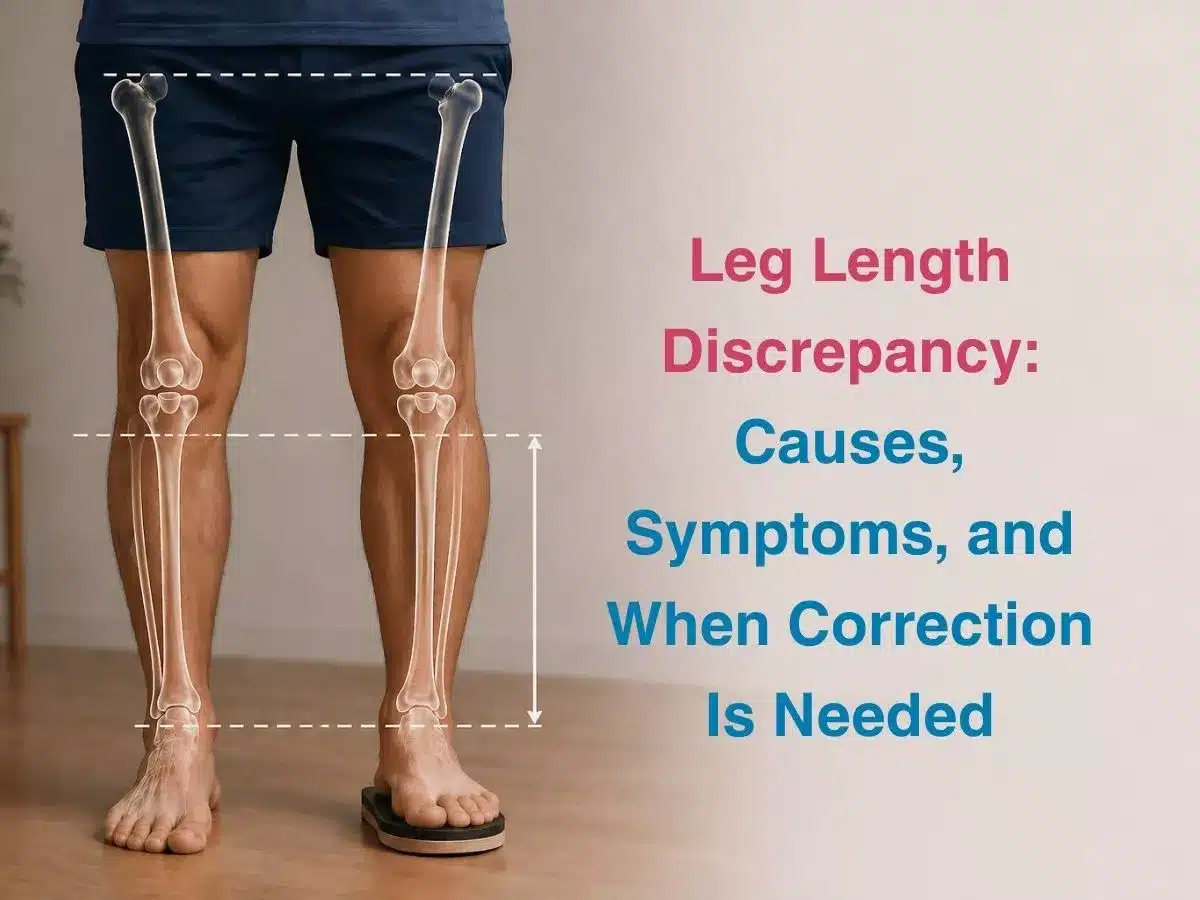
Our limbs are how we get to move freely and go about our lives normally, on a daily basis. But, when they are not formed in the right way at birth or if there is an injury to the legs, it can lead to a leg length discrepancy- which can cause symptoms, which may make your life uncomfortable. There are two types of leg length discrepancies- structural and functional respectively. If you notice pain, discomfort, swelling or other symptoms, it makes sense to get an orthopedic evaluation for leg length done at KIMS Sunshine Hospital- as we are the best orthopaedic hospital in Hyderabad.
Causes for Leg Length Discrepancy
The causes for having uneven leg length can be attributed to a mix of genetic factors and acquired conditions. Minor cases often do not have any differences in length but symptoms can be caused by walking or loading the legs in an abnormal manner. Some well known causes include-
- Shortening of muscles and postural problems- structural discrepancy.
- Having anatomical defects which may be congenital at times- this is why pediatric leg length discrepancy is a well known condition. Otherwise, causes include paralysis, growth disorders, deformity of the hip, leg or foot etc – this is a structural problem.
- Having surgery previously on the hip joint.
- Difference in length due to lateral growth of bone after fractures.
- In children, injuries to growth plates can worsen length differences. Discrepancy in length is literally due to a shortening or elongation of specific parts of the skeleton.
Symptoms and Diagnosis of Leg Length Discrepancy
You may have pain in the legs and a crooked shoulder- on the same side as the longer leg. You may even tilt the head towards the shorter leg- this is a compensatory measure to help you walk. If the leg length discrepancy is not subtle, you can also have problems in the lumbosacral or lower back region- as the lumbar spine tends to rotate too much.
Diagnosis of leg length inequality is done using the following tests-
- Visual cues- You will be asked to stand with your legs close to each other. Doctors then look at the height of the iliac crests and other markers to check for any length differences.
- Palpation– To check if one hip is higher than the other one- like in scoliosis, back pain, gait problems etc.
- Measuring leg length- You will lie down for the doctor to measure the length from the iliac crests to the outer ankle. Length will also be taken when you stand up. Differences between standing up and sitting down are noted.
- Imaging– X-ray, CT or MRI can be done to get a diagnosis.
- Gait Analysis- Checking for scoliosis, gait changes or others due to a pelvic obliquity.
Leg Length Discrepancy Treatment
No treatment is needed if the difference is less than 1 cm and you don’t show any symptoms per se. You could use shoe lifts if needed.
If it is between 1-2 cm, you may need treatment based on how severe your symptoms are.
If the difference is much more pronounced- more than 2 cm, treatment is necessary.
- Non-surgical approaches include using physiotherapy, heel lifts, insoles, customised shoes and prostheses or orthoses for daily use.
- Limb length correction surgery- An acute correction is when the entire length is corrected in one surgery. Bones are fixed using nails, screws and plates for the best results.
- Chronic leg length correction surgery takes time and involves the use of fixators, intramedullary devices- and this is more common in younger adolescents or with people who have complex twisting related injuries.
Conclusion
For many individuals who don’t have prominent symptoms, stretching and related exercises can help target muscles which can shorten the joint. If you begin to notice symptoms after a leg injury or in young children, please don’t hesitate to call an experienced orthopedic specialist at KIMS Sunshine Hospital for more information. Schedule an appointment today!
Frequently Asked Questions
When should I consult a doctor for leg length discrepancy?
Is surgery necessary for leg length discrepancy?
Which specialist treats leg length discrepancy?
What is the recovery time after correction surgery?
Are non-surgical treatments effective for mild cases?