

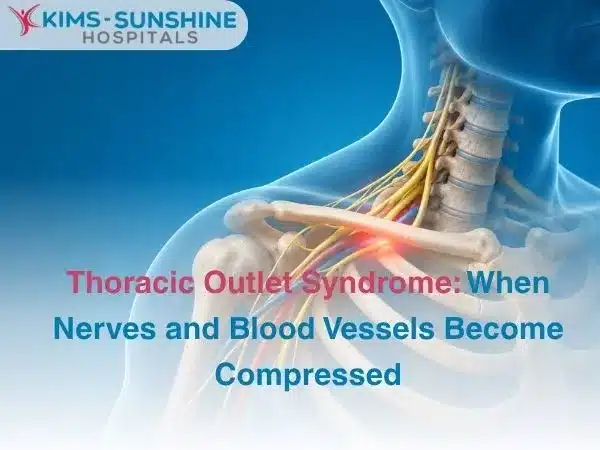
Thoracic Outlet Syndrome: When Nerves and Blood Vessels Become Compressed

Verified By
KIMS-SUNSHINE
Specialist,
03 June, 2026
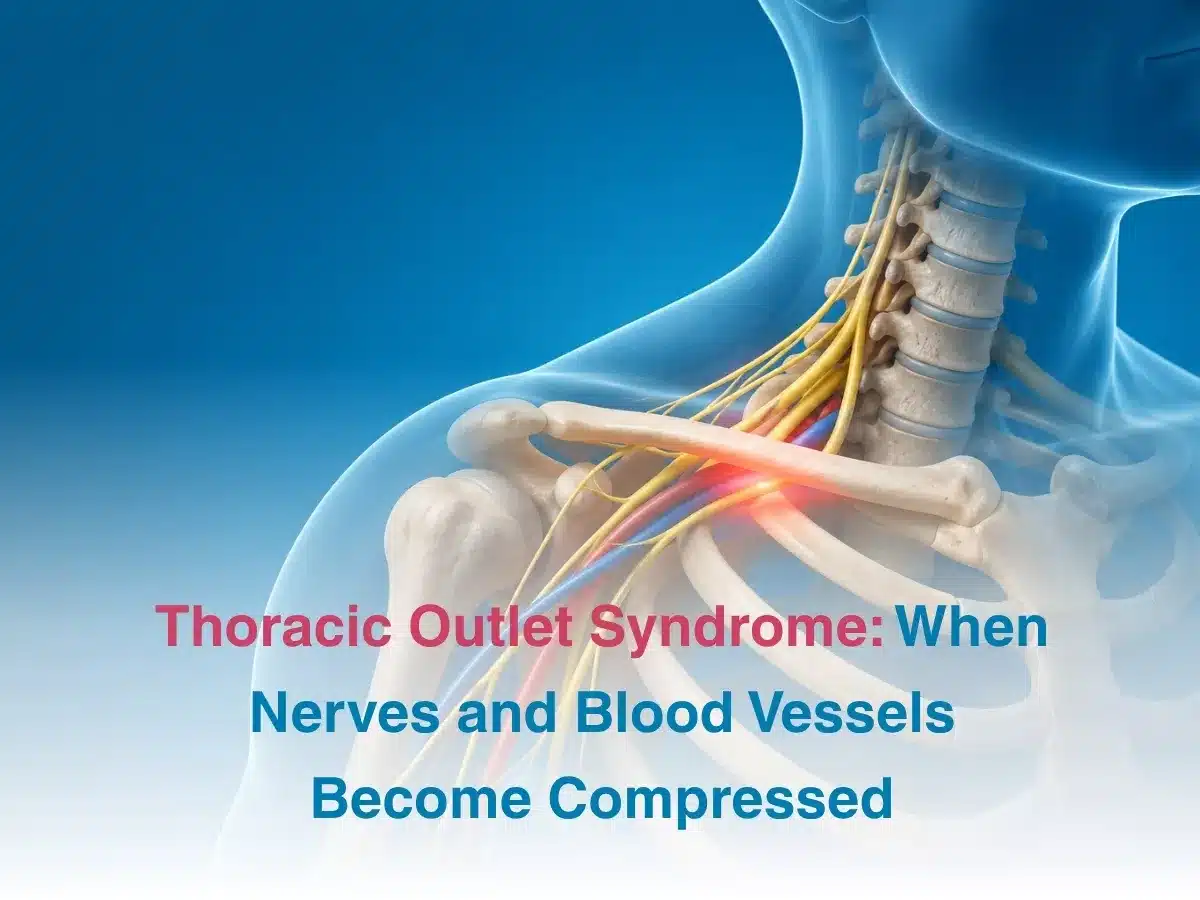
The thoracic outlet refers to the space or the opening leading to the chest from the neck – i.e. the thoracic region. The superior thoracic aperture or thoracic outlet contains important structures like the subclavian artery, subclavian vein and the brachial plexus (all the nerves that pass to the neck and beyond from the brain), respectively. When this space is narrower or begins to compress against blood vessels and nerves, you will need to talk to a thoracic outlet syndrome specialist at the best hospital in Hyderabad.
Cause For Thoracic Outlet Syndrome (TOS)
Thoracic outlet syndrome can be of 3 types, depending on the type of tissue being compressed or affected-
- Arterial TOS– if the subclavian artery gets compressed and blood flow is not good. More common in men.
- Venous TOS- If the subclavian vein gets affected. This affects more women than men.
Together, these two come under vascular thoracic outlet syndrome types.
- Nervous TOS- Where the brachial plexus gets compressed.
It is hence clear that the possible causes include congenital defects where a cervical rib is present, or if the ligaments and nearby tissue are abnormal, whiplash from accidents or due to repetitive movements like in athletes – swimmers or anyone who lifts their hands and heads up a lot.
Symptoms Of Thoracic Outlet Syndrome
Most people report symptoms on one side of their body and they change depending on which tissue is affected-
- With nerve compression shoulder and arm, you may have to deal with tingling and neuropathy when you lift them up.
- Your skin may look overly pale or bluish if blood vessels are getting compressed.
- If any cuts or sores in your hands take a lot of time to heal due to inadequate blood flow.
- If your skin feels cool to the touch.
- When the vein is compressed, your arm may swell up and feel heavier because blood is not able to flow back to the heart.
- Some people may have chest pain.
- Some people may notice tingling on one side of the body – and this symptom may be mistaken for that of a stroke.
If you notice any of these symptoms, please get in touch with the best orthopedic and vascular specialist at KIMS Sunshine Hospital today!
Diagnosis of Thoracic Outlet Syndrome
Doctors normally ask you to describe your symptoms in detail, take a complete medical history and will then ask you to get some movement based tests done-
- Elevated arm stress test- You will be asked to lift your arms up, with the elbows flexed at 90 degrees, with the shoulders braced to the back. You will need to hold this position for 3 minutes.
- Upper limb tension test- The neck, shoulder, arm, elbow and wrist are all slowly moved to different positions to raise tension. This is to check if the nerves are working fine- like the radial, ulnar and median nerves.
If there is pain or tingling or other symptoms, then you have TOS.
Doctors will also ask you to get imaging done- like a chest X-ray, CT scan, MRA of blood vessels, MRI of the spine and chest, nerve conduction studies and blood tests to confirm this condition. These tests allow them to check for any clots, how muscles and nerves are functioning and to look for congenital abnormalities like a cervical rib.
Thoracic Outlet Syndrome Treatment
These are the approaches normally used to treat this condition-
- If you have gotten a nerve compression diagnosis, then thoracic outlet syndrome physiotherapy is administered- these specific exercises help improve range of motion and improve muscle health and posture in the long term, which lead to betterment of symptoms.
- Painkillers are given for pain.
- If a clot is blocking blood flow, then thrombolytic agents are used to break it down and restore blood flow.
- Decompression surgery for thoracic outlet syndrome is another option.
Conclusion
If you have severe pain and limited range of motion, have congenital defects, then you may be suffering from some type of TOS. Symptoms don’t get better if you continue to wait. So, please get in touch with a thoracic outlet syndrome specialist at KIMS Sunshine Hospital so you can be diagnosed and treated promptly.
Call us today!
Frequently Asked Questions
When should I consult a specialist for thoracic outlet syndrome?
Which specialist treats thoracic outlet syndrome?
What tests are done to diagnose nerve or vessel compression?
Can untreated thoracic outlet syndrome cause permanent nerve damage?
How long does recovery take after treatment?